I. Introduction
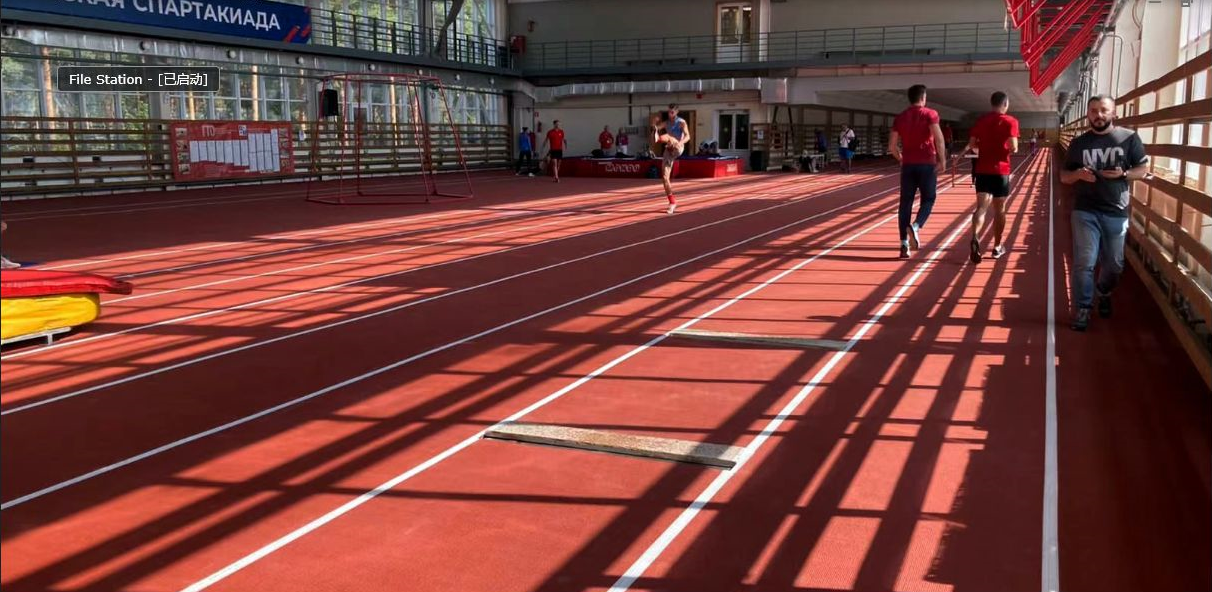
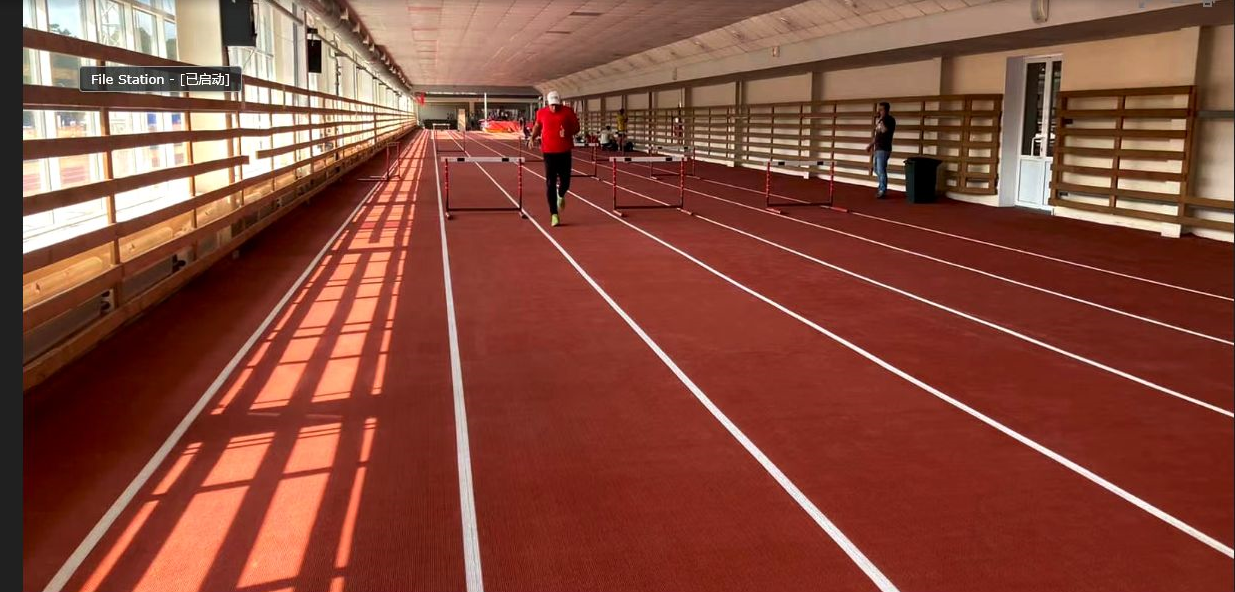
Chelyabinsky Indoor Track and Field Training Center in Russia is a very different type of project from an outdoor stadium. It is not about a large open venue, public seating, or a full competition bowl. It is about year-round training in an enclosed athletics environment, where the surface has to support repeated movement, stable footing, and clean visual guidance under indoor lighting.
That makes the project a useful case for discussing prefabricated running track systems in training facilities. Indoors, weather exposure is reduced, but installation tolerance becomes less forgiving. The space is tighter, edges are closer, and every lane line or joint is seen at a shorter distance.
![]()
II. What Makes an Indoor Track Facility Different
1. The surface is used more repeatedly
Indoor training centers often carry dense daily use. Athletes may run drills, acceleration work, warm-ups, and technical sessions in the same controlled space. The track is not only a show surface. It is a working surface that sees repeated foot traffic at close range.
This makes stability, surface feel, and line clarity important. A track that looks acceptable from a distance may still feel poorly managed when athletes use it every day.
2. Indoor lighting exposes small inconsistencies
Outdoor projects are influenced by sunlight, weather, and distance. Indoor projects are different. Artificial lighting, long walls, and corridor-like sightlines can make small color differences, uneven seams, or edge issues easier to see.
For this reason, indoor track installation needs careful control over roll alignment, surface cleanliness, and transition details.
III. Why Prefabricated Track Systems Fit Indoor Training Use
1. Consistent material structure supports controlled performance
In this setting, the specification is less about brochure numbers and more about repeatability. Huadong Track's prefabricated rolls are commonly supplied at `1.22 m` width and `15-20 m` length, with a `9-13 mm` thickness range. For an indoor training center, that controlled structure matters because athletes and coaches judge the surface at close range every day.
The benefit is not only speed. The more important point is repeatability. A training surface should feel consistent from lane to lane and from one session to the next.
2. Installation becomes a precision job
Indoor spaces often have walls, columns, thresholds, drainage details, equipment zones, or access points close to the track. That means the installer has less room to disguise rough cutting or weak alignment.
A prefabricated system can help because the surface arrives in a stable form. But the final quality still depends on accurate measuring, careful trimming, tight bonding, and clean seam closure.
![]()
IV. Construction Challenges in This Type of Project
1. Substrate acceptance had to be strict
Even indoors, base quality matters. If the substrate has local unevenness, dust contamination, moisture, or weak areas, the prefabricated surface can lose bonding stability over time.
Before installation, the base should be checked for flatness, dryness, cleanliness, and surface strength. In a training hall, these checks are especially important because athletes use the space repeatedly and notice small irregularities quickly.
2. Edges and transitions required more attention
Indoor track projects often have many boundary conditions: wall edges, door openings, equipment areas, and sometimes raised or recessed construction details. These transitions are where careless installation becomes visible.
Good edge treatment makes the track feel intentional. Poor edge treatment makes even a good material look unfinished.
3. Marking accuracy shaped the training experience
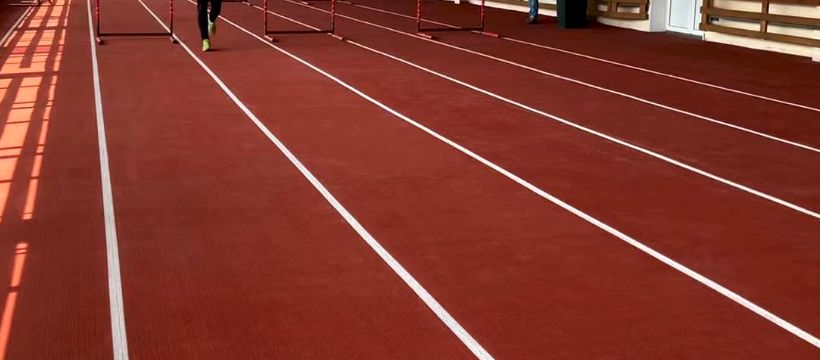
In an indoor training center, line marking is more than decoration. It gives athletes spatial rhythm and helps coaches organize drills. If the markings are inconsistent or hard to read under lighting, daily training becomes less efficient.
Clear lane lines and well-placed marks therefore become part of the performance environment.
![]()
V. What the Project Suggests After Delivery
1. A successful indoor track should disappear into training
The best training surface is often the one athletes stop thinking about. It provides predictable footing, clear guidance, and a stable feel without distracting from the work being done.
For a facility like Chelyabinsky, this is the real post-delivery test. The track should support training routines rather than becoming a maintenance topic.
2. Visual consistency protects the facility image
Indoor athletics spaces are compact, which means surface defects are more personal and more visible. Coaches, athletes, and visitors stand close to the track every day. A tidy, controlled surface helps the whole facility feel professional.
That is why this project is useful for buyers planning indoor training venues. It shows that prefabricated track selection should be connected to installation discipline, not treated as a material choice alone.
VI. Conclusion
Chelyabinsky Indoor Track and Field Training Center shows how indoor athletics projects have their own surface logic. They may avoid outdoor rain and sunlight, but they create stricter demands around close-range finish, edge treatment, line clarity, and repeated training use.
For indoor training halls, Huadong Track's value is strongest when product consistency is matched with careful substrate checking, precise layout, and disciplined finishing. That combination is what turns a roll material into a dependable training surface.
VII. FAQ
1. Is an indoor running track easier to install than an outdoor track?
Not always. Indoor projects avoid some weather risks, but they often have tighter spaces, more edge details, and closer visual inspection. That can make installation precision even more important.
2. Why does a prefabricated track make sense indoors?
A prefabricated track provides a more controlled material structure before installation begins. In indoor training facilities, that helps support consistent feel, clean appearance, and more predictable surface behavior.
3. What is the biggest risk in indoor track installation?
Poor substrate preparation and weak edge treatment are common risks. Because the space is compact, small installation problems are easier for athletes and coaches to notice.
4. How should images be used for this article?
Use two or three images from the Chelyabinsky folder: one overview, one lane perspective, and one close-up or alternate angle if available. Do not mix in outdoor stadium images.