When planning a sports facility, one of the most crucial decisions you'll make is choosing the right outdoor sports surface. Whether you're designing a football field, tennis court, or multi-sport complex, the surface you choose will have a significant impact on the safety, performance, and longevity of the venue. In this article, we’ll explore the various types of outdoor sports surfaces and their benefits to help you make an informed choice for your facility.
Understanding the Importance of Outdoor Sports Surfaces
The right outdoor sports surface is essential for ensuring the success of your facility. A well-chosen surface can enhance athletic performance, reduce injuries, and lower long-term maintenance costs. Here’s a brief overview of why selecting the correct outdoor sports surface matters:
Performance: The surface affects the speed, bounce, and control of the game. For example, a tennis court surface should provide consistent ball bounce, while a soccer field requires a durable, weather-resistant surface.
Safety: A good surface minimizes the risk of injuries. Surfaces like synthetic turf and rubber are designed to absorb shock and provide good traction, reducing the likelihood of slips and falls.
Maintenance: Different surfaces come with varying levels of maintenance. Synthetic surfaces and rubber are often lower maintenance than natural grass, which requires regular mowing and care.
Longevity: A high-quality surface ensures the facility remains in top condition for years, reducing the need for frequent repairs or replacements.
Exploring Different Types of Outdoor Sports Surfaces
There are several types of outdoor sports surfaces, each suited to specific sports and conditions. Let’s break them down and look at their characteristics, benefits, and ideal applications.
1. Synthetic Turf
Overview
Synthetic turf is a man-made material designed to replicate natural grass. It’s commonly used for sports like soccer, rugby, and multi-sport fields. The surface consists of synthetic fibers that are tufted into a backing material and then infilled with sand or rubber granules.
Benefits
Durability: Synthetic turf can withstand heavy foot traffic and extreme weather conditions, making it ideal for high-use sports fields.
Low Maintenance: Unlike natural grass, synthetic turf doesn’t need mowing, watering, or reseeding.
All-Weather Performance: Synthetic turf performs well in various weather conditions, including rain and extreme heat, without deteriorating quickly.
Consistency: It provides a consistent playing surface, with uniformity in bounce and traction, making it great for competitive play.
Best Sports
Soccer
Rugby
American Football
Multi-sport fields
Considerations
Upfront Cost: Synthetic turf has a high initial installation cost, but the maintenance savings over time can make it a cost-effective choice.
Heat Retention: In extremely hot weather, synthetic turf can become hot underfoot, requiring proper cooling measures.
2. Rubber Flooring (Prefabricated Rubber Surfaces)
Overview
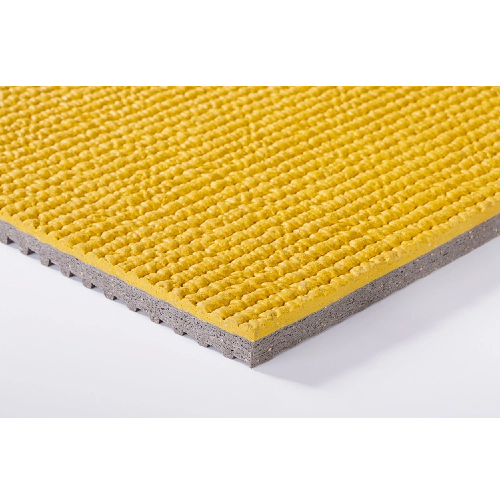
Prefabricated rubber surfaces are made from rubber granules bonded together to form a durable, resilient flooring material. Rubber is commonly used for running tracks, playgrounds, and fitness zones.
Benefits
Shock Absorption: Rubber surfaces are known for their excellent shock absorption, reducing the impact on joints and minimizing injury risk.
Slip-Resistant: The texture of rubber surfaces helps prevent slips, providing a safer environment for athletes.
Weather Resistance: Rubber flooring can withstand various weather conditions without significant degradation.
Low Maintenance: Rubber surfaces are relatively low maintenance compared to natural grass or even synthetic turf.
Best Sports
Running tracks
Playground areas
Fitness zones
Multi-sport courts
Considerations
Cost: The initial cost can be higher than some other surfaces, but the longevity and low maintenance costs make it a valuable investment in the long run.
Aesthetic Variety: While available in various colors, rubber surfaces may not offer the aesthetic appeal of natural grass.
3. Polyurethane Surfaces
Overview
Polyurethane surfaces are made from synthetic polymers and are often used for tennis courts, basketball courts, and other court-based sports. Polyurethane is a smooth, elastic material that provides an ideal playing surface for precision sports.
Benefits
Smooth and Consistent: Polyurethane provides a smooth and even surface, essential for sports like tennis and basketball, where consistent bounce is crucial.
Durability: It’s highly resistant to wear, making it suitable for high-traffic areas.
Low Maintenance: Polyurethane surfaces are easy to clean and require minimal upkeep.
All-Weather Performance: Polyurethane surfaces are designed to perform well in various climates, making them ideal for outdoor courts.
Best Sports
Tennis
Basketball
Multi-sport courts
Considerations
Surface Hardness: Polyurethane surfaces can be harder than other materials, which may increase the risk of injury in high-impact sports unless shock-absorbing layers are added.
Resurfacing: Over time, the surface may need to be resurfaced to maintain its performance.
4. Natural Grass
Overview
Natural grass is one of the oldest and most traditional outdoor sports surfaces. While it requires significant upkeep, it provides a natural aesthetic and soft landing for athletes, making it ideal for certain low-impact sports.
Benefits
Soft Landing: The natural cushioning of grass makes it ideal for sports where players may fall, such as football or rugby.
Aesthetic Appeal: Natural grass has a classic, pleasing look that many players and spectators appreciate.
Eco-Friendly: Natural grass is biodegradable and environmentally friendly, especially when compared to synthetic materials.
Best Sports
Golf
Cricket
Baseball
Low-impact field sports
Considerations
High Maintenance: Natural grass requires regular mowing, irrigation, fertilization, and reseeding, which can make it a costly and labor-intensive surface.
Weather Sensitivity: Grass fields can become muddy in wet weather and may need time to recover from heavy usage.
5. Asphalt and Concrete Surfaces
Overview
Asphalt and concrete are commonly used for outdoor courts, such as basketball, volleyball, and tennis courts. These materials are durable and cost-effective, providing a solid base for various sports.
Benefits
Affordability: Asphalt and concrete are budget-friendly options for outdoor sports facilities.
Durability: Both surfaces are highly durable and can handle heavy use for many years.
Multi-Use: Suitable for a wide range of sports and recreational activities.
Best Sports
Basketball
Tennis
Volleyball
General multi-purpose use
Considerations
Hard Surface: Asphalt and concrete are much harder than other surfaces like grass or rubber, which can increase the risk of injury from falls.
Maintenance: While durable, these surfaces require periodic resurfacing to prevent cracks and damage over time.
Benefits of Different Outdoor Sports Surfaces
Each type of outdoor sports surface offers unique benefits. Here’s a summary of the key advantages:
Surface Type | Benefits | Best Suited For |
Synthetic Turf | Durable, low maintenance, consistent performance in all weather conditions | Football, rugby, multi-sport fields |
Rubber Flooring | Shock absorption, slip-resistant, long lifespan | Running tracks, playgrounds, fitness zones |
Polyurethane | Smooth, consistent surface, easy maintenance, durable | Tennis courts, basketball courts, multi-sport |
Natural Grass | Soft, eco-friendly, aesthetic appeal | Golf, cricket, baseball, low-impact sports |
Asphalt/Concrete | Affordable, durable, multi-purpose use | Basketball, volleyball, recreational use |
![outdoor sports surfaces]()
How to Choose the Best Outdoor Sports Surface for Your Facility
When selecting an outdoor sports surface, consider the following factors to make the best choice for your facility:
1. Assess the Sport-Specific Needs
Different sports require different surface characteristics. For example, a tennis court requires a surface that provides consistent bounce, while a soccer field needs a durable, all-weather surface that can handle heavy foot traffic. Choose the surface based on the sport’s specific performance requirements.
2. Understand the Facility's Climate
The local climate plays a significant role in determining the right surface. Synthetic turf and rubber are better suited for areas with extreme weather conditions, while natural grass may be better for mild climates. Consider the long-term performance of the surface in varying temperatures and weather conditions.
3. Consider Long-Term Investment and Maintenance
Think about the long-term costs of maintenance. While natural grass may have a lower initial cost, it requires regular upkeep. Synthetic turf and rubber surfaces may have a higher initial cost but lower maintenance costs over time, making them more cost-effective in the long run.
Conclusion
Selecting the right outdoor sports surface is essential for creating a safe, high-performance environment for athletes. Whether you're opting for synthetic turf for its durability, rubber for its shock absorption, or natural grass for its classic appeal, each surface type has its unique advantages. It’s important to assess your specific needs, the sports being played, and the climate of your facility before making a decision.
If you're unsure which surface is best for your sports venue or need expert advice on installation, Huadongtrack offers professional guidance and high-quality solutions tailored to your needs. Their experienced team can help you select the most suitable outdoor sports surface, ensuring optimal performance and safety for athletes. Get in touch today to learn more about how to enhance your facility with the right surface solution.
FAQ
1. What is the best surface for a soccer field?
Synthetic turf is the most recommended surface for soccer because it offers durability, low maintenance, and excellent all-weather performance.
2. Can rubber surfaces be used for different sports?
Yes, rubber surfaces are versatile and can be used for various sports, including running, basketball, and multi-purpose courts.
3. How long do outdoor sports surfaces last?
Synthetic Turf: 8-15 years
Rubber Flooring: 10-15 years
Polyurethane: 10-15 years
Natural Grass: 1-5 years, depending on maintenance
4. Are there eco-friendly options for outdoor sports surfaces?
Yes, many outdoor sports surfaces, such as synthetic turf and rubber flooring, are made from recycled materials and are environmentally friendly.
5. How often should I maintain my outdoor sports surface?
Synthetic Turf: Annually for brushing and cleaning
Rubber and Polyurethane: Regular cleaning and occasional repairs
Natural Grass: Weekly mowing and fertilization