Replacing or installing a new athletic facility represents a massive capital expenditure for school districts. This critical decision directly impacts student safety and athletic compliance. It also dictates facility maintenance budgets for the next two decades. Traditional asphalt or basic spray-coatings still exist across many older campuses. However, modern athletic programs demand better, more resilient solutions. Administrators must balance biomechanical performance against daily weather exposure when selecting an outdoor school track flooring. This careful balance protects athletes and prevents constant repair cycles.
We will explore why a prefabricated rubber running track for schools serves as the most reliable, high-performance option available today. You will learn how to evaluate important technical specifications for a premium school running track surface. Finally, we will show you how to rigorously audit supplier quotes. You can avoid falling for hidden costs by asking contractors the right questions upfront.
Key Takeaways
Quality Control over Weather Risk: Prefabricated rolls eliminate the inconsistencies of on-site mixing (Cast-in-Place), guaranteeing uniform 13-15mm thickness and shock absorption.
Safety First: Factory-engineered textures provide the required 0.5 dynamic friction coefficient (World Athletics standard) while reducing joint impact for student-athletes.
Strict Installation Limits: The success of a prefabricated athletic track relies entirely on the sub-base (asphalt/concrete) leveling and drainage; poor site prep will ruin premium materials.
1. Evaluating the Material: Prefabricated vs. Cast-in-Place and Hybrids
Industry jargon often confuses facility managers during the initial research phase. Terms like "Tartan" actually refer to a legacy brand name from the 1960s. Today, polyurethane (PU) and rubber serve as the core materials. They form the foundation of any modern synthetic school track. Let us break down how prefabricated options compare directly against traditional cast-in-place systems.
The Prefabricated Advantage
Factory-controlled manufacturing gives prefabricated rolls a massive edge over alternatives. Facilities manufacture these rolls under perfectly regulated temperature and humidity levels. They guarantee uniform density across the entire product. You avoid thin spots completely. This consistency ensures every athlete experiences the exact same surface rebound.
Installation speed also improves dramatically. Crews glue these rolls directly to the prepared substrate. This efficient process minimizes delays caused by sudden rain or unexpected temperature drops. Wet-pour systems often face days of delay due to minor weather changes. Furthermore, high-quality prefab materials remain highly eco-friendly. They utilize recycled rubber components and maintain low VOC emissions.
The Trade-Offs (Transparent Risk)
No athletic surface system is perfect. Prefabricated surfaces demand a near-perfect sub-base. The asphalt or concrete foundation must be incredibly level before installation begins. Skilled contractors must handle the seam-welding carefully. If seams fail, moisture intrusion will occur. This trapped moisture easily causes surface bubbling over time.
![article image]()
2. Technical Specs: Biomechanics, Safety, and Compliance
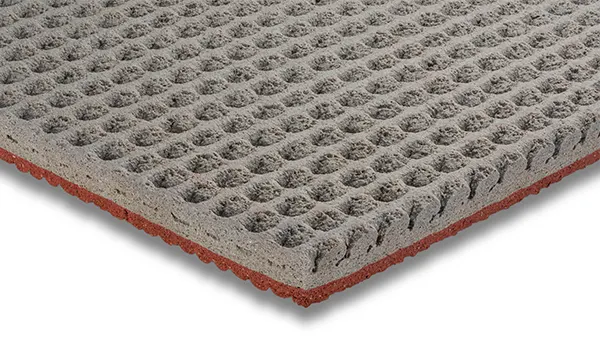
Student safety relies heavily on proper shock absorption and surface friction. Premium materials feature a specialized bottom layer designed for protection. This honeycomb design creates a powerful air cushion beneath the runner. It actively reduces joint impact during heavy sprints. This force reduction prevents common shin splints and knee injuries among student-athletes.
Meanwhile, the top layer ensures superior grip. It targets a dynamic friction coefficient above 0.5. This specific metric meets strict World Athletics standards. Runners maintain perfect traction even during wet conditions. Good traction prevents dangerous slipping incidents during rainy meets.
Compliance and Certifications
High schools should demand World Athletics (WA) or regional athletic association certifications. You might never host Olympic trials on your campus. However, these certifications guarantee baseline material safety. They prove the surface meets rigorous biomechanical testing. Furthermore, ISO quality and environmental standards ensure the materials contain no harmful heavy metals.
Permeable vs. Impermeable Surfaces
Your geographical location dictates your ideal surface structure. High-rainfall areas frequently require permeable systems. These designs prevent dangerous standing water from ruining events. Conversely, dry or high-performance facilities often utilize impermeable surfaces. They rely on precise slope drainage to clear occasional moisture.
System Type | Climate Suitability | Drainage Mechanism |
Permeable Track | High-rainfall regions | Water flows directly through the porous surface layers into the base. |
Impermeable Track | Dry or professional-grade facilities | Precise 1-2% surface slopes push water toward designated edge drains. |
3. Budgeting: Real Costs and Funding
You need realistic cost baselines before starting construction. Let us examine current 2025 estimates for a standard project. Materials for a high-quality rubber track for schools cost roughly $25 to $40 per square meter. Professional installation adds another $10 to $20 per square meter. Your final upfront budget sits between $35 and $60 per square meter.
Compare these figures to intensive alternatives. A full resurfacing project costs between $180,000 and $250,000 for a standard 400-meter layout. Meanwhile, premium collegiate systems often exceed $300,000. Factory-direct materials save your district massive amounts of money over the long term. You avoid repainting or spraying the surface every three to five years.
Funding Strategies
Most public schools need creative ways to secure infrastructure funding. You should consider these realistic funding avenues:
Apply for municipal grants dedicated specifically to youth sports development.
Engage parent booster clubs to organize community fundraising events.
Secure local business sponsorships in exchange for prominent facility banners.
Launch digital crowdfunding campaigns highlighting improved student safety metrics.
4. Infrastructure Realities: Sub-base and Climate Constraints
Every athletic surface functions as a complex multi-layered system. Your new surface relies entirely on its foundation. You must guarantee strict planar limits for the base. This applies equally to asphalt or concrete foundations. Even premium rubber will fail if the ground beneath it shifts or sinks.
New asphalt requires significant curing time. Fresh asphalt outgasses oils over several weeks. These natural oils prevent synthetic adhesives from bonding correctly. You must wait at least 28 days before applying any glue to new asphalt.
Climate and Installation Windows
Weather dictates your project timeline. Consider these critical installation constraints before scheduling contractors:
Crews require ambient temperatures above 60°F (15°C) to apply adhesives successfully.
Northern climates experience freeze-thaw cycles requiring highly flexible base layers.
Southern regions face severe UV degradation requiring specialized resistant topcoats.
Humidity levels must remain low to prevent trapped moisture under the rolls.
5. How to Read a Track Quote and Vet Contractors
Equip yourself to audit contractor proposals rigorously. You need an "apples-to-apples" quote check. Ensure the quote explicitly separates base repair costs from the surface material and labor. Some contractors hide massive concrete repair fees inside the general installation line item. Transparency protects your school budget.
You can also bypass distributors entirely. Working directly with manufacturers yields 10 to 30 percent cost efficiencies. Middlemen often add huge markups without providing additional installation value.
Hard Questions for the Contractor
Ask these specific questions to weed out unreliable bidders:
Contractor Question | Why It Matters |
Are you using proprietary crews or independent sub-contractors? | In-house crews typically offer better quality control and brand-specific expertise. |
Does this proposal include a mandatory site laser-survey? | A proper survey guarantees your sub-base meets required planar tolerances before glue goes down. |
What specific warranty protections cover future seam separations? | Seams represent the most common failure point in rolled materials. You need robust coverage. |
6. Long-Term Maintenance: Protecting the Investment
Consistent maintenance protects your initial financial investment. You should allocate $1,000 to $2,000 annually for routine upkeep. This small budget drastically extends the overall surface life. Basic maintenance involves clearing debris, washing the surface, and inspecting heavy-use zones.
The Maintenance "Blacklist"
Never use harsh chemicals or abrasive tools. You must permanently ban the following items from the facility to prevent chemical burns or physical tearing:
Steel wool or stiff wire brushes.
Acetone or turpentine.
Gasoline or industrial solvents.
High-pressure power washers exceeding 1,500 PSI.
Proactive Inspections
Schedule annual checks focusing heavily on seam integrity. Block all heavy vehicle traffic from crossing the lanes. Maintenance trucks easily damage the rubber matrix. You should also rotate training areas regularly. This simple habit protects lane lines from localized wear caused by repeated sprint starts.
Conclusion
Choosing a reliable prefabricated system represents a highly strategic investment. Schools gain predictable quality, improved student safety, and long-term budget stability. You eliminate the guesswork associated with wet-pour installations. Factory-controlled thickness ensures your athletes always run on a safe, compliant surface.
Administrators should take immediate action. Start by scheduling a professional geotechnical or laser survey of your current field base. Complete this crucial step before requesting material samples or finalizing a budget. Accurate ground data ensures your new athletic facility succeeds for decades.
FAQ
Q: How long does a prefabricated school running track last?
A: With proper maintenance, a high-quality prefabricated track has a lifespan of 10 to 15 years, and often up to 20 years, before requiring major renovation.
Q: Is it cheaper to spray-coat our old asphalt or install prefabricated rubber?
A: Spray-coating costs less upfront but lasts only three to five years. It also offers minimal shock absorption. Prefabricated rubber has a higher initial cost but delivers vastly superior long-term value and a much safer profile for students.
Q: What is the standard thickness for a high school track?
A: The international standard recommendation for competitive and high-traffic school tracks is between 13mm and 15mm. This depth guarantees proper force reduction.
Q: Can prefabricated tracks be installed in any weather?
A: No. While the material is pre-made, the adhesives require a dry surface and ambient temperatures above 60°F (15°C) to cure properly and prevent seam failure.