Improving spike resistance in a prefabricated running track requires a durable wearing compound, controlled vulcanization, consistent layer thickness and reliable support after installation. A high tensile-strength value alone cannot describe how a surface responds to repeated spike contact. Manufacturers and project teams need to evaluate local cutting, tear growth, surface wear and the condition of the bonded assembly together.
Keywords: spike resistant running track, prefabricated rubber track durability, rubber tear resistance, track vulcanization, running track installation
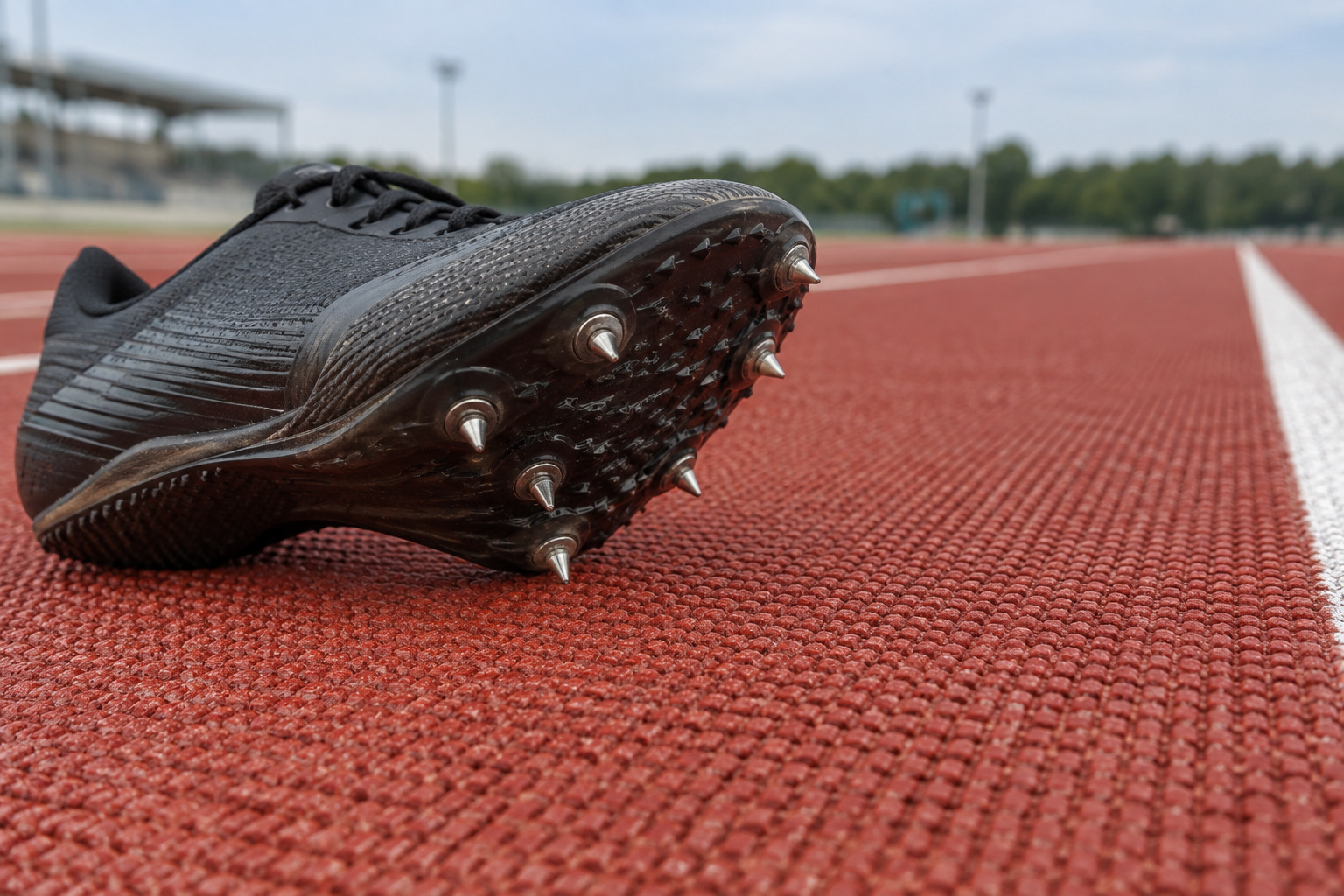
![Athletics spike shoe beside the embossed surface of a prefabricated rubber running track]()
Figure 1. Athletics spike shoe beside the embossed surface of a prefabricated rubber running track. AI-generated technical illustration.
Understand How Spikes Damage a Rubber Surface
A spike concentrates load over a small area. During running, contact includes compression and shear, and local stress changes as the athlete accelerates, brakes or turns. A small cut may develop into a tear if subsequent loading repeatedly opens it. Abrasive dirt and inappropriate footwear can add a separate source of wear.
The performance question is therefore broader than whether a spike can mark a new sample. Evaluate the size and progression of damage under a defined procedure. The spike geometry, applied load, number of contacts, test temperature and supporting base all affect the outcome. A casual demonstration with an unspecified shoe cannot establish a comparable durability rating.
Develop the Wearing Compound for Balanced Properties
Polymer selection, reinforcing fillers, dispersion and the cure system influence rubber strength and resistance to local damage. Increasing hardness alone can change deformation and grip without necessarily improving the complete running surface. Likewise, a higher rubber-content claim does not reveal whether mixing or cure control is adequate.
For a dual-layer construction, assess the wearing compound separately and then within the complete sheet. The top layer must withstand surface contact while working with the resilient base. Changes intended to improve wear should be checked for their effects on tensile behavior, tear resistance and the sports-performance requirements of the intended system.
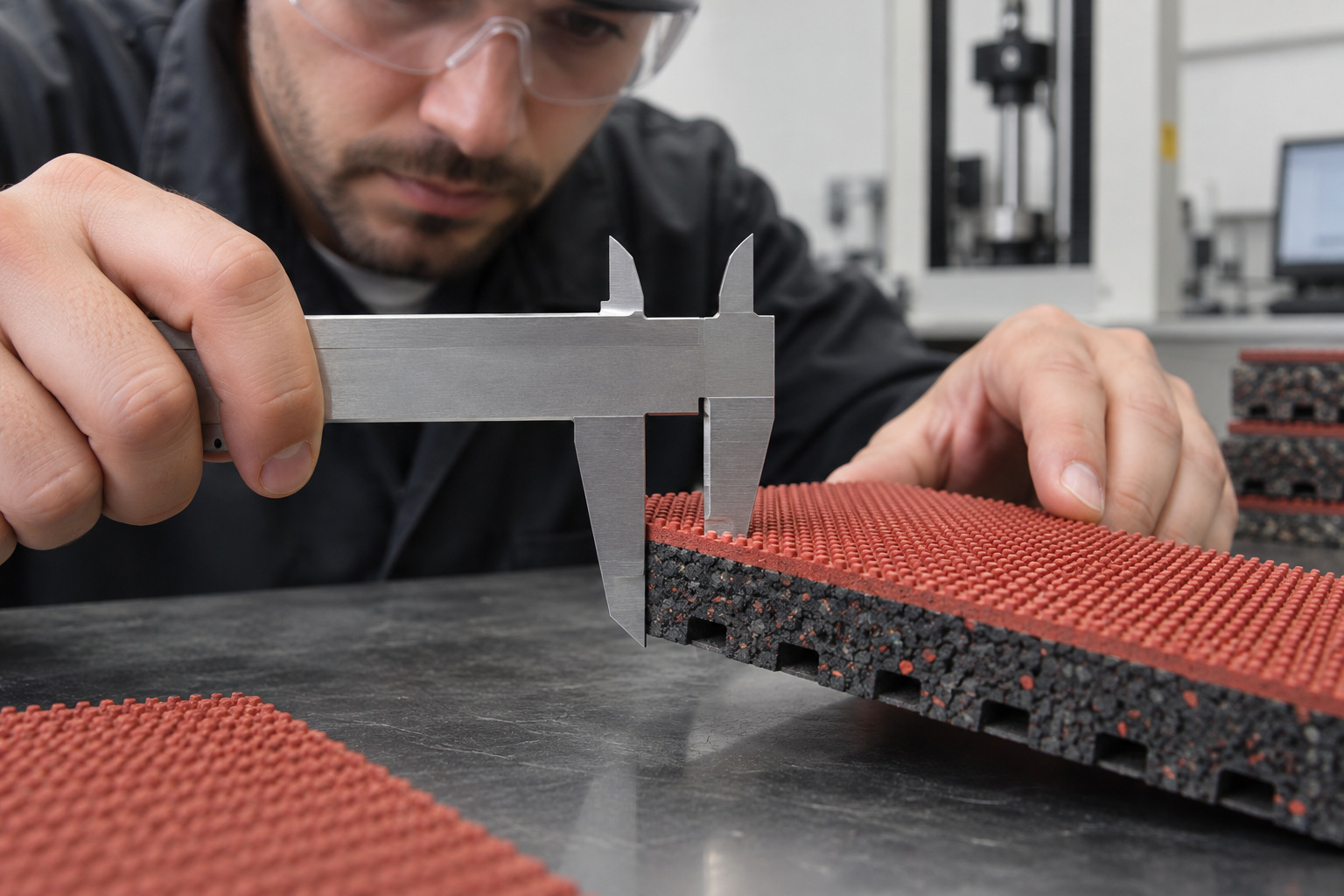
![Technician examining the thickness and construction of a prefabricated rubber track sample]()
Figure 2. Technician examining the thickness and construction of a prefabricated rubber track sample. AI-generated technical illustration.
Control Thickness and Vulcanization in Production
Thin areas in the wearing layer reduce the available material before a localized cut reaches the lower layer. Inspect the thickness profile across the sheet and along production lengths rather than relying on one central measurement. Distinguish total thickness from the thickness of the dense wearing portion and from the depth of surface embossing.
Vulcanization must develop the intended rubber network consistently. Uneven temperature, residence time or compound preparation can produce variation within a batch. Process validation should connect the chosen production settings with finished-material results. Neither longer cure nor more crosslinking is automatically beneficial; the suitable cure condition depends on the compound and required balance of properties.
Use Several Tests to Describe Durability
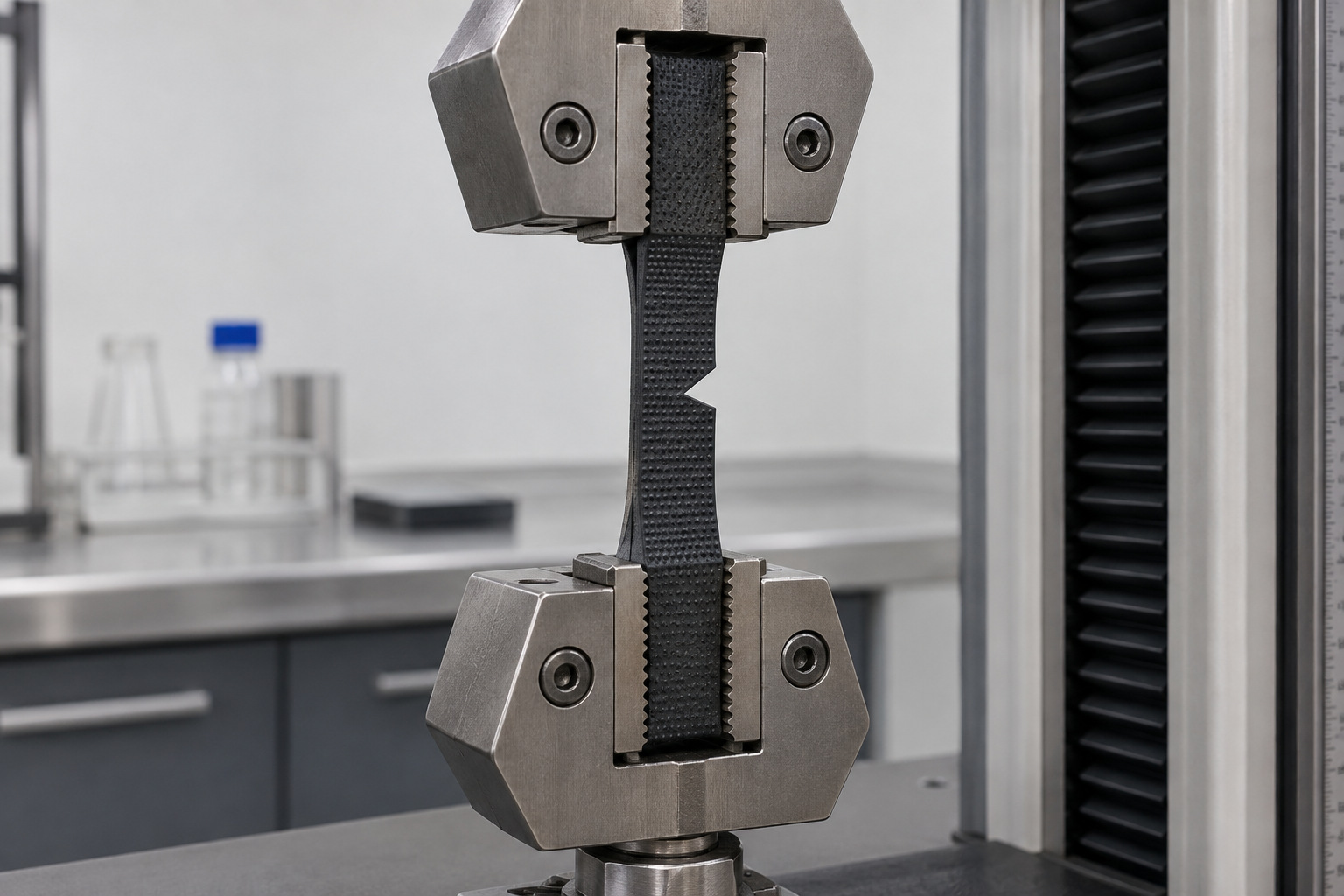
ASTM D624 measures rubber tear resistance under defined conditions. It is useful supporting evidence, but its results do not directly establish the life of a running track under spikes. The project also needs a relevant, agreed spike-resistance assessment for the finished sports surface.
| Evaluation | What it helps explain | What must be recorded |
| Tensile properties | Strength and extension under tension | Specimen geometry, direction and conditioning |
| Tear resistance | Resistance to propagation of a defined tear | Method, specimen and test conditions |
| Repeated spike contact | Local damage under a stated protocol | Spike geometry, load, cycles and observations |
| Abrasion assessment | Wear under the chosen contact mechanism | Abrasive medium and measurement method |
| Conditioned retesting | Property changes after specified exposure | Exposure sequence and retained performance |
![Notched rubber coupon held between laboratory grips for examination under load]()
Figure 3. Notched rubber coupon held between laboratory grips for examination under load. AI-generated technical illustration.
Preserve Material Performance During Installation
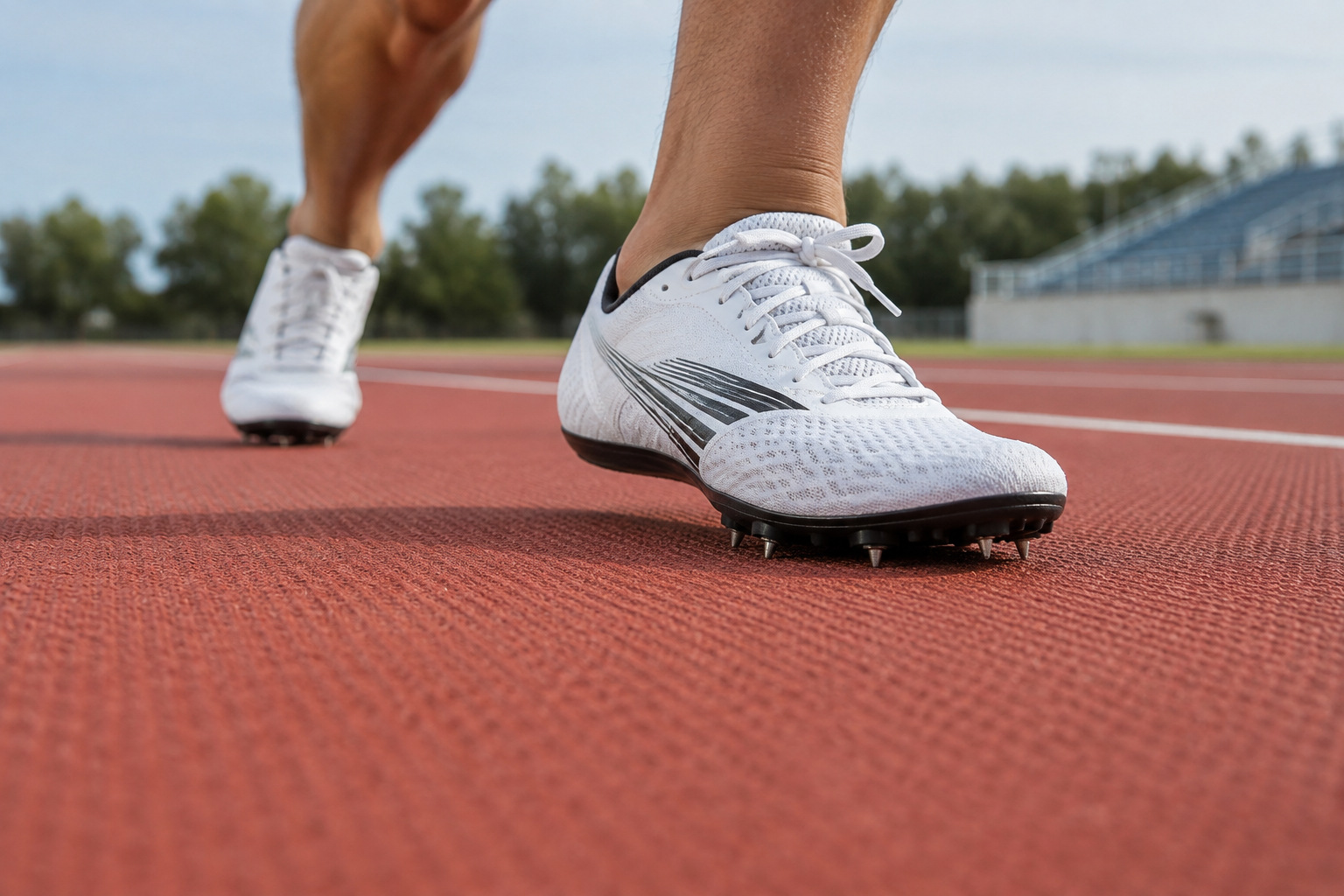
A strong sheet can still suffer concentrated movement above an unsupported area. Prepare a flat, stable foundation and establish the adhesive contact required for the backing. Air pockets, ridges and unbonded edges alter local support and can allow repeated flexing near a developing defect.
Handle rolls without dragging the wearing face over abrasive concrete. Use approved cutting and consolidation methods, protect fresh work from tools and restrict access during cure. In heavily used areas such as starts and takeoff approaches, inspect the installed surface closely before opening. Installation quality supports the material's intended performance; it cannot convert an unsuitable compound into a spike-resistant one.
![Short shoe spikes contacting a fully supported prefabricated rubber running surface]()
Figure 4. Short shoe spikes contacting a fully supported prefabricated rubber running surface. AI-generated technical illustration.
Manage Footwear and Inspect High Use Areas
Use the spike geometry and length permitted by the surface supplier and the applicable competition rules. An event's maximum permitted spike length is not automatically the right choice for every surface. Keep sand and grit off the track and prohibit equipment that can cut or gouge the wearing layer.
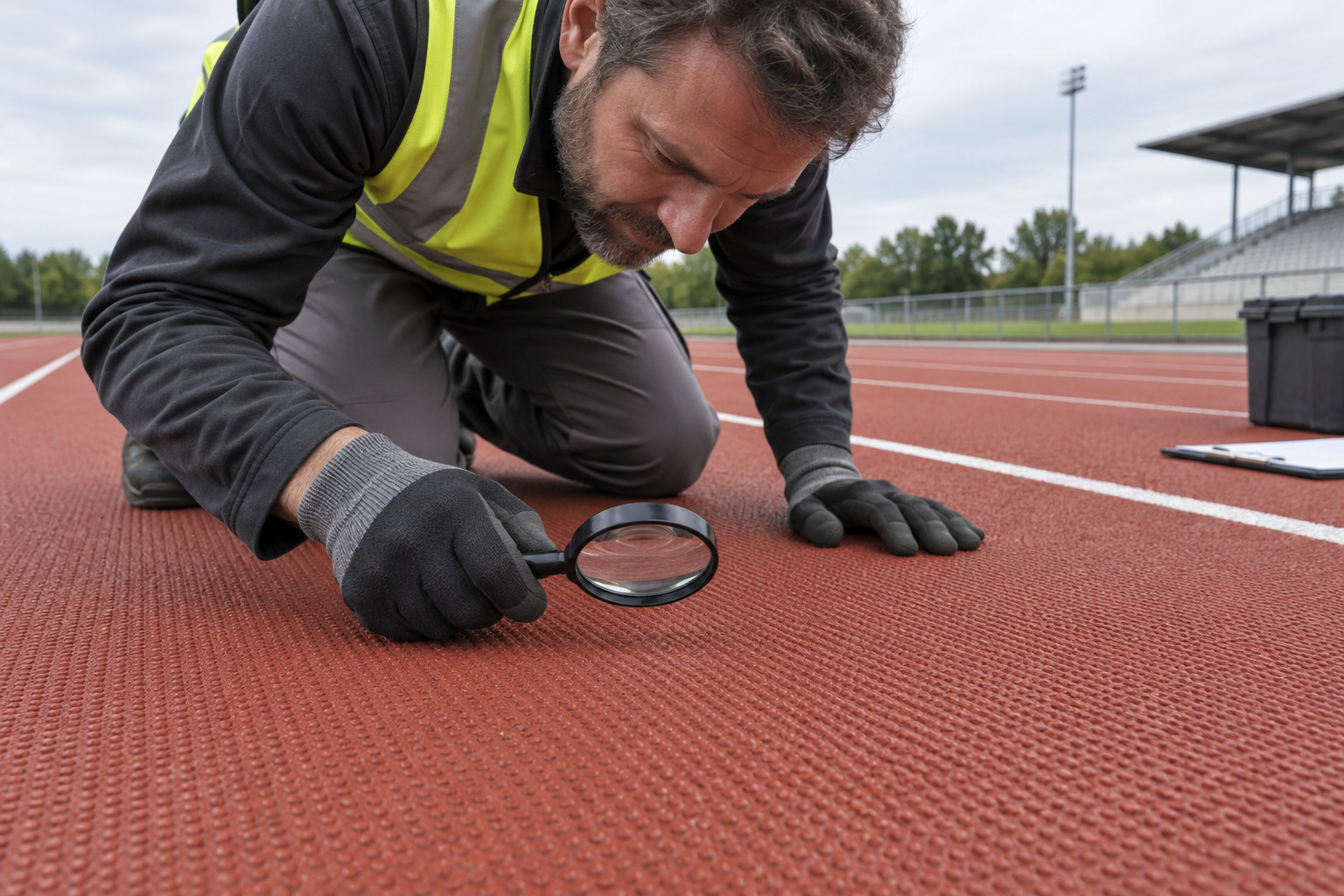
Inspect starts, inside bends and takeoff approaches at intervals matched to use. Record small defects and whether they are growing. Early local repair can prevent a damaged edge from receiving repeated load, but recurring damage should trigger a review of footwear, support conditions and the material specification.
![Inspector examining localized surface marks on an embossed prefabricated rubber track]()
Figure 5. Inspector examining localized surface marks on an embossed prefabricated rubber track. AI-generated technical illustration.
Specify Evidence for a HUADONG Project
For a GOTER running track, describe the expected spike use, training volume and high-load zones in the project brief. Request results for the proposed construction, including the methods used and any conditioning. A useful technical discussion connects production controls, installation requirements and maintenance with the facility's actual workload.
Frequently Asked Questions
1. Is a harder track always more resistant to spikes?
No. Hardness is one property. Tear behavior, compound formulation, wearing-layer thickness and support also matter, and sports performance must remain appropriate.
2. Can a tensile test replace a spike-resistance test?
No. Tensile loading and repeated localized spike contact are different mechanisms. Tensile results should be considered alongside other relevant material and surface tests.
3. Will a thicker track automatically last longer?
Total thickness does not identify how much durable wearing material is present. Compare the layer structure, tested properties and intended use before drawing a service-life conclusion.
4. Can poor bonding accelerate surface damage?
Unsupported areas can permit additional flexing and movement. Investigate the bond and foundation when damage repeatedly occurs in the same location.
5. How should spike resistance be described in a tender?
Name the applicable method or agreed protocol, specimen construction, conditioning and acceptance criteria. Avoid an unsupported percentage improvement or a service-life promise derived from an informal demonstration.