Indoor and outdoor prefabricated running tracks need different exposure and installation assessments even when their appearance is similar. Outdoor systems must account for sunlight, rain, temperature variation and drainage. Indoor projects place additional emphasis on building conditions, emissions, ventilation and the requirements of the intended indoor use. Product selection should address the complete surface, adhesive and foundation assembly for its actual environment.
Keywords: indoor prefabricated running track, outdoor rubber running track, track weather resistance, indoor sports flooring emissions, rubber track specification
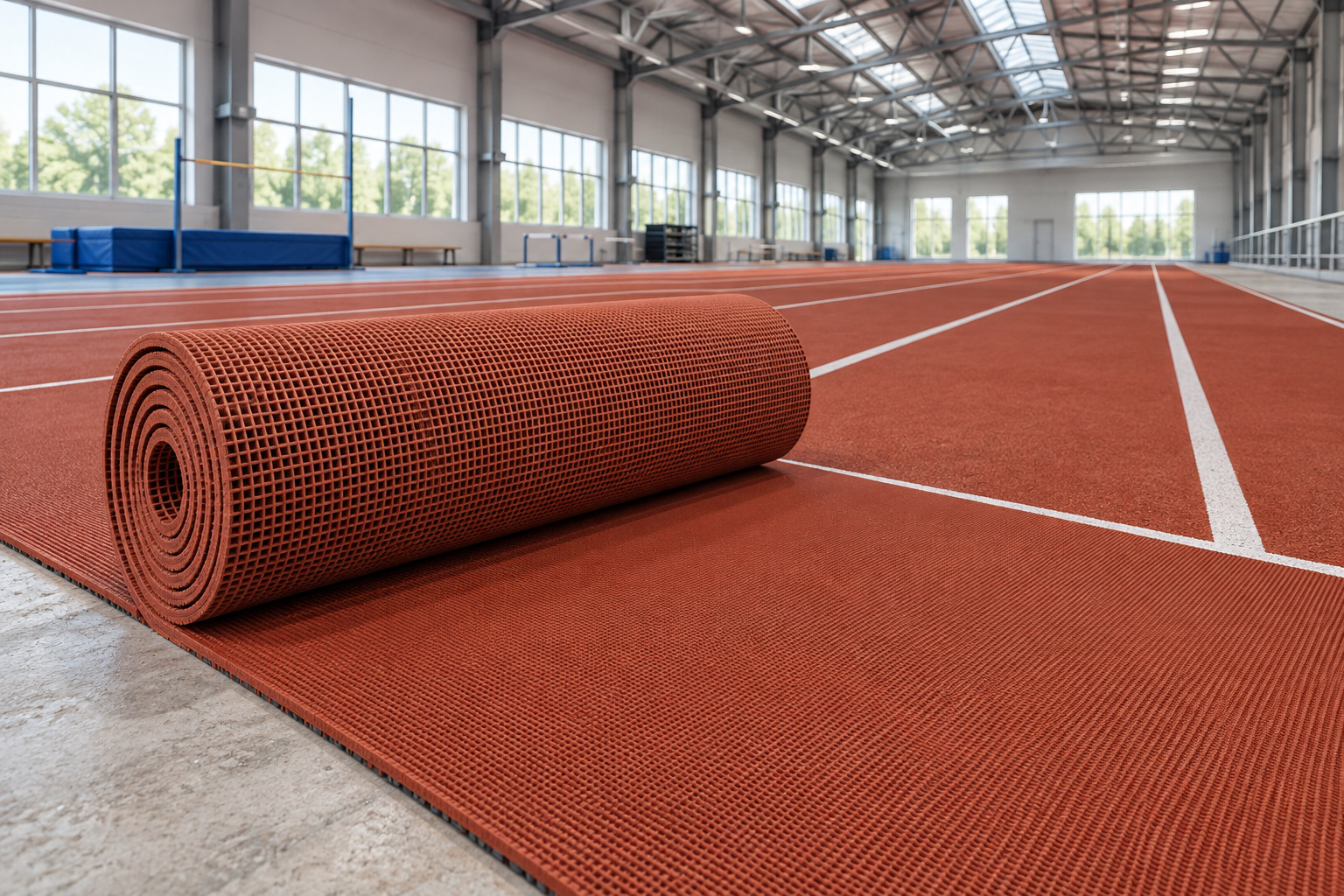
![Indoor athletics training lanes surfaced with prefabricated red rubber]()
Figure 1. Indoor athletics training lanes surfaced with prefabricated red rubber. AI-generated technical illustration.
Start With the Facility Use
A straight indoor training lane, a competition oval and a shared sports hall do not necessarily need the same construction. Determine whether athletes will use spikes, whether other sports share the surface and whether temporary equipment or vehicles will cross it. Those decisions influence wear, support and maintenance requirements in both environments.
Confirm the applicable sporting and building requirements early. Do not assume that a surface suitable for an outdoor athletics venue is automatically appropriate for a banked indoor track or a multipurpose hall. Likewise, a comfortable gym floor is not necessarily a track surface approved for spike use.
Specify Outdoor Exposure as a Combined Problem
Sunlight and heat can affect color and rubber properties over time. Rain and dew expose the surface and joints to moisture, while temperature cycling can influence the material and bonded interfaces. The foundation and drainage determine whether water leaves the area or remains where it can create further problems.
Outdoor selection should therefore examine weathering behavior, wet-use requirements, adhesive exposure limits and edge details together. In freezing climates, pay particular attention to water trapped below the surface and the condition of the base. A low-absorption sheet cannot compensate for failed drainage or an unstable foundation.
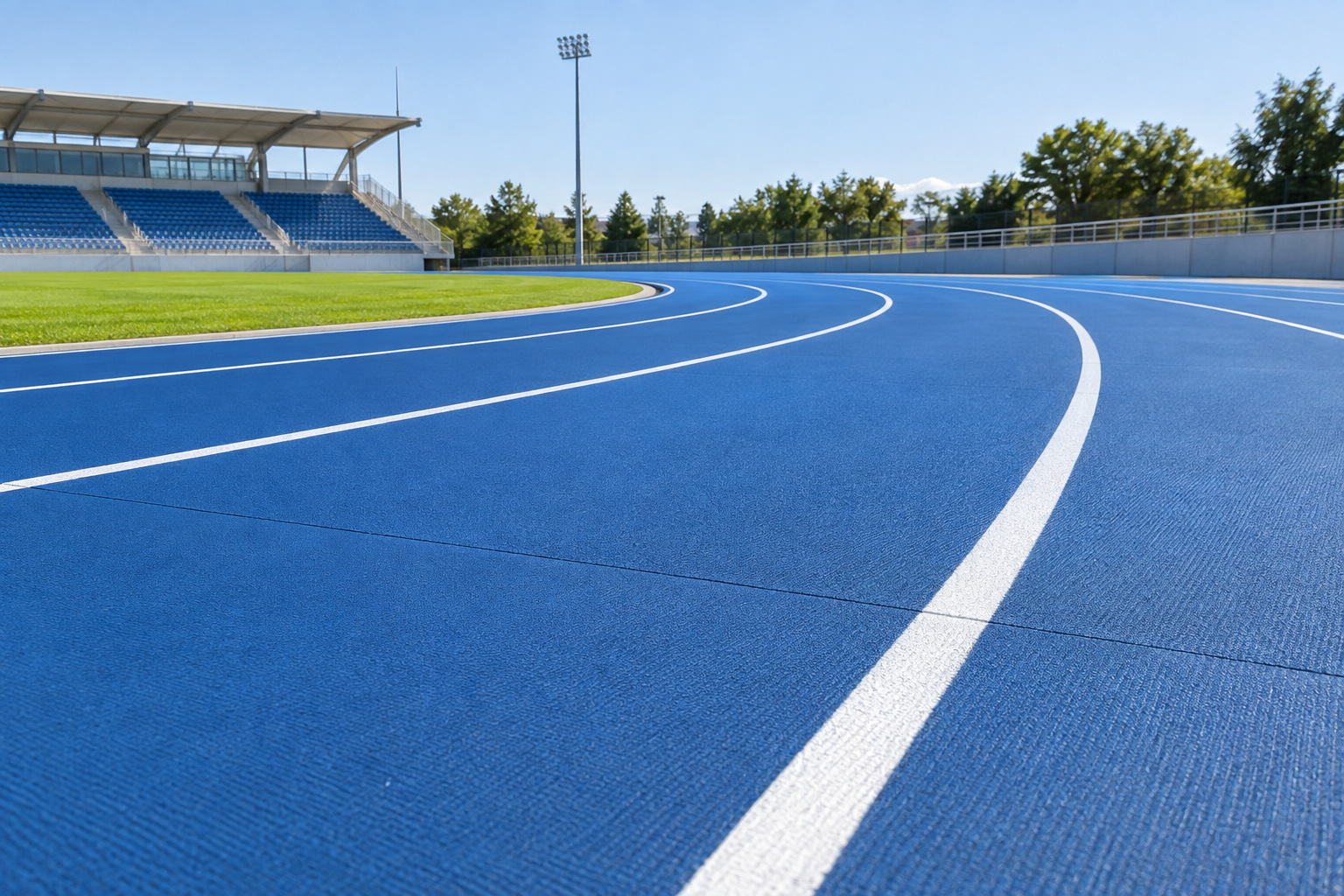
![Blue prefabricated rubber running track exposed to outdoor sunlight]()
Figure 2. Blue prefabricated rubber running track exposed to outdoor sunlight. AI-generated technical illustration.
Read Weathering Reports Beyond the Headline
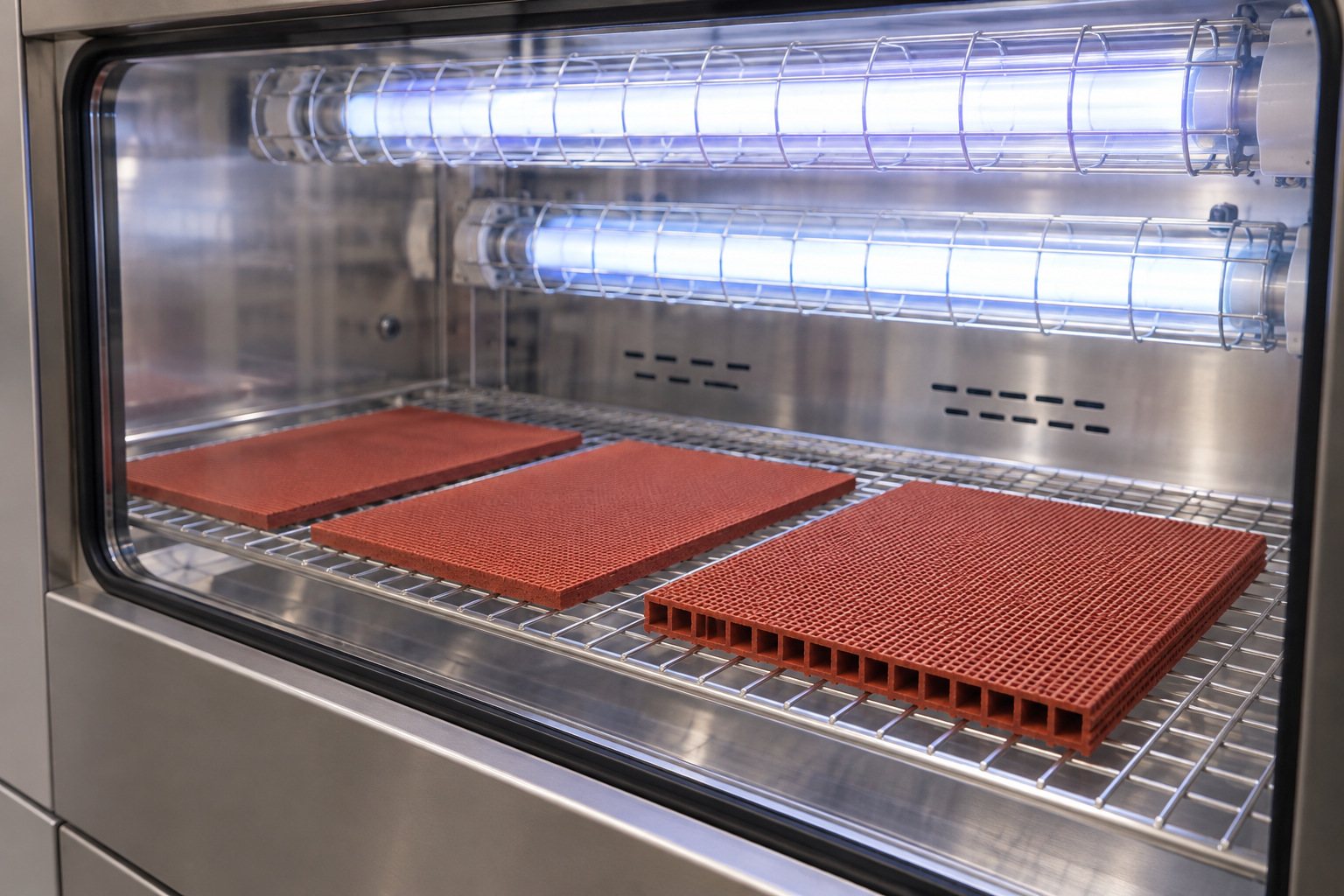
Accelerated weathering reports should identify the apparatus, exposure cycle, duration and properties measured afterward. ASTM G154 describes operation of fluorescent ultraviolet exposure apparatus. It does not by itself provide a universal pass or fail result for a running track.
Ask what changed after exposure: color, surface condition, tensile properties or another relevant characteristic. Compare specimens tested under the same conditions. Do not translate an arbitrary number of chamber hours directly into years of service unless a valid correlation exists for the product and environment. Laboratory exposure supports material evaluation, while site conditions still influence actual performance.
![Rubber specimens visible through a guarded laboratory weathering chamber window]()
Figure 3. Rubber specimens visible through a guarded laboratory weathering chamber window. AI-generated technical illustration.
Address Indoor Air and Building Conditions
Indoor assessment should cover both the flooring and the installation materials. Low odor is not the same as measured low emissions, and a general environmental claim does not identify a test method or the full installed assembly. Request the evidence required by the project's indoor-air specification.
Coordinate ventilation, temperature and humidity during installation and curing. The building should provide the conditions required by the surface and adhesive instructions. Review any applicable reaction-to-fire or other building requirements with the responsible project team, using reports for the relevant assembly. An athletics performance certificate does not establish compliance with every indoor building requirement.
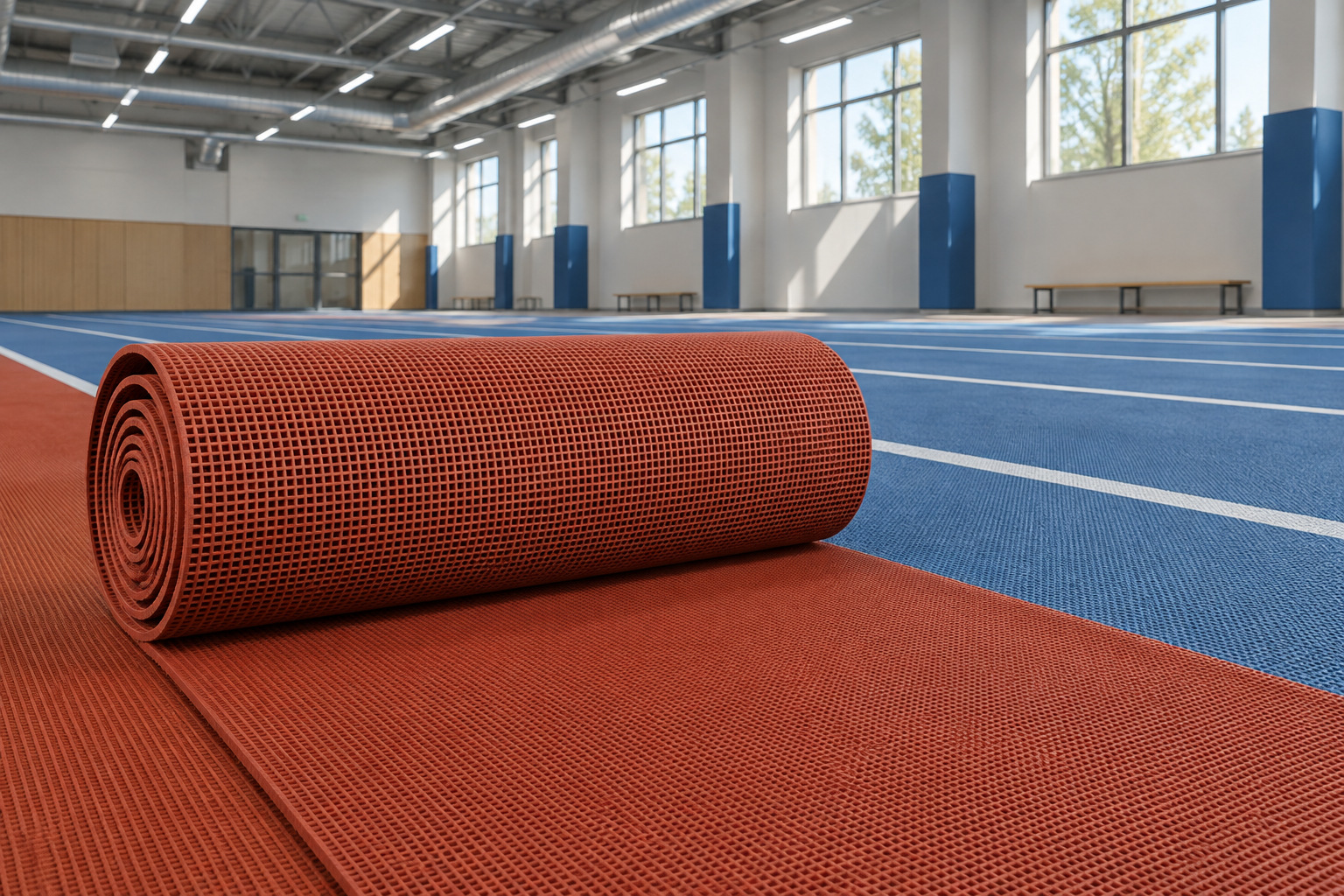
![Ventilated indoor training hall with prefabricated rubber lanes and exposed ceiling ducts]()
Figure 4. Ventilated indoor training hall with prefabricated rubber lanes and exposed ceiling ducts. AI-generated technical illustration.
Compare the Project Requirements Side by Side
| Issue | Outdoor emphasis | Indoor emphasis |
| Weather exposure | Sunlight, rainfall and thermal cycling | Building climate and occasional solar exposure |
| Water management | Surface drainage and perimeter details | Slab moisture and wet-cleaning control |
| Adhesive selection | Exterior exposure and site weather | Substrate compatibility, emissions and curing conditions |
| Environmental evidence | Relevant product and project requirements | Indoor-air and building-specific evidence |
| Surface use | Training, competition and weather-dependent access | Athletics, shared uses and equipment loads |
| Maintenance | Grit, leaves and functioning drains | Dust, tracked-in dirt and cleaning residues |
The same issue can exist in both columns. The difference is the exposure profile and how the complete design responds to it, not a simple indoor or outdoor label on the roll.
Plan Cleaning and Maintenance for the Setting
Outdoors, remove grit and organic debris and keep drainage routes clear. Inspect shaded areas where dirt or moisture may persist. Indoors, control tracked-in dirt at entrances and use cleaning methods that avoid incompatible residues or unnecessary soaking.
For both settings, use the supplier's cleaning guidance and check compatibility before introducing a new chemical or machine. Protect the track from concentrated equipment loads and inspect high-use areas. Maintenance should preserve texture and bonding rather than merely improve color for an event.
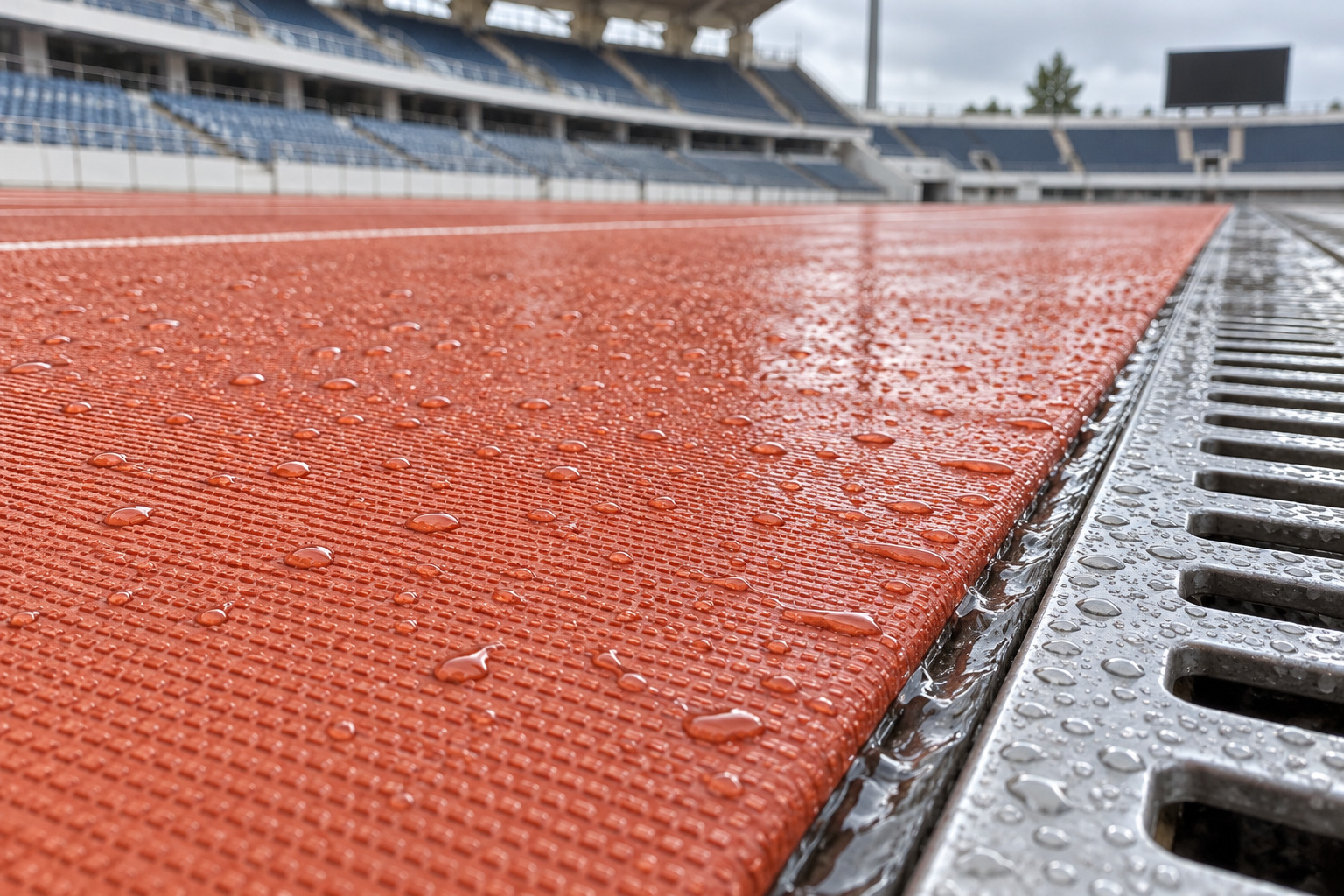
![Rain droplets on a prefabricated track beside a functioning linear drain]()
Figure 5. Rain droplets on a prefabricated track beside a functioning linear drain. AI-generated technical illustration.
Discuss the Complete Environment With HUADONG
Use the HUADONG prefabricated track range as a starting point for product discussions, then provide the actual use and exposure. For projects considering GODER, confirm the proposed construction, adhesive and required reports for the specific indoor or outdoor application. Avoid extending a model's suitability beyond the documented configuration.
Frequently Asked Questions
1. Can the same rubber track be used indoors and outdoors?
Some products may suit both, but the proposed construction and adhesive need approval for each environment. Confirm the complete assembly and project requirements.
2. Does an indoor track need ultraviolet resistance?
Exposure is usually different from outdoors, but direct sunlight through glazing can still matter. Assess the actual building conditions rather than assuming there is no exposure.
3. Does low odor prove that a floor meets an emissions requirement?
No. Odor and emissions testing are different. Request the relevant report for the specified materials and installed assembly.
4. Can outdoor adhesive automatically be used inside a sports hall?
Not automatically. Check indoor suitability, substrate compatibility, installation conditions and the project's emissions requirements in addition to bond performance.
5. Are indoor and outdoor maintenance schedules identical?
No. Use intensity and exposure should determine the schedule. Outdoor debris and drainage need attention, while indoor dirt control and cleaning residues may be more prominent.