Operating a community sports facility means balancing contradictory demands every single day. You must provide safe, biomechanically sound courts for athletes while accommodating high-traffic, non-sporting events like assemblies and fairs. Facility managers constantly juggle these opposing needs to keep spaces functional. Traditional wood or PVC floors often suffer accelerated wear under such diverse conditions. They frequently require expensive, cumbersome protective covers when subjected to heavy, non-athletic loads. Constant repairs disrupt schedules and drain maintenance resources quickly.
A properly specified multifunctional rubber sport surface neutralizes this conflict effectively. This guide examines the technical criteria, material formats, and installation realities needed to evaluate resilient flooring solutions based on performance and compliance standards. You will learn how to match material architecture to subfloor realities, mitigate installation risks, and ensure your next facility upgrade meets both athletic and community demands perfectly.
Key Takeaways
TCO Advantage: Rubber surfaces dramatically lower lifecycle costs by eliminating the need for periodic sanding, refinishing, or full-surface replacements common with wood or thin PVC.
Format Dictates Function: Choosing between vulcanized rolls, modular tiles, and poured systems depends on subfloor conditions, required downtime, and primary facility use.
Biomechanical Protection: High-quality rubber flooring integrates specific shock absorption and "lateral forgiveness" metrics to protect athletes' joints during repetitive multi-sport play.
Implementation Risk Mitigation: Evaluating subfloor moisture and deciding between surface repair (resurfacing) versus full reconstruction are critical steps before procurement.
Municipal centers cannot afford single-use spaces today. They must maximize every square foot to serve diverse populations. This creates a severe mixed-use dilemma. A single gymnasium might host a youth basketball tournament on Saturday. By Sunday, it transforms into an assembly hall or a vendor fair. Floors must withstand athletic footwear alongside heavy rolling loads. Retractable bleachers, staging equipment, and dense pedestrian foot traffic test the limits of standard materials. Installing dedicated community sports flooring solves this constant functional clash without compromising safety.
When evaluating flooring options, facility directors must look beyond the initial purchase price. Think about the operational lifecycle and daily maintenance burden instead. Traditional alternatives require intense, specialized maintenance routines. Wood surfaces demand frequent sanding and moisture-sensitive coatings. Thin PVC surfaces scuff easily under non-athletic loads and often require full replacement if deeply gouged. High-density rubber materials eliminate the need for waxing, stripping, and refinishing entirely. You drastically reduce your ten-year operational burden. Maintenance staff save hundreds of hours annually, allowing them to focus on other critical facility needs.
Downtime reduction offers another massive operational advantage. Traditional wood floors require extensive acclimation periods before installation begins. Sealing and curing processes subsequently shut down facilities for weeks. Certain modular rubber systems allow for phased installations instead. Loose-lay or interlocking formats go down quickly over existing substrates. You can keep sections of your community center open while installers work on designated zones. This minimizes disruptive facility closures significantly and maintains revenue streams from facility rentals.
![Multifunctional rubber sport surface installation]()
Choosing the right structural format determines your facility's long-term success. We categorize a multi-sport rubber surface into three primary architectures. Each format serves distinct subfloor conditions, budget constraints, and usage requirements.
| | | Multi-Sport Rubber Surface Formats Comparison |
Format Type | Manufacturing Process | Best Application Scenarios | Installation Profile |
Vulcanized Rubber Rolls | Heat and pressure fusing layers | High-traffic arenas, extreme durability needs | Full-spread adhesive glue-down |
Modular Rubber Tiles | Interlocking slide-lock mechanisms | Multi-use zones, functional training areas | Loose-lay or partial adhesive |
Poured-in-Place Hybrids | On-site polyurethane/rubber mixing | Custom logos, calibrated energy return | Seamless liquid application |
Prefabricated vulcanized rubber rolls offer unparalleled structural integrity. Manufacturers use intense heat and pressure to fuse multiple layers together during vulcanization. These distinct layers never separate under stress. This process creates a dense, non-porous finish capable of handling immense weight. Vulcanized rolls work best for high-traffic areas requiring extreme durability. They deliver a consistent biomechanical response across the entire court. Facility managers face zero risk of surface delamination over time, even when exposing the floor to heavy mechanical lifts or rolling bleachers.
Modular rubber tiles provide unmatched flexibility and targeted repair capabilities. They often utilize robust interlocking mechanisms like slide-lock systems to ensure tight, seamless seams. These tiles come in significant thickness variations, often reaching up to 3/8-inch or more. They are ideal for multi-use zones and functional weight training spaces. If heavy equipment damages a specific section, maintenance teams can easily swap out the affected tiles. You never need to replace the entire floor, keeping lifecycle disruptions incredibly low.
Poured-in-place polyurethane and rubber hybrids create completely seamless athletic environments. Installers pour these specialized liquid systems directly over the prepared subfloor. Standard industry thickness ranges fall between 6mm to 17mm, depending on the required shock absorption. This liquid application ensures maximum aesthetic customizability. Facilities can easily embed complex team logos, functional markings, and vibrant color schemes directly into the wear layer. These hybrids suit facilities requiring highly calibrated energy return and a perfectly smooth, professional aesthetic.
Key Evaluation Dimensions: Biomechanics and Compliance
Evaluating performance requires understanding specific athletic metrics. We must balance injury prevention with long-term structural durability. Modern athletic standards demand surfaces that protect players without hindering their physical performance.
Shock Absorption and Energy Return: Flooring must compress adequately upon impact. This compression absorbs shock and protects athletes' joints during aggressive, repetitive play. However, it must also return energy efficiently. If a surface absorbs too much energy, it feels sluggish and causes rapid player fatigue. Quality systems typically provide a baseline of 14% or higher shock absorption. The exact performance metric depends heavily on the chosen material thickness and the underlying pad structure.
Lateral Forgiveness and Traction: Athletes constantly make sudden, explosive directional changes. A proper multifunctional floor allows for slight lateral movement underfoot. We call this critical feature "lateral forgiveness." It prevents dangerous ankle and knee torsion when athletic shoes grip the floor too aggressively. The surface must balance this slight release while maintaining necessary friction. Players need reliable, consistent traction to sprint safely without slipping during intense competition.
Industry Certifications and Standards: Safety and performance claims require strict independent verification. For indoor applications, you must require compliance with established frameworks. Look for the EN14904 standard. This serves as the primary European benchmark for indoor sports surfaces, testing friction, vertical deformation, and specular reflectance. Furthermore, always ensure ADA compliance for general accessibility. Multi-purpose public spaces must comfortably accommodate wheelchairs and mobility devices without excessive rolling resistance.
Adapting to the Environment: Indoor Courts vs. Outdoor Fitness Flooring
Environmental conditions dictate your material specifications. Indoor arenas and exterior spaces present entirely different engineering challenges. A product that performs flawlessly inside might degrade rapidly under direct sunlight or rain.
Indoor climate constraints revolve heavily around moisture mitigation and room acoustics. Subfloor moisture can destroy resilient floors from the bottom up. High-quality indoor systems feature enhanced moisture resistance and excellent acoustic properties. They absorb ambient sound, preventing large community halls from becoming intolerable echo chambers during loud events. Many premium products include factory-applied surface treatments. These specialized treatments resist stubborn stains and aggressive sweat. They also feature a low gloss finish to reduce harsh lighting glare during competitive play.
When evaluating a prefabricated sport surface for exterior use, engineering priorities shift drastically. You must focus primarily on UV degradation resistance. Sun exposure quickly degrades untreated polymers, causing them to crack and fade. Thermal expansion presents another massive outdoor challenge. Extreme seasonal temperature swings cause exterior materials to expand and contract constantly. Engineers must formulate the product to withstand these dimensional shifts without buckling, curling, or tearing at the seams.
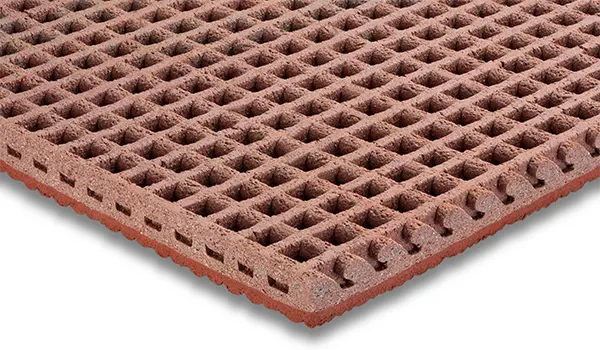
Drainage and sub-base design determine the longevity of outdoor fitness flooring. Outdoor modular applications require specialized structural backings to manage precipitation. We emphasize the strict necessity of double-grid structures beneath the wear layer. Elevated backing profiles allow rainwater to escape quickly. Leaves, dirt, and debris flow safely beneath the play surface. This vital engineering prevents pooling water from creating severe slip hazards or degrading the underlying foundational layers.
Implementation Realities: Mitigating Installation Risks
Even the most advanced materials fail if installers prepare the site incorrectly. Assessing the physical site prevents disastrous, costly failures down the road.
Before ordering materials, determine the appropriate intervention level. We use a simple triage model to categorize subfloor preparation strategies effectively:
Minor Wear: Existing surfaces might only need aggressive cleaning and top-coat sealing to restore visual appeal and adequate friction.
Moderate Cracking: Installers use advanced cementitious composite patching to repair existing concrete or asphalt. This bridges small gaps effectively without full demolition.
Severe Damage: Instead of incurring massive concrete tear-out costs, use a thicker rubber base layer. This robust foundation layer bridges wider structural flaws seamlessly.
Subfloor moisture remains the silent killer of all resilient floors. Hydrostatic pressure pushes invisible water vapor up through concrete slabs. This relentless pressure easily destroys adhesives and warps synthetic materials. You must address the strict necessity of relative humidity (RH) testing in concrete slabs. Installers must perform these quantitative tests prior to applying any glue-down systems to ensure the slab meets manufacturer tolerances.
Finally, weigh adhesive bonding against floating installations carefully. Full-spread adhesives provide maximum stability for aggressive rolling loads like scissor lifts and heavy bleachers. However, they require pristine, perfectly dry subfloors. Loose-lay or interlocking modular systems offer superior speed. They also forgive minor subfloor imperfections easily. This flexibility saves considerable time and labor capital during the extensive preparation phase.
Procurement Checklist: Finalizing Your Shortlist
Purchasing reliable rubber sports flooring requires strict vendor vetting. Protect your facility's investment by verifying technical claims carefully before issuing purchase orders.
First, closely align the written warranty with your actual facility use. Buyers must scrutinize warranty fine print aggressively. Ensure that hosting non-sporting events does not instantly void the athletic performance guarantee. Community meetings require dense setups of tables, chairs, and temporary staging. These items create significant, concentrated point loads. Your final warranty must explicitly cover these daily mixed-use scenarios to be truly valuable.
Create a brief checklist to verify the Technical Data Sheet (TDS). Do not accept vague marketing claims blindly. Verify the dynamic coefficient of friction to ensure proper athletic grip. Check the precise point-load capacity to confirm the floor handles heavy bleachers and maintenance machinery safely. Review VOC emissions data carefully. Low-VOC products ensure excellent indoor air quality and actively contribute to LEED certification goals for green buildings.
Always mandate pilot testing before signing massive contracts. We highly recommend requesting physical material samples. Test slip resistance under actual athletic footwear. Observe visual glare under your facility's specific LED lighting conditions. Drop heavy weights on the samples to gauge indentation recovery. This hands-on evaluation prevents unpleasant surprises after the final installation concludes.
Conclusion
A multifunctional surface represents a critical infrastructure investment for any community center. It serves as much more than a simple commodity purchase. Matching the structural format to your specific damage risks proves paramount. Vulcanized, poured, or modular architectures each solve distinct operational challenges. You must align the material with your internal maintenance capabilities and anticipated event schedules.
Facility managers and procurement officers should take immediate, structured action. Schedule a comprehensive site assessment today. Review your subfloor conditions thoroughly with certified installation professionals. Request technical spec sheets tailored specifically to your primary use cases and verify environmental standards. Informed planning and diligent product selection guarantee a resilient, high-performing facility that serves your community safely for decades.
FAQ
Q: Can a multi-sport rubber surface withstand heavy non-sporting equipment?
A: Yes. High-quality rubber floors feature exceptional point-load capacity. Vulcanized materials and dense polyurethane systems handle tables, chairs, and light staging easily. They resist permanent indentation by rapidly recovering their original shape after you remove heavy rolling loads or temporary bleachers.
Q: What is the lifecycle difference between rubber sports flooring and traditional wood?
A: Wood requires specific humidity controls, bi-annual chemical coating, and complete sanding every decade. Quality rubber offers a 10+ year lifespan with extremely low maintenance. It requires only standard mechanical cleaning, eliminating the severe downtime and labor associated with wood floor refinishing.
Q: Do we need to tear out our existing damaged court to install a prefabricated sport surface?
A: Not always. Many resurfacing options save significant demolition costs. Installers can use specialized cementitious patching for moderate cracks. Furthermore, thicker modular tiles or robust poured rubber systems can float over or encapsulate minor subfloor imperfections safely without requiring a full slab tear-out.
A: Yes, provided you source it from reputable manufacturers. High-quality recycled rubber undergoes strict processing to remove impurities. You must check for third-party low-VOC certifications (like FloorScore). These certifications ensure the material will not compromise indoor air quality, while simultaneously contributing to green building LEED points.