Legacy paving materials often fail in demanding, high-traffic pedestrian zones. Tree roots forcefully heave concrete slabs over time. Extreme heat aggressively cracks rigid asphalt surfaces. Heavy rain consistently washes away loose natural mulch. These recurring failures create dangerous trip hazards and cause endless maintenance headaches for property managers. Enter outdoor rubber flooring. It stands out as a highly durable, ADA-compliant alternative. It deeply prioritizes joint protection and ensures reliable all-weather accessibility. This article serves a distinct purpose. We want to provide facility managers, municipal planners, and landscape architects with a technical evaluation framework. You need objective data to make informed choices. We will show you how to accurately select the right rubber walking path surface. We will cover crucial factors like peak traffic volume, substrate requirements, and strict environmental compliance needs. Read on to master these foundational concepts.
Key Takeaways
Lifespan & ROI: Proper installation yields an 8 to 20-year lifespan with significantly lower maintenance costs compared to loose-fill or rigid concrete.
Substrate Flexibility: Poured and prefabricated systems can often be retrofitted directly over existing, stable concrete or asphalt, reducing demolition costs.
Compliance & Safety: High-quality systems ensure ADA accessibility, pass heavy-metal leaching tests, and provide distinct ergonomic benefits for a rubber fitness trail or park walking track.
Material Variables: Selecting between single-layer, dual-layer, or bonded mulch depends on desired porosity, wear resistance, and aesthetic integration.
Concrete looks permanent initially. It rarely survives nature long-term. We see underlying tree root growth shatter rigid paths constantly. A flexible nature changes everything. Rubber aggressively mitigates cracking. It bends smoothly as roots shift the soil beneath it. You eliminate sudden trip hazards entirely. This remains a primary failure point for traditional concrete paths. Property managers save heavily on trip-and-fall liabilities. Traditional hardscapes require constant patching. Facility teams spend countless hours fixing minor cracks. Rubber eliminates this repetitive labor entirely.
Universal inclusivity defines modern public spaces. Americans with Disabilities Act (ADA) compliance is mandatory. Natural mulch and gravel fail accessibility tests miserably. Wheels quickly sink into loose surfaces. Strollers, wheelchairs, and bicycles need firm ground. A seamless rubber surface prevents any sinking. It outperforms gravel across every accessibility metric. Everyone navigates the terrain effortlessly. Seniors with walkers feel incredibly secure. The uniform friction prevents accidental slippage entirely.
All-weather drainage prevents pathway closures. Recycled rubber systems feature a highly porous nature. They allow rapid rainwater dispersion immediately after storms. Traditional dirt turns to dangerous mud. Standard asphalt collects large, slippery puddles. Rubber eliminates mud and annoying standing water completely. You maintain a pristine pathway year-round. The open-grid structure channels water down into the earth. It prevents destructive surface erosion effectively.
Consider the undeniable ergonomic value. Shock-absorbing properties matter immensely to daily users. Joggers strike the ground thousands of times per mile. Older pedestrians require gentle surfaces for tender joints. Rubber dramatically reduces sheer joint impact. It makes it the ultimate choice for a dedicated park walking track. Your community will praise the distinct physical comfort. Shin splints decrease significantly. The bouncy response mimics professional athletic tracks beautifully.
Solution Categories: Selecting the Right Rubber Architecture
You cannot buy a one-size-fits-all solution. Selecting the right rubber architecture requires deliberate planning. Your project needs dictate the specific material choice.
Single-Layer Porous Systems (SBR)
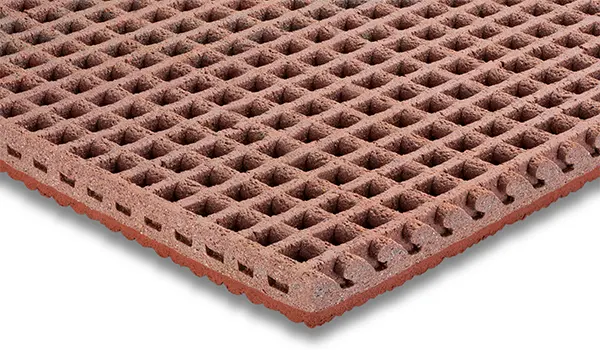
These systems utilize 100% recycled tire rubber. The profile features a highly open-grid surface. You achieve maximum drainage capacity quickly. They work best for extremely cost-sensitive projects. High-drainage areas benefit from this simple construction. Visually, this option mimics the darker look of porous asphalt. You get superior grip without premium pricing. Municipalities love this for long parkland stretches. It stretches tight budgets much further.
Dual-Layer Systems (SBR Base + EPDM/TPV Wear Layer)
This architecture offers peak structural performance. The bottom profile is a thick, shock-absorbing base. The top features a vividly colored native rubber layer. It boasts tremendous UV resistance. High-traffic corporate campuses demand this durability. It forms the backbone of any premium rubber fitness trail. You gain high abrasion resistance immediately. You also achieve highly specific color branding matching your corporate identity. The EPDM layer resists scuffing perfectly. It withstands intense daily wear and tear.
Bound Rubber Mulch Nature Trails
Natural landscapes require subtle aesthetic integration. These trails use precisely shredded recycled rubber. Factories coat these shreds in environmentally safe binders. It looks remarkably like natural wood bark. Wooded parks heavily prefer this exact aesthetic. You preserve the rustic visual appeal completely. However, you completely avoid the annoying washout common with real wood chips. Landscapers appreciate the vivid, permanent coloration. It never requires seasonal topping off.
Prefabricated Rubber Path vs. Poured-in-Place (PIP)
You must evaluate installation methodologies carefully. Compare a prefabricated rubber path against seamless poured-in-place (PIP) systems. Prefabricated rolls provide incredibly rapid installation. They guarantee consistent, factory-calibrated density across every inch. Tight corners pose no problem for poured mixtures. PIP systems contrast this approach entirely. Installers mix and pour materials directly on-site. PIP offers flawless, custom-contoured capabilities. It seamlessly hugs uneven borders and odd curves perfectly. Factory rolls excel on long, straight avenues instead.
| | | Comparison of Pathway Material Architectures |
Architecture Type | Primary Material Focus | Best Ideal Use Case | Key Unique Advantage |
Single-Layer Porous (SBR) | 100% Recycled Tire Rubber | Budget-conscious parks | Maximum rainwater drainage |
Dual-Layer Systems | SBR Base + EPDM/TPV Top | Corporate campuses | High abrasion & color matching |
Bound Rubber Mulch | Shredded coated rubber | Wooded nature trails | Rustic aesthetic integration |
Prefabricated Rolls | Factory-calibrated rubber | Linear transit paths | Rapid, uniform installation |
![Technical Specifications for Rubber Surfaces]()
Technical Specifications & Installation Realities
Technical specifications dictate your absolute success. You cannot ignore strict engineering baselines. Substrate depth requirements vary based on your existing sub-base. We recommend objective minimums to protect your investment.
Concrete Sub-bases: Require a strict minimum installation depth of 0.5 inches.
Asphalt Sub-bases: Demand a slightly thicker baseline of 0.75 inches.
Compacted Aggregate: Mandate a full 1.5 inches to ensure lasting structural integrity.
Material quality baselines matter equally. Establish harsh procurement red lines before signing contracts. Advise your bidding contractors clearly. Industrial-grade systems must maintain a minimum rubber content of 35%. Anything lower severely compromises overall structural integrity. The binder will fail prematurely if fillers dominate the mixture. Applying the correct adhesive ratio guarantees superior bonding. Installers must use specialized trowels to spread the binder evenly.
Retrofitting existing surfaces saves massive demolition costs. Discuss the feasibility of pouring directly over existing hardscapes. Site prep becomes your most critical phase here. The sub-base must remain structurally sound underneath. You must ensure the surface is properly leveled beforehand.
Best Practices for Retrofitting: Fill small voids thoroughly before pouring. Power-wash existing concrete to remove slick organic debris.
Common Mistakes to Avoid: Never pour over actively heaving concrete slabs. Do not ignore deep moisture issues trapped beneath old asphalt. Check moisture levels in the concrete before pouring. Trapped moisture aggressively destroys the polyurethane binder bond.
Security, Compliance, and Environmental Standards
Environmental safety dominates modern construction planning. We must rigorously frame the criteria for an eco-friendly walking path. Toxicity and leaching concerns ruin poorly planned projects. Emphasize the absolute necessity for lab-tested materials. Your surface must pass stringent heavy metal leaching tests. It must demonstrate zero or ultra-low VOC emissions. Communities demand safe spaces for their children and pets. Testing validates the chemical stability of the recycled tires. You cannot skip this verification phase.
Micro-plastic pollution concerns dominate modern bidding requirements. Environmental boards scrutinize synthetic materials heavily today. Address this proactively during your initial proposals. Highlight surfacing options officially certified as micro-plastic free. This proactive stance wins municipal bids consistently. It protects local waterways from invisible toxic runoff. Eco-conscious buyers heavily prioritize these precise certifications.
Acoustic control provides an often-overlooked environmental standard. Heavy foot traffic generates disruptive ambient noise constantly. Note the remarkable sound-dampening properties of these porous systems. They prove highly effective even at surprisingly thin 2.5mm thicknesses. Quiet zones require this specific acoustic intervention. Paths routed near senior living communities benefit immensely. University libraries and hospital courtyards demand peaceful exterior environments. The surface absorbs the harsh clatter of jogging shoes effortlessly. Golf cart tires roll silently over it. Neighborhood associations heavily favor this acoustic dampening.
Risks, Limitations, and Mitigation Strategies
Every construction material exhibits specific physical limitations. You must acknowledge these realities transparently. Let us review the primary risks and actionable mitigation strategies.
Thermal Retention in Direct Sunlight:
We strongly acknowledge that dark surfaces absorb intense heat. Black SBR materials spike in temperature during summer afternoons.
Mitigation Strategy: Recommend lighter EPDM color blends for exposed areas. Specify these darker paths strictly for shaded, tree-lined routes. The surrounding foliage naturally lowers ambient surface temperatures. Sprinkler systems can also cool the path quickly.
Load-Bearing Constraints:
These systems handle pedestrian and light mobility traffic perfectly. They effortlessly support bicycles, heavy wheelchairs, and double strollers. However, standard trails are not engineered for heavy vehicles.
Mitigation Strategy: Clarify access rules immediately. Block motorized road traffic with physical bollards. Keep heavy municipal maintenance trucks entirely off the trail. Use lightweight utility carts for servicing. Signage must clearly state weight limitations. Prevent accidental damage from heavy delivery vans.
Binder Degradation:
Ultraviolet light relentlessly attacks chemical binders over time. Low-grade binders often yellow significantly. They degrade and turn brittle under continuous UV exposure.
Mitigation Strategy: Warn procurement teams against cheap aromatic binders. Recommend premium aliphatic polyurethane binders instead. They cost slightly more upfront. They easily survive extreme sun exposure without yellowing or cracking. Aliphatic binders maintain their clear, transparent finish indefinitely. Aromatic binders inevitably turn an ugly amber hue.
Conclusion
You now possess a comprehensive technical framework. We have explored the critical aspects of surface selection. Shortlisting logic requires a methodical approach. First, guide your buying team to audit the current sub-base carefully. You must determine your exact peak daily foot traffic. Finally, deeply assess your extreme local climate variables.
Action-oriented next steps include:
Survey your existing concrete or asphalt for structural stability.
Determine if you need single-layer porosity or dual-layer durability.
Encourage soliciting site-specific lifecycle cost analyses from trusted contractors.
Request certified material safety data sheets (MSDS) before finalizing any bid.
Select premium aliphatic binders if your installation sees intense direct sunlight.
FAQ
Q: How long does a commercial rubber walking path surface last?
A: A high-quality installation typically lasts between 8 and 20 years. Your actual expectancy depends heavily on daily foot traffic volume. The local climate and overall binder quality also play critical roles. Routine cleaning and minor topcoat applications significantly extend this operational lifespan.
Q: Can outdoor rubber flooring be installed directly over an old, cracked concrete path?
A: Yes, you can often pour it directly over existing hardscapes. Installers can easily bridge minor cracks and tiny surface imperfections. However, major structural heaving requires comprehensive sub-base remediation. You must fix severely broken concrete before applying any new surface layer.
Q: Does recycled rubber surfacing get too hot for bare feet or pets?
A: Dark recycled rubber absorbs and retains noticeable heat in direct sunlight. It can become uncomfortably hot for bare feet or dog paws during peak summer afternoons. We strongly advise selecting lighter color blends. Strategic placement in shaded, naturally cool areas drastically reduces this thermal issue.