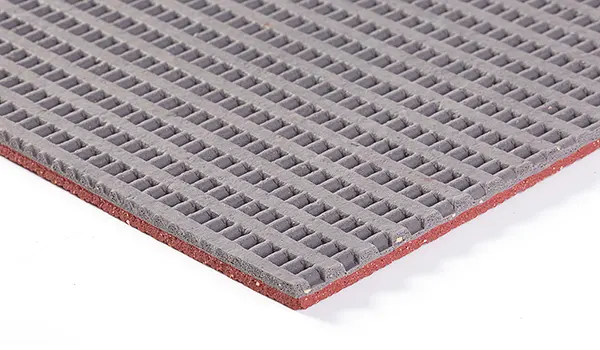
While a vibrant synthetic polyurethane or latex surface captures immediate visual attention, an athletic facility's true structural integrity relies entirely on sub-surface engineering. Most international standard track surfaces measure just 13mm to 15mm thick. Because they remain incredibly thin, they offer absolute zero tolerance for foundation defects. Unlike artificial turf, which uses thick infill layers to mask minor subgrade undulations, a track surface transfers base imperfections straight upward. Any hidden bump or dip below will appear right on top.
A scientifically prepared base prevents premature bubbling, delamination, and complex drainage failures. Ultimately, perfect groundwork determines if a facility requires a massive, complete reconstruction in seven years or a simple, cost-effective surface resurfacing after fifteen years. You will learn the specific geometry standards required for competition, why material selection profoundly impacts longevity, and how to navigate critical curing times correctly.
Key Takeaways
Precision is Non-Negotiable: Competition-grade tracks require laser-guided grading to meet strict slope tolerances (maximum 1% lateral, 0.1% longitudinal).
Material Selection Drives Lifespan: Post-tensioned concrete offers superior crack resistance over traditional asphalt, though it requires a higher initial capital expenditure.
Patience Prevents Failure: Asphalt bases must cure and degas for 14 to 30 days; rushing this phase is the primary cause of polyurethane surface bubbling.
Budgeting Realities: Site and base preparation alone often account for $2 to $10 per square foot, frequently exceeding the cost of the synthetic surface material itself.
Why Running Track Base Preparation Dictates Surface Success
A solid running track base preparation strategy operates on the zero-forgiveness principle. A rubber track subbase does not absorb hidden subgrade errors. The thin 13mm synthetic layer relies heavily on the substrate's absolute perfection. High spots cause aggressive, localized surface wear. As athletes run over a hidden high point, their spikes tear away the rubber prematurely. Low spots create an even bigger hazard. They create pooling water. Pooling water degrades the polyurethane binder rapidly over time. It guarantees early failure and voids surface warranties.
The base must withstand immense physical impact from athletes. More importantly, it endures relentless thermal expansion and contraction. Synthetic materials expand daily under intense sunlight. They shrink at night. The groundwork beneath must support this continuous movement without fracturing. An inadequate base shifts during freeze-thaw cycles. This shifting tears the synthetic top layer apart from the bottom up.
Lifecycle economics rely on perfect execution early on. Build an athletic track foundation correctly the first time. End-of-life maintenance only requires stripping the thin synthetic layer. You pour a new top layer and save massive renovation funds. This saves you roughly 30% to 40% on overall renovation budgets. Conversely, a failed base mandates full-depth demolition. You must rip out the asphalt and the dirt below. You throw away the entire initial investment.
![Running Track Base Preparation and Construction]()
Evaluating Athletic Track Foundation Materials: Asphalt vs. Concrete
Both core systems start identically. You need a carefully compacted 8-inch crushed stone sub-base. Installers use angular, clean aggregate. This layer establishes necessary load-bearing capacity. It also provides a critical capillary break. This prevents groundwater from migrating upward into the asphalt or concrete layer above.
Asphalt remains the most common industry selection. It typically requires 4 inches of specially mixed asphalt. Crews install it in two separate lifts. The bottom gets a 2.5-inch base course containing larger aggregate. The top receives a 1.5-inch surface course using finer aggregate for a smooth finish. Asphalt remains highly flexible. However, it stays susceptible to minor settling over time. Thermal cracking also presents a risk over a decade of use.
Facility managers seeking maximum durability choose post-tensioned concrete. It involves a 5-inch monolithic concrete pour. Builders place high-strength tensioned steel cables inside the slab in a precise grid pattern. After the concrete cures partially, they pull the cables tight. The cables compress the concrete tightly, counteracting external tensile forces. It virtually eliminates structural cracking. This provides massive long-term stability and guarantees an exceptional return over a 20 to 30-year facility lifespan.
Feature Focus | Traditional Asphalt Base | Post-Tensioned Concrete |
Sub-Base Requirement | 8-inch compacted crushed stone | 8-inch compacted crushed stone |
Thickness Structure | 4 inches total (installed in two lifts) | 5 inches total (monolithic single pour) |
Core Advantage | Highly flexible and budget-friendly | Superior crack resistance and long-term stability |
Primary Risk Profile | Vulnerable to thermal cracking over a decade | Requires significantly higher upfront capital |
Common Material Mistakes
Wrong Asphalt Mix: Unspecialized contractors often use standard roadway asphalt mixes. Roadway mixes contain large aggregates that create a rough, porous finish. Athletic facilities require a specialized, tight-graded asphalt mix to ensure the top surface remains perfectly smooth.
Skipping the Stone Base: Laying asphalt directly onto compacted dirt invites immediate failure. The 8-inch stone layer is non-negotiable for load distribution.
Geometry, Grading, and Running Track Drainage Standards
Establishing perfect geometry is paramount. Proper track base construction demands specialized, laser-guided grading equipment. Standard earth-moving machinery fails here. You cannot achieve athletic certification micro-tolerances using a standard bulldozer. Specialized dual-laser graders cross-check elevations multiple times per second. They adjust the blade automatically to shave exact millimeters of aggregate.
Competition mandates strict, inflexible rules regarding slope and runoff tolerances. To meet IAAF and NCAA compliance, your lateral drainage slope must incline toward the inner lanes. It cannot exceed a maximum 1% grade. If it hits 1.1%, certifiers will reject the track completely. Furthermore, longitudinal slopes running down the straightaways remain incredibly strict. They must not exceed 0.1%. These precise numbers guarantee fair racing conditions while managing water shed effectively.
Surface runoff requires immediate, efficient management. You must integrate proper running track drainage to protect the sports flooring base from saturation and erosion. When water breaches the subgrade edge, it destroys structural integrity instantly.
Slot drain systems serve as the modern industry standard. They replace outdated open trench grates. They capture high-volume runoff swiftly through a narrow surface opening. They integrate completely flush against the track material. This seamless transition mitigates tripping hazards entirely. They keep athletes safe during tight inner-lane maneuvering.
Execution Realities: Compaction, Curing, and Testing Risks
Skipping upfront geotechnical soil testing introduces catastrophic financial risk. An engineer must drill boreholes to evaluate soil plasticity and moisture content. Unstable organic soils ruin projects quickly. Builders frequently perform over-excavation. They dig 12 to 18 inches deep to remove bad clay or organic matter. They must stabilize the raw earth using lime or cement before base construction ever begins.
Your subbase must hit a uniform 95% standard Proctor density. Teams use heavy vibratory rollers to achieve this metric. But a dangerous compaction paradox exists. Under-compaction causes hidden sinkholes that collapse after the first winter. Over-compaction fractures the crushed aggregate into dust. Shattered aggregate destroys natural sub-surface drainage capabilities, trapping water permanently beneath the asphalt.
Asphalt requires incredible patience. New asphalt contains highly volatile oils and solvents. It must cure for a strict minimum of 14 to 30 days before receiving a synthetic topcoat.
The Mandatory Testing and Curing Sequence
Paving Completion: Finish rolling and sealing the final 1.5-inch surface course smoothly.
Degassing Period: Wait a minimum of 14 to 30 days for volatile chemical gases to escape fully into the atmosphere.
Flood Testing: Flood the entire asphalt oval with water. Wait 45 minutes. Locate any lingering depressions deeper than 1/16th of an inch.
Patching: Fill identified "birdbaths" using approved specialized acrylic patching compounds.
Surface Pour: Only apply the synthetic layer after completely resolving every single defect.
Applying impermeable rubber running tracks or poured polyurethane over "green" asphalt traps escaping gases. Those trapped gases seek an exit path. They create massive pressure blisters. The synthetic layer will delaminate completely, requiring a total teardown of the rubber layer.
Procurement and Contractor Vetting for Base Construction
You can theoretically hire separate contractors for earthwork and surface installation. However, industry experts strongly advise against it. Keeping base preparation and surface installation under a single, unified contract eliminates harmful finger-pointing. When surface tolerances fail an inspection, a unified contractor takes full responsibility. If you split the bid, the surfacing team will blame the grading team. The grading team will blame the surfacing team. The facility owner loses time and money.
Structure your Request for Proposal (RFP) carefully to protect your facility from corner-cutting.
Demand verifiable proof of laser-guided paving equipment directly from bidders.
Require a mandatory 14-30 day curing window explicitly built into the master project timeline.
Specify mandatory pre-surfacing flood tests before authorizing the synthetic layer pour.
Request specific references for projects that successfully passed IAAF or NCAA certification.
Schools and municipalities face unique bureaucratic hurdles. Navigating blind low-bid public tenders often rewards unqualified contractors who cut corners. Instead, utilize Cooperative Purchasing Agencies. They streamline procurement quickly. They ensure you hire pre-vetted, highly qualified base construction experts. You avoid the lowest-bidder trap without compromising municipal project integrity.
Conclusion
A high-performance running track acts as an interconnected, specialized system. The top synthetic layer depends entirely on the layers hiding beneath it. Investing heavily in premium EPDM and PU surface materials while value-engineering the earthwork guarantees early failure. Shrinking the drainage scope or ignoring asphalt curing times ruins the best topcoat. Facility owners must view proper preparation not as a basic site task, but as a critical foundational asset. This foundational asset directly secures long-term athletic performance.
Here are your crucial next steps:
Prioritize precise laser-grading to ensure perfect slope compliance.
Allocate adequate timeline buffers for asphalt curing to prevent trapped gas delamination.
Enforce strict flood testing before laying any synthetic surface material.
Keep civil construction and rubber surfacing under one unified contract to ensure strict accountability.
Begin by commissioning a comprehensive geotechnical soil test. Contact a specialized athletic facility engineer to draft your strict RFP. Ensure your team heavily prioritizes underground stability before finalizing top-layer colors and aesthetic finishes.
FAQ
Q: How much does running track base preparation cost?
A: Site preparation, grading, and foundation work typically range from $2 to $10 per square foot. The final number depends heavily on existing soil stability, drainage requirements, and regional material costs. This foundational work often represents up to 50% of the total project budget.
Q: Why does my asphalt track base need to sit untouched for weeks?
A: New asphalt releases chemical gases as it cures, a process called outgassing. If a synthetic rubber layer is poured before 14 to 30 days, these gases become permanently trapped. This trapped pressure causes the track surface to form large bubbles and peel away entirely.
Q: What happens if the base isn't perfectly level?
A: Track surfaces are uniformly thin, usually 13 to 15 millimeters. Any underlying depression creates a permanent low spot on the surface above. Rainwater will pool in these "birdbaths," accelerating the chemical breakdown of the polyurethane binder and voiding official performance certifications.
Q: Can an old running track base be reused when replacing the surface?
A: Yes. If the original base was engineered properly and shows no structural failure, you can perform a full surface replacement. Reusing an intact, stable base typically saves 30% to 40% compared to a complete site demolition and rebuild.