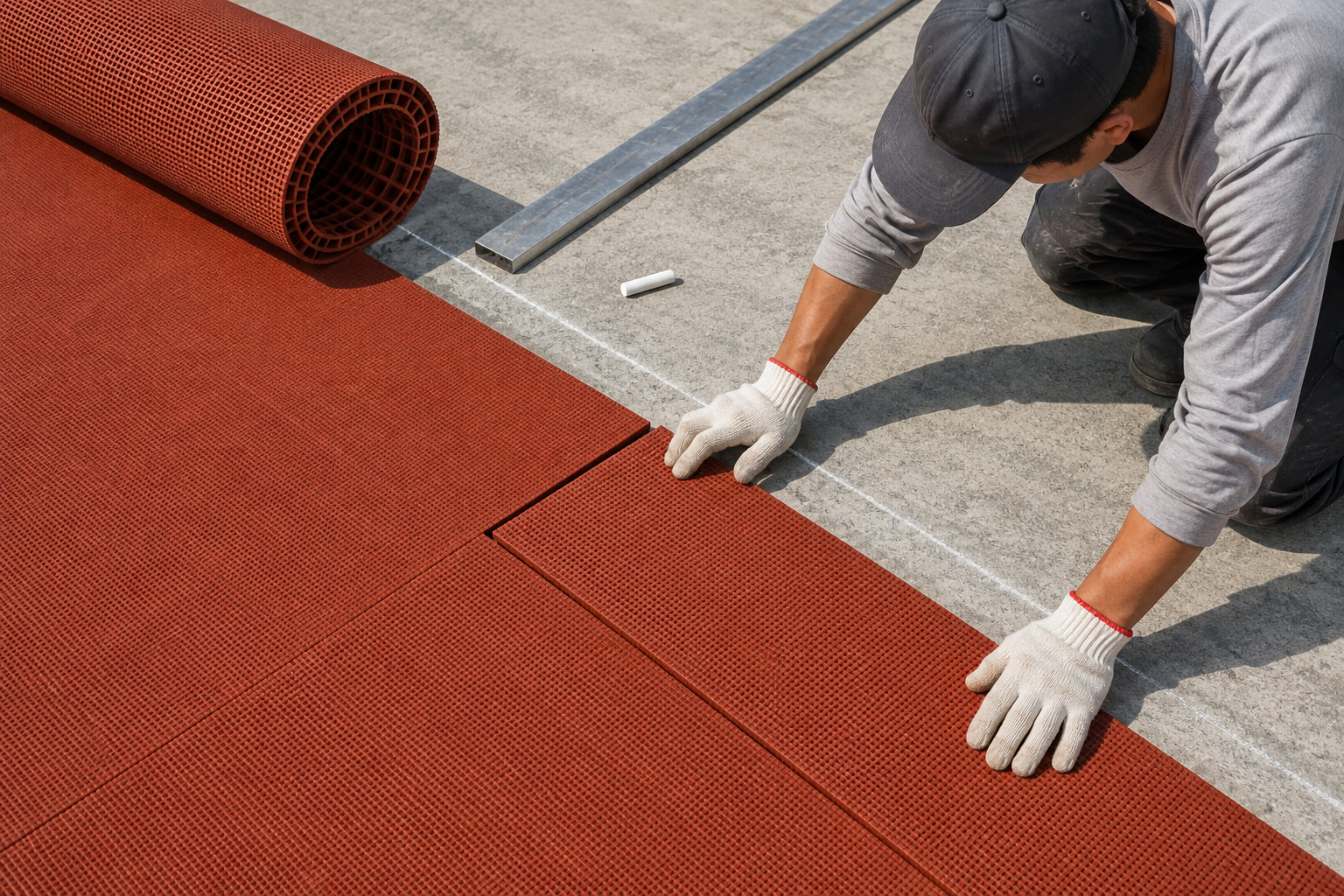
Prefabricated rubber track rolls need suitable conditioning so their temperature and shape are stable enough for accurate fitting and bonding. Storage and transport can leave material colder, warmer or more curved than the installation area. The correct procedure follows the selected product's instructions and actual site conditions. A fixed waiting period, used without checking the rolls, cannot establish that every sheet is ready.
Keywords: track roll acclimation, prefabricated rubber installation, running track roll relaxation, rubber sheet dimensional stability, track dry fitting
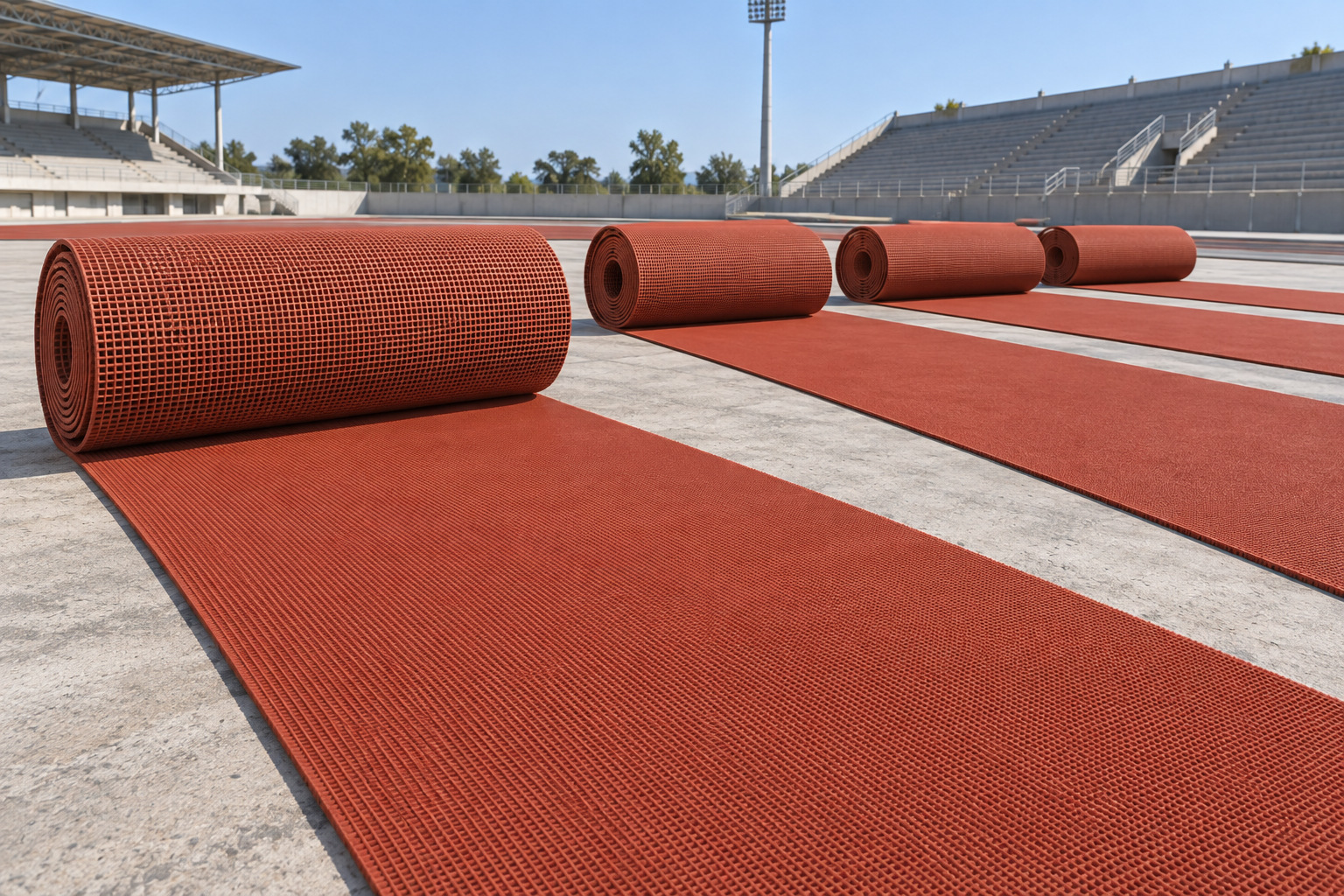
![Prefabricated rubber track rolls unrolled flat on a dry stadium foundation]()
Figure 1. Prefabricated rubber track rolls unrolled flat on a dry stadium foundation. AI-generated technical illustration.
Understand Temperature and Roll Memory
Acclimation and relaxation are related but different. Acclimation concerns the material approaching suitable site conditions. Relaxation concerns the reduction of curvature and stresses associated with storage in a roll. A sheet can reach the surrounding temperature while its end still retains a curl.
Rubber responds to temperature and mechanical history. Cutting or bonding while the sheet is changing shape can affect the final fit. Pulling an end into position may temporarily hide the problem while introducing restraint that remains after installation. Observe the material itself and use the manufacturer's procedure to establish readiness.
Protect Rolls During Delivery and Storage
Inspect packages on arrival for damage, contamination and distortion. Keep roll identities associated with the material, even when the packaging is removed. Store the rolls in the orientation and with the support specified by the supplier, with protection from weather and uneven heating.
Do not assume that a storage method suitable for a small floor roll is suitable for a heavier athletics-track roll. Avoid concentrated loads that deform the edges or core, and use appropriate handling equipment. Plan a clean unloading and staging area so material is not dragged across rough ground before it reaches the prepared foundation.
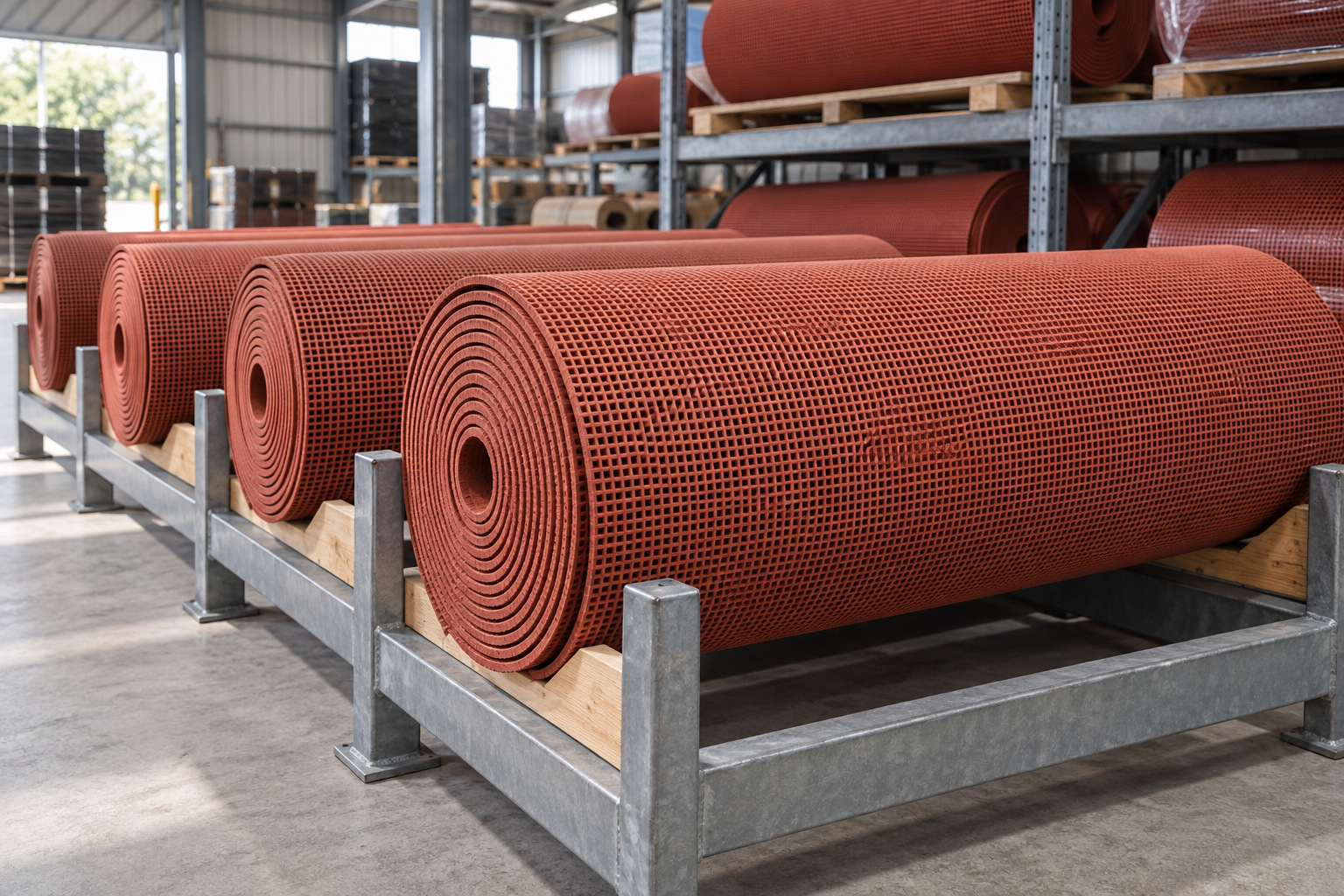
![Rubber track rolls supported in a sheltered storage area]()
Figure 2. Rubber track rolls supported in a sheltered storage area. AI-generated technical illustration.
Check More Than the Air Temperature
Sunlight can heat a dark foundation and the upper surface of a roll differently from shaded material. Conditions can also change during a long working day. Record relevant temperatures at the work area rather than using a distant weather reading as the only reference.
| Condition | What to check | Practical response |
| Cold delivered rolls | Material temperature and stiffness | Condition within the approved range before handling and fitting |
| Uneven sunlight | Differences across exposed and shaded sheets | Use consistent conditions and review work sequencing |
| Persistent end curl | Flatness without forced stretching | Continue the approved relaxation process |
| Damp or dusty staging area | Backing cleanliness and dryness | Protect or relocate the material |
| Long delay after dry fitting | Shape and site conditions before bonding | Recheck alignment and readiness |
The adhesive may have a different storage or application range from the rubber. Confirm that both materials and the foundation meet the combined installation requirements.
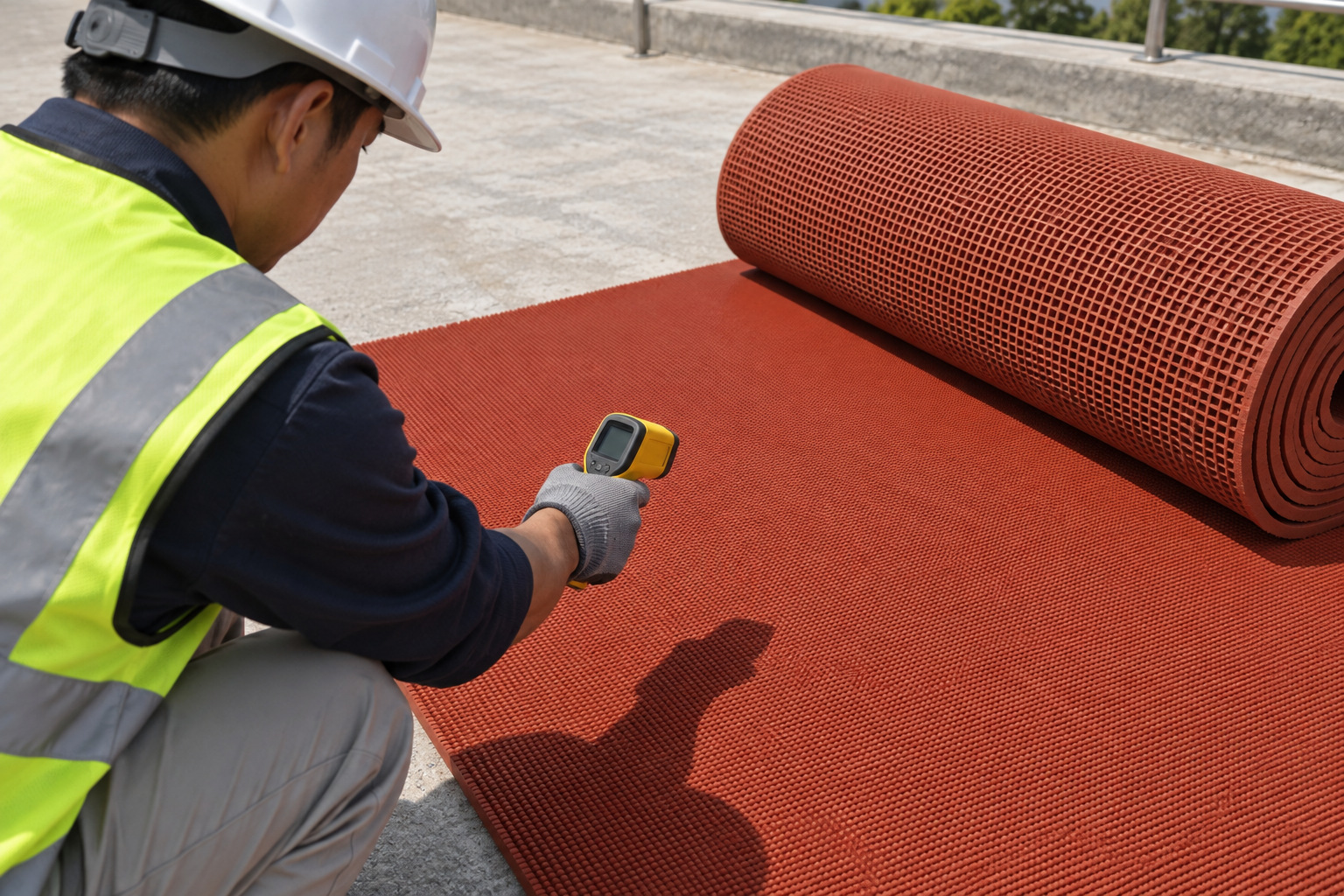
![Installer measuring the surface temperature of a prefabricated rubber sheet]()
Figure 3. Installer measuring the surface temperature of a prefabricated rubber sheet. AI-generated technical illustration.
Unroll and Inspect Before Final Cutting
Use a clean, stable area and unfold the material without damaging the wearing face or backing. Follow the supplier's requirements for timing, orientation and any approved restraint. Do not use uncontrolled heat, excessive weights or reverse bending to force a result.
Check whether the sheet lies naturally, whether edges are straight and whether any curl changes over the observation period. Compare dimensions under consistent conditions. Obvious damage or persistent distortion should be investigated before the material is committed to an adhesive bed. This stage is also an opportunity to identify color and texture orientation before adjacent rolls are fitted.
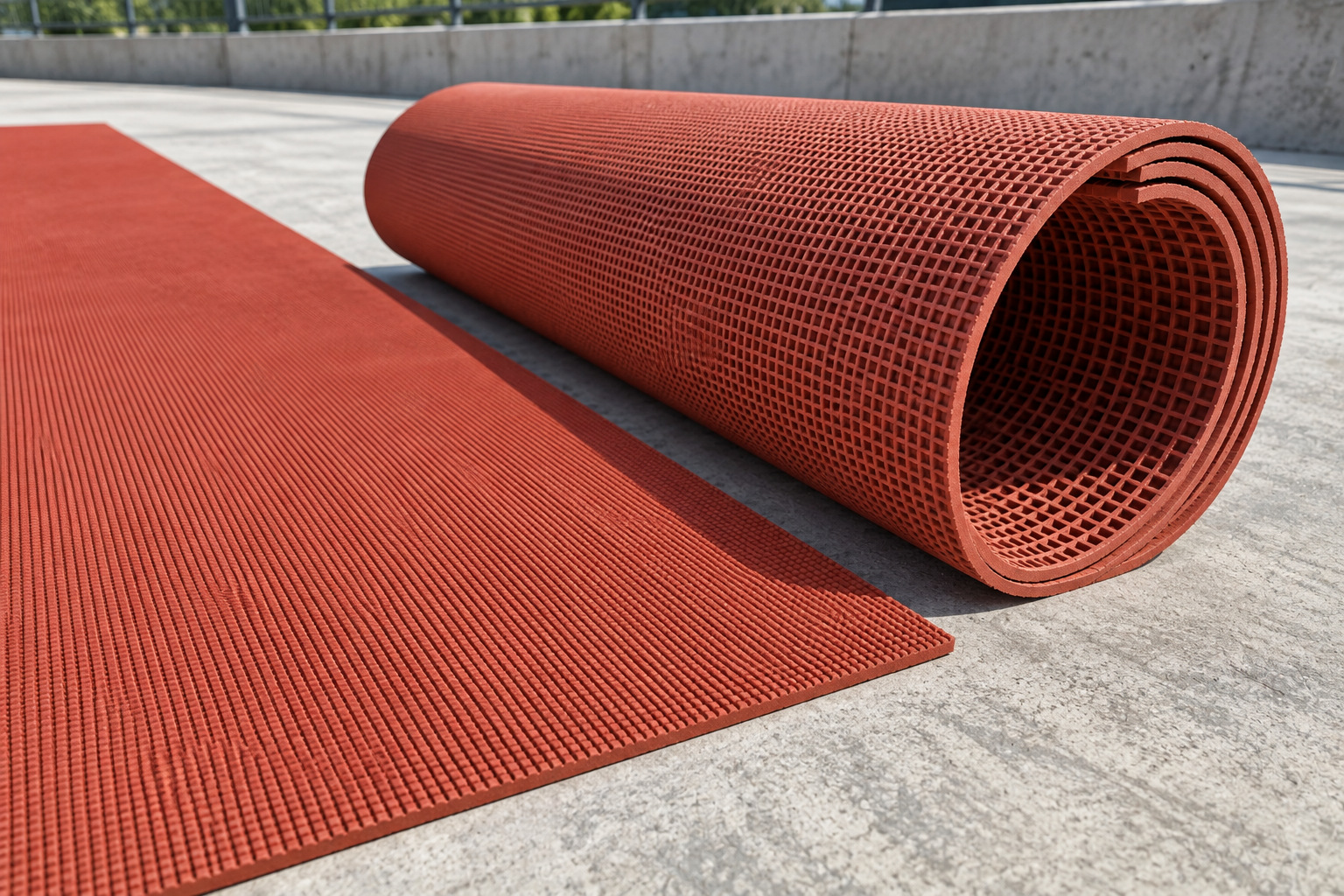
![Gently curled end of newly unrolled material beside a relaxed rubber sheet]()
Figure 4. Gently curled end of newly unrolled material beside a relaxed rubber sheet. AI-generated technical illustration.
Use Dry Fitting to Resolve Layout Problems
Dry fit the conditioned rolls against the approved setting-out plan. Establish the sequence, end-joint locations and allowances for final trimming. Check the interface with drainage channels, curbs and event equipment before adhesive is spread.
Avoid closing a mismatch by stretching one strip or compressing a neighboring edge. Recheck dimensions and the cutting plan. Once the fit is accepted, preserve roll identity and orientation through bonding. Repeat an alignment check if a temperature change or installation delay has altered the material's condition.
![Conditioned prefabricated track sheets aligned for dry fitting before bonding]()
Figure 5. Conditioned prefabricated track sheets aligned for dry fitting before bonding. AI-generated technical illustration.
Coordinate Conditioning With the HUADONG Installation Plan
The published dimensions on a product page are useful for planning, but they do not replace installation instructions. For a GODER rubber running track, agree the delivery schedule, storage arrangement and conditioning method with HUADONG before work begins. Include suitable staging space in the site plan so that preparation of the rolls does not become an improvised last-minute task.
Frequently Asked Questions
1. Must every roll rest for exactly the same number of hours?
No universal period applies. Follow the product instructions and check material temperature, flatness and site conditions. Transport history and roll dimensions can also influence readiness.
2. Is acclimation only necessary in cold weather?
No. Material stored in heat or exposed to uneven sunlight can also differ from the installation environment. Consistent conditions matter in both hot and cold weather.
3. Can adhesive hold a curled sheet flat?
Adhesive should not be relied on to correct excessive stored curvature. Resolve the material condition using the approved procedure before bonding.
4. Should final cutting happen immediately after delivery?
Final fitting is more dependable once the material has reached the condition required for installation. Inspect and condition the rolls first, then follow the agreed cutting sequence.
5. What should be recorded during conditioning?
Record roll identity, staging location, relevant temperatures, condition on arrival and checks before bonding. These details help explain later dimensional or seam questions.