Accepting a prefabricated running track requires more than checking whether the color and lane lines look correct. The owner needs evidence that the surface matches the approved construction, remains properly bonded and meets the project's dimensional and performance requirements. Organize handover around defined inspections, applicable tests and complete records. Resolve the acceptance criteria before construction so completion is judged against an agreed specification.
Keywords: running track acceptance checklist, prefabricated track inspection, track flatness testing, track handover documents, athletics facility testing
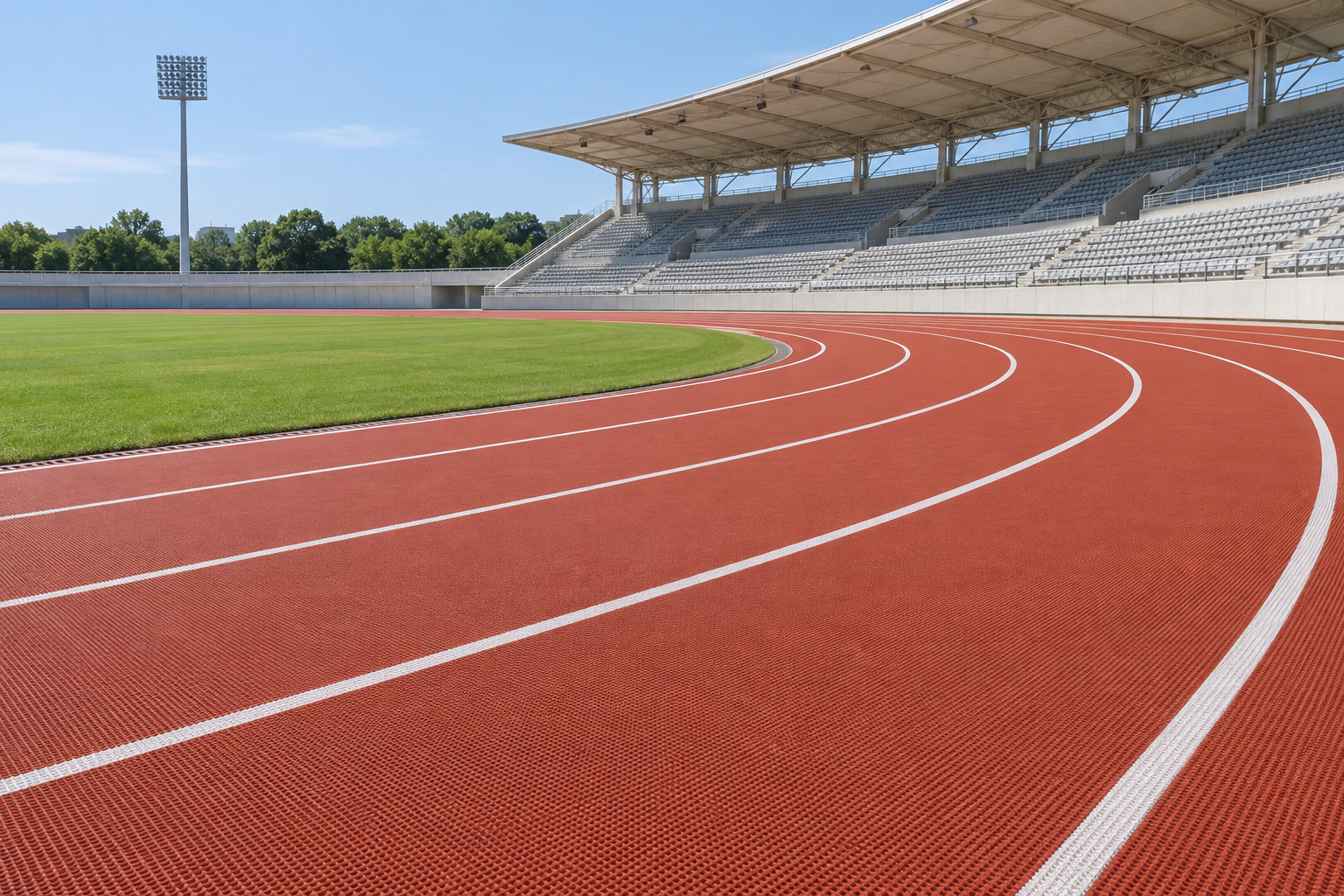
![Completed prefabricated running track ready for inspection before opening]()
Figure 1. Completed prefabricated running track ready for inspection before opening. AI-generated technical illustration.
Separate Visual Acceptance From Performance Verification
Visual inspection can identify damaged sheets, uneven edges, contamination and poor line work. It cannot establish shock absorption, friction or the condition of every hidden bond. Laboratory product reports describe tested specimens; they do not independently verify a completed facility.
Where formal athletics certification is required, establish the applicable process with the responsible designer and testing organization. World Athletics technical information lists product certification, facility certification and surface-testing documents separately. A product certificate should not be presented as automatic certification of every venue using that product.
Inspect the Physical Surface Systematically
Walk the whole installation using a recorded inspection route. Check joints, transitions, event areas, drains and perimeter terminations as well as the central running lanes. Describe defects by location and extent, with photographs that show both context and detail.
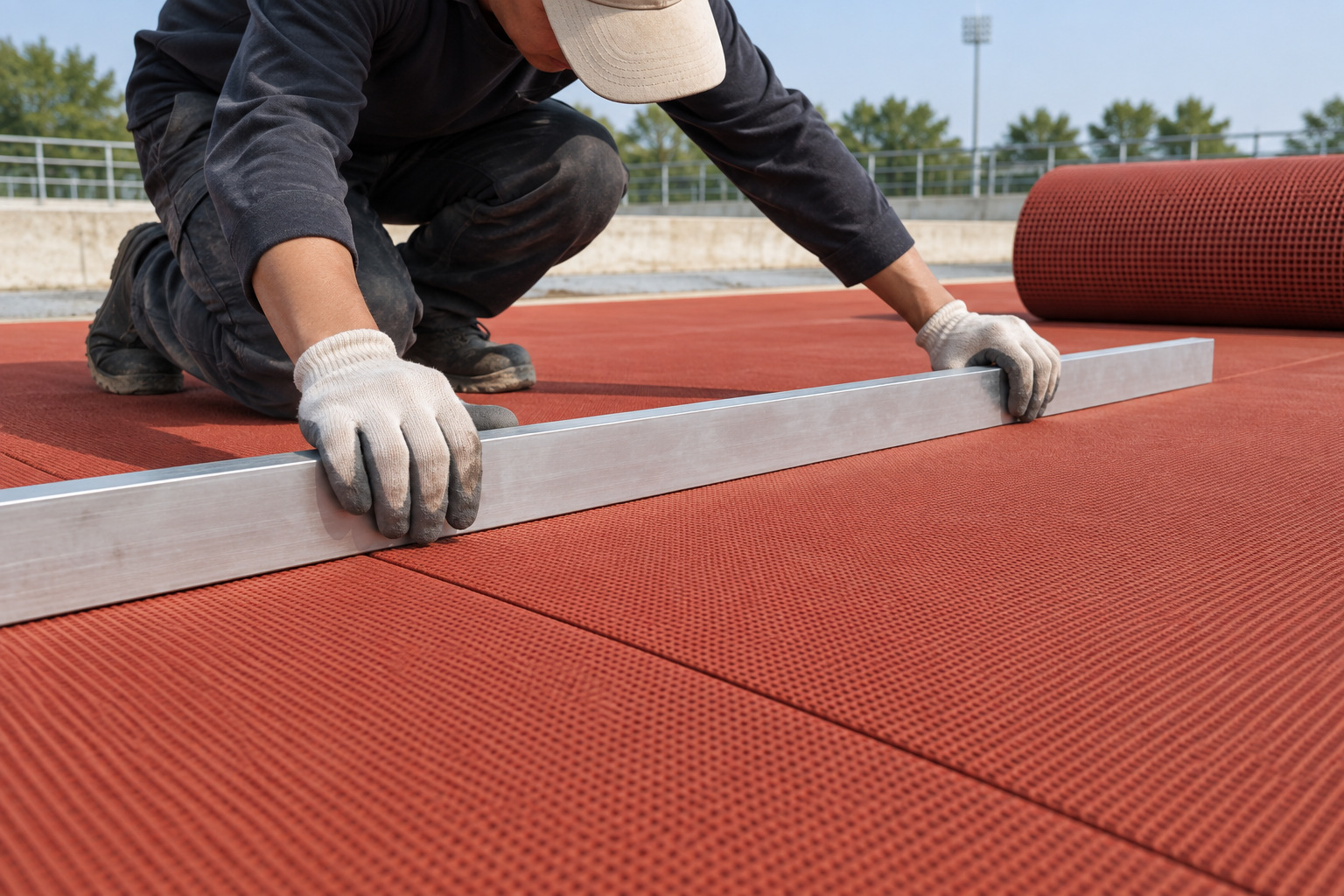
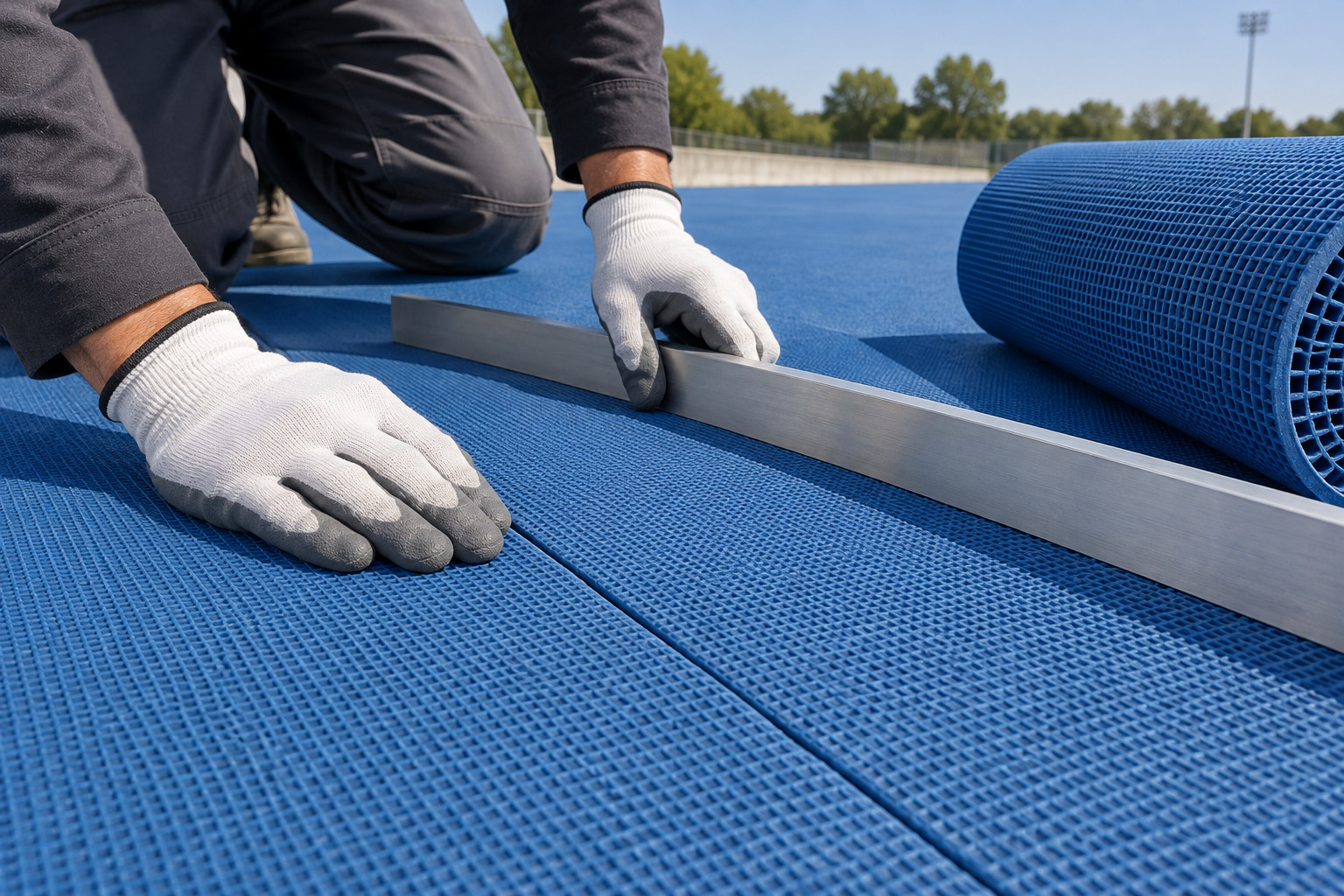
Examine flatness using the method and tolerance specified for the project. A straightedge check is useful only when its length, placement and interpretation are defined. Distinguish local surface regularity from the overall designed gradient. A uniformly sloping surface can be correct even though it is not level, while a locally uneven surface can create a problem despite an acceptable average gradient.
![Straightedge used to inspect local surface regularity on a prefabricated rubber track]()
Figure 2. Straightedge used to inspect local surface regularity on a prefabricated rubber track. AI-generated technical illustration.
Use a Checklist That Produces an Acceptance Record
| Inspection area | What to verify | Evidence for handover |
| Product identity | Model, thickness configuration and delivered lots | Approved specification and material records |
| Surface condition | Damage, contamination and texture consistency | Dated visual inspection record |
| Joints and edges | Flushness, support and stability | Seam inspection and completed repairs |
| Foundation geometry | Required dimensions and gradients | Survey results and relevant as-built drawings |
| Bond condition | Suspect lifting or unsupported areas | Agreed investigation or test results |
| Drainage | Outlets, transitions and water movement | Inspection and specified drainage assessment |
| Markings | Position, width, color and continuity | Approved marking plan and survey checks |
| Sports performance | Required surface properties | Reports using the specified methods |
Record each unresolved item with responsibility and a closure condition. A checked box without a location or result is weak evidence when a later question arises.
Verify Geometry and Markings Against the Approved Plan
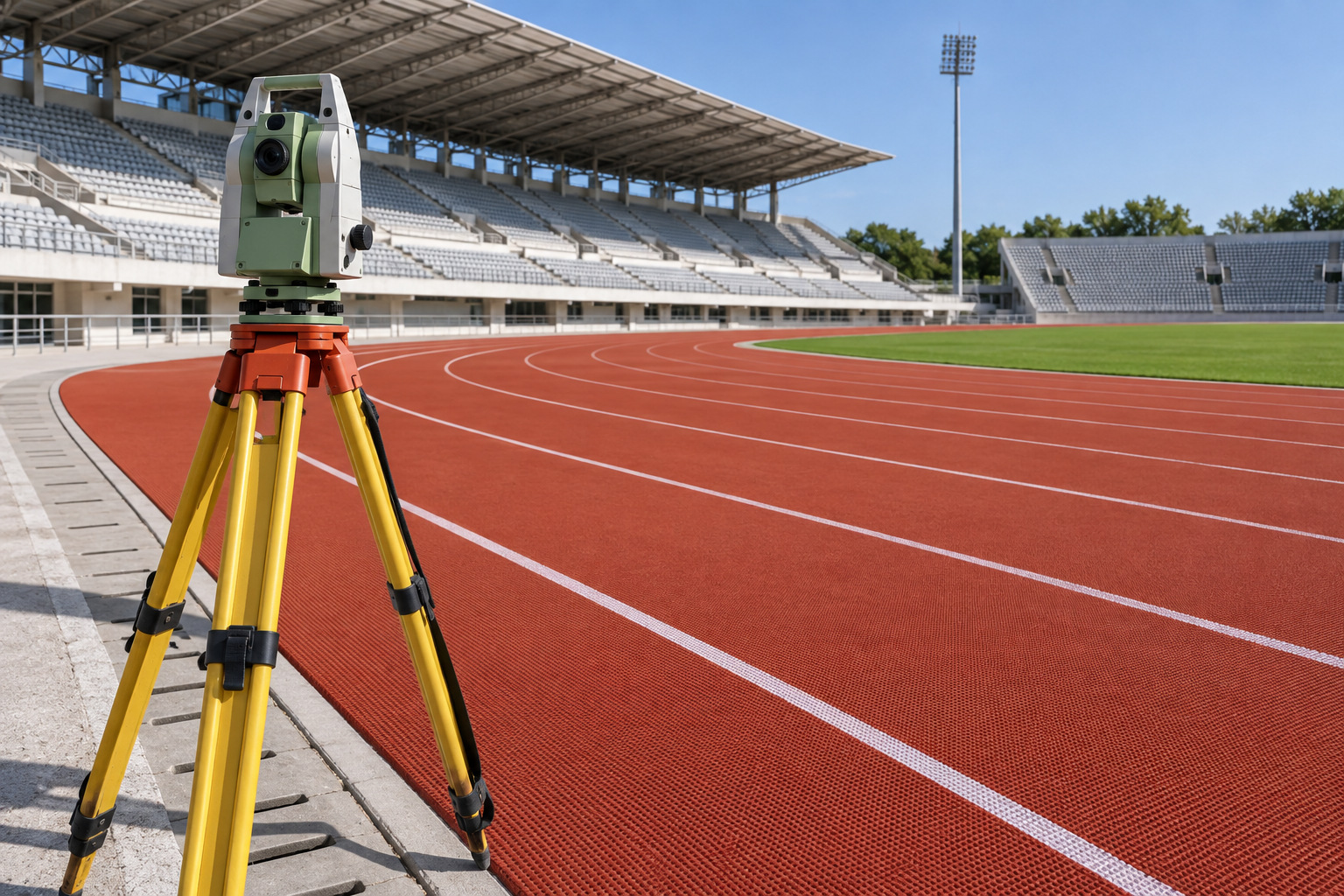
The survey must relate the finished surface and relevant reference lines to the approved athletics layout. Confirm event-specific features and transitions, not only the nominal track length. Coordinate marking work with the verified geometry before final paint application.
Inspect the compatibility and curing of the marking coating as well. Smearing, poor adhesion or incomplete coverage can affect usability even when the location is correct. Protect markings until they can withstand the intended use and cleaning. Keep the final marking plan with the survey documentation so future repainting can use a reliable reference.
![Survey instrument positioned beside the finished running track for dimensional verification]()
Figure 3. Survey instrument positioned beside the finished running track for dimensional verification. AI-generated technical illustration.
Check Drainage and Investigate Suspect Bond Areas
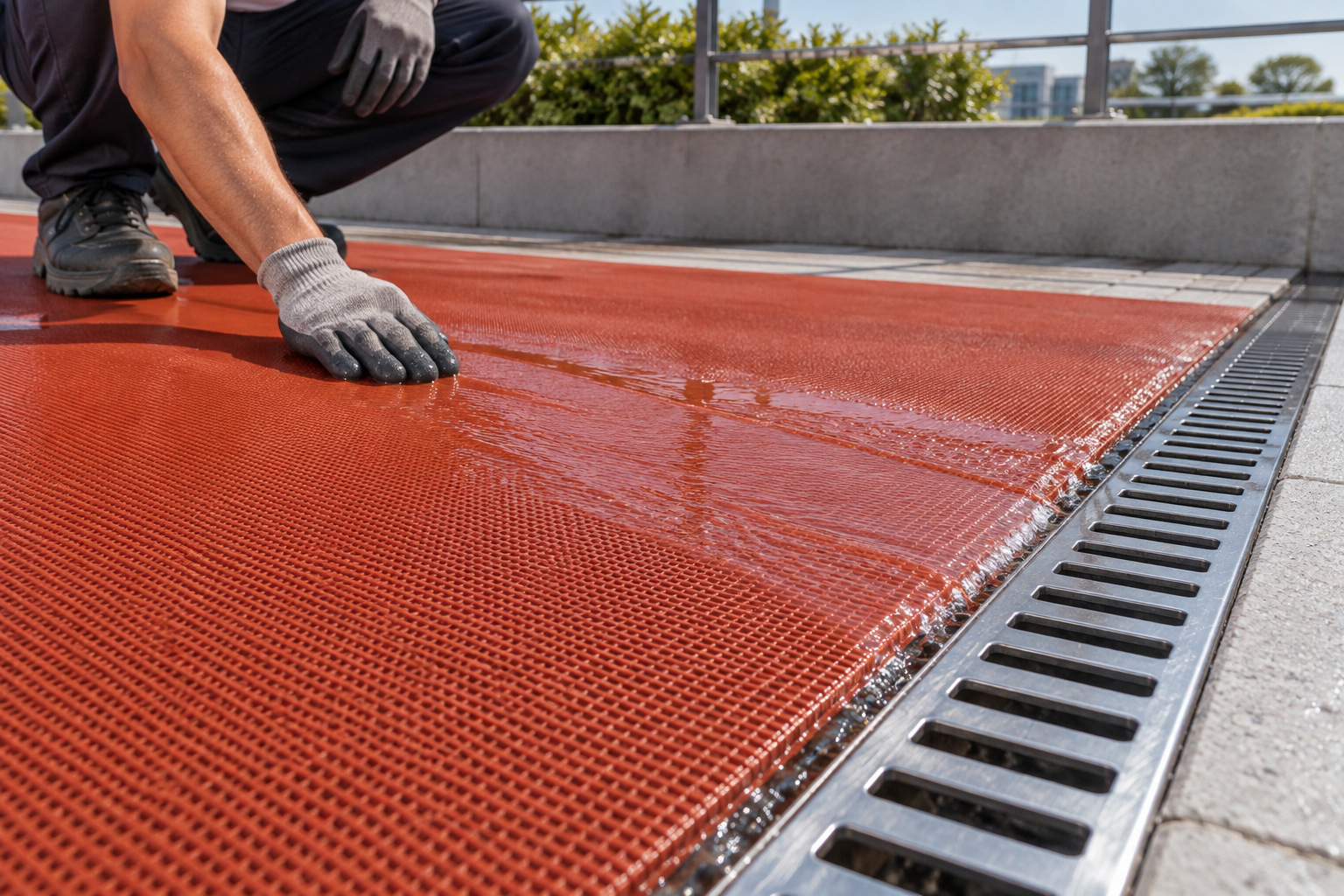
Inspect channels and outlets for construction debris or adhesive obstruction. Assess water movement using the specified project procedure. Record where water collects and investigate whether the cause is a local depression, an edge detail or a broader civil-works issue. Avoid inventing a universal ponding tolerance or time limit when the contract uses a defined method.
If an area sounds different or feels unsupported, treat that as a reason for investigation rather than a conclusive bond-strength measurement. Use the agreed inspection method, and undertake any destructive sampling only through the project process. Repaired test locations should be restored and reinspected before release.
![Water draining from the running surface toward a clear perimeter channel]()
Figure 4. Water draining from the running surface toward a clear perimeter channel. AI-generated technical illustration.
Close Out Documents and Defects Before Opening
The handover package should identify the installed product, adhesive system, material lots, roll layout, test reports and approved repairs. Include maintenance instructions, restrictions on footwear and equipment, relevant warranties and the responsible contact for service questions.
Document the opening decision after curing and outstanding defects have been addressed. A scheduled event should not silently replace technical release criteria. Arrange an early maintenance review to check seams, high-use zones and drainage under actual operating conditions.
![Close inspection of a flush joint in a completed blue prefabricated rubber track]()
Figure 5. Close inspection of a flush joint in a completed blue prefabricated rubber track. AI-generated technical illustration.
Coordinate Acceptance for a HUADONG Surface
Whether the project uses GOTER or GODER, agree the documentation and testing responsibilities at the specification stage. Supply HUADONG with the intended venue use and acceptance requirements so product information, installation planning and the final handover can be coordinated from the start.
Frequently Asked Questions
1. Does a good appearance prove the track meets performance requirements?
No. Appearance is one part of acceptance. Required dynamic, friction and other performance properties need the appropriate tests and records.
2. Does a certified product automatically create a certified facility?
No. Product approval and facility certification concern different scopes. The completed venue must follow the applicable facility process where certification is required.
3. Can tapping the surface measure adhesive strength?
It may help locate differences worth investigating, but it is not a quantified bond-strength test. Use the agreed method to assess suspected defects.
4. Who should define the acceptance tolerances?
The project specification should establish them with the relevant designer, owner and testing requirements. They should be agreed before construction, not improvised at handover.
5. Which records are most useful after opening?
Keep the specification, material and adhesive identities, roll map, as-built survey, test reports, repair records and maintenance instructions together. They support targeted maintenance and future investigations.