How to Select a Running Track Surface and Control Its Quality
Selecting a running track surface is not simply a choice between a roll and a liquid system. The decision has to connect the intended level of competition, spike use, climate, base condition, construction programme and acceptance requirements. Quality control must then continue from material approval and base inspection through installation, thickness verification, physical testing and final handover. A surface can look uniform while still containing thin areas, weak seams or performance values outside the project specification, so appearance alone is never a complete acceptance method.
![]()
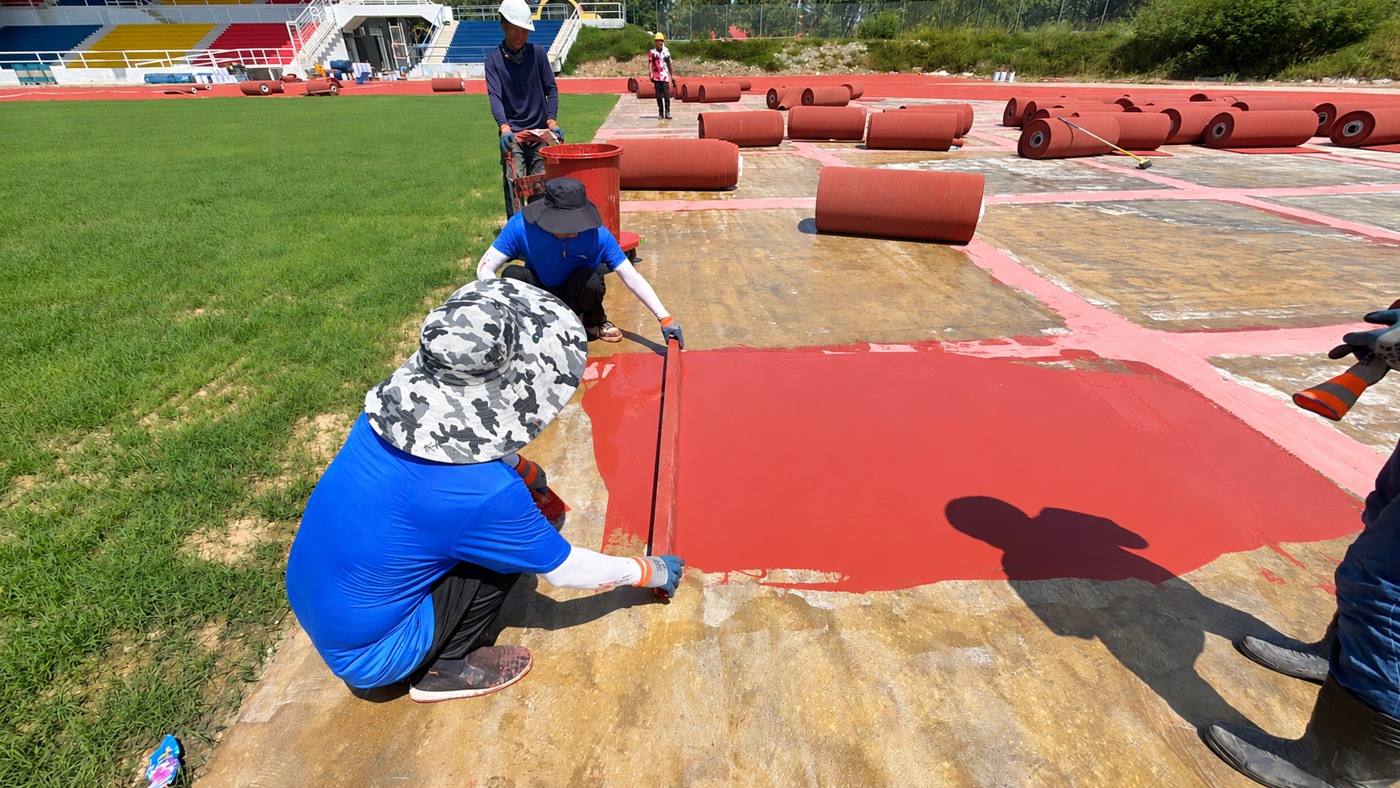
Figure 1. HUADONG installers position prefabricated rubber track sheets over the prepared stadium base at the Labuan project. Photo: HUADONG project archive.
Choose the Surface System for the Actual Venue
Running-track surfaces are commonly divided into factory-made prefabricated rubber sheets and site-applied synthetic systems. Prefabricated sheets are calendered and vulcanized under controlled factory conditions, giving the supplied rolls a defined thickness and repeatable material structure. Site-applied systems include cast elastomer surfaces, resin-bound rubber-granule surfaces and combined or sandwich systems. Each option can be appropriate when its product certificate, installation method and performance data match the project.
The specification should state the intended use before naming a system. A professional competition venue may prioritize current certification, spike resistance and verified performance consistency. A school or community facility may place greater emphasis on multi-use operation, maintenance access and budget. Tropical rainfall, temperature range, UV exposure, construction season and the condition of the base also influence the selection. A product should not be accepted merely because its color and nominal thickness resemble another approved surface.
For projects that require a factory-manufactured track roll, the HUADONG GOTER prefabricated environmental rubber track and HUADONG GODER prefabricated environmental rubber track provide two product pages that can be reviewed against the approved project specification. Product selection and site acceptance should still be treated as separate decisions.
Set Thickness Requirements Before Procurement
The contract should define total synthetic-surface thickness, any local thickened zones and the permitted distribution of individual readings. In the cited Chinese athletics-facility classification, I-A and I-B outdoor venues use a total synthetic thickness of at least 14 mm, while II-A, II-B and III venues use at least 13 mm. The selected project standard, current product certificate and approved drawings remain the controlling documents.
A nominal thickness is not the same as an accepted finished thickness. Under the cited assessment method, areas below 90% of the certified absolute thickness should not exceed 10% of the total measured area, excluding intentionally thickened zones. An area below 80% of the certified thickness is an ultra-thin area and requires specific evaluation rather than being hidden in an average. The acceptance plan should state how these areas will be mapped, corrected and rechecked.
High-wear event locations need additional resilience. The cited design guidance uses a 20 mm surface over the final 3 m of the high-jump approach, the final 13 m of the triple-jump runway and the final 8 m of the pole-vault and javelin runways, including the area before the javelin throwing arc. The steeplechase water-jump landing area uses 25 mm. These dimensions must be coordinated with base levels so that thickening does not create a step or unwanted local basin.
![]()
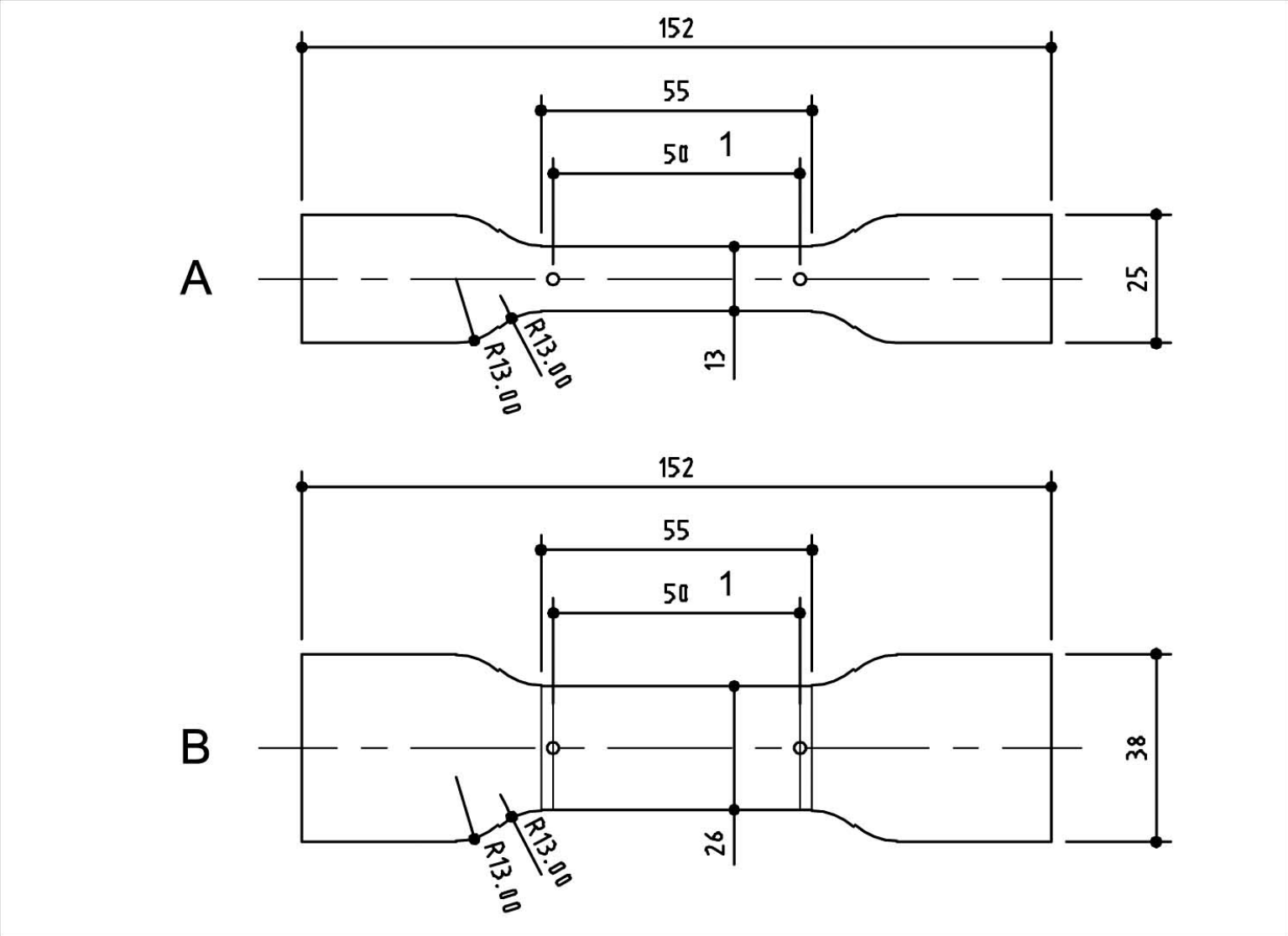
Figure 2. Representative test-piece geometries show why material specimens must be prepared and measured consistently before tensile testing.
Control Materials and Installation as One Process
Material approval should record the product name, batch, roll or lot identification, color, thickness, certificate and relevant laboratory reports. On delivery, inspect packaging, damage, contamination and storage conditions. Keep a roll map or batch map so that any later test result or repair can be traced to its installed location. Samples taken only from unopened material cannot describe every site-made seam, transition or repair.
The base must be accepted before surfacing starts. Confirm strength, smoothness, levels, gradients, drainage, cleanliness and moisture against the selected adhesive and surface system. Factory-controlled thickness does not correct a local high point or low basin in the base. In fact, a prefabricated sheet often makes base irregularities easier to see because the installer cannot vary the sheet thickness to mask them.
Weather and substrate temperature affect adhesive open time, wetting and cure. Record the actual conditions, not only the forecast. The work sequence should protect completed areas from construction traffic and contamination. Rolls must be oriented correctly, fitted without forced stretching and pressed into the adhesive according to the installation method. The grey or waffle-textured underside of a prefabricated roll is the bonded face and must remain toward the base; it is not the exposed running surface.
![]()
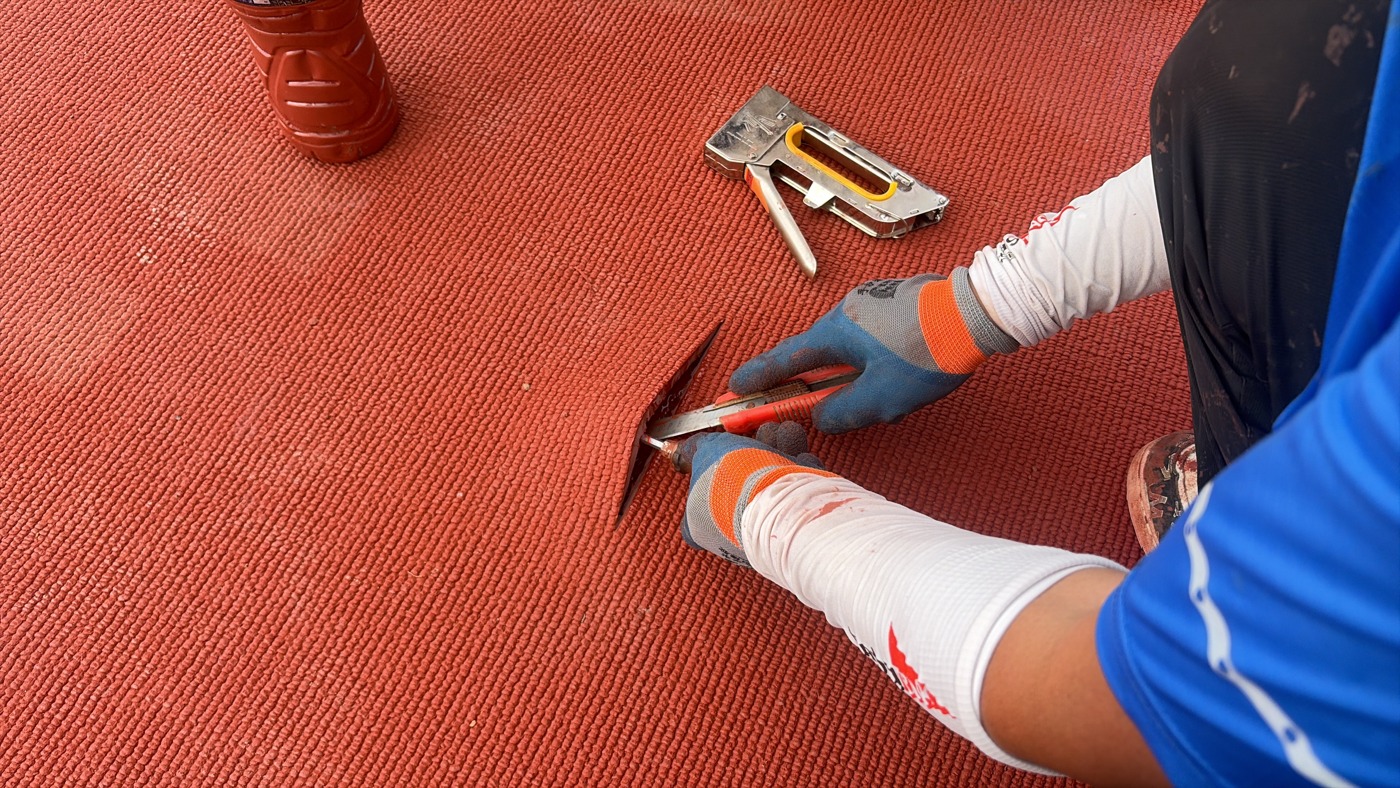
Figure 3. Accurate trimming and full edge bonding are essential at prefabricated track seams. Photo: HUADONG project archive.
Inspect Seams Flatness and Surface Continuity
Seams should be tight, straight and fully bonded, with no open gaps, edge lift, contamination or adhesive squeeze-out that interferes with use. Curves, runway transitions, drainage edges and event-equipment interfaces deserve additional checks because the sheet is being fitted to changing geometry. Residual roll curvature and temperature differences should be resolved before final cutting and bonding rather than held in place by temporary weights alone.
The cited smoothness limits are a maximum gap of 6 mm under a 4 m straightedge and 3 mm under a 1 m straightedge. A step-like irregularity greater than 1 mm is not acceptable, particularly across prefabricated seams. Record the straightedge position, direction and measured gap so a failed area can be found again after correction. Random unlocated readings have little value during defect closure.
Visual inspection should also cover bubbles, debonding, cracks, color variation, surface damage, drainage edges and the interfaces with kerbs, covers and take-off boards. Tapping or walking the surface can help identify areas for investigation, but it is not a quantified bond-strength test. Suspected defects should be assessed using the method agreed in the project specification.
Verify Finished Thickness and Physical Performance
Finished thickness is measured on the installed surface with a calibrated three-needle gauge or the method required by the project standard. The cited layout takes readings every 10 m around the circuit while alternating even and odd lanes, every 5 m through bends and semicircular event areas, and at the center of each lane at the 110 m hurdles start. The purpose is to test the spatial distribution of thickness, not to create a favourable average from a few selected locations.
Tensile properties should be based on at least four representative samples and reported as an average under the cited method. The cited minimum tensile strength is 0.5 MPa for non-porous surfaces and 0.4 MPa for porous surfaces, with elongation at break of at least 40%. Confirm the current governing standard because specimen geometry, conditioning and test speed affect the result.
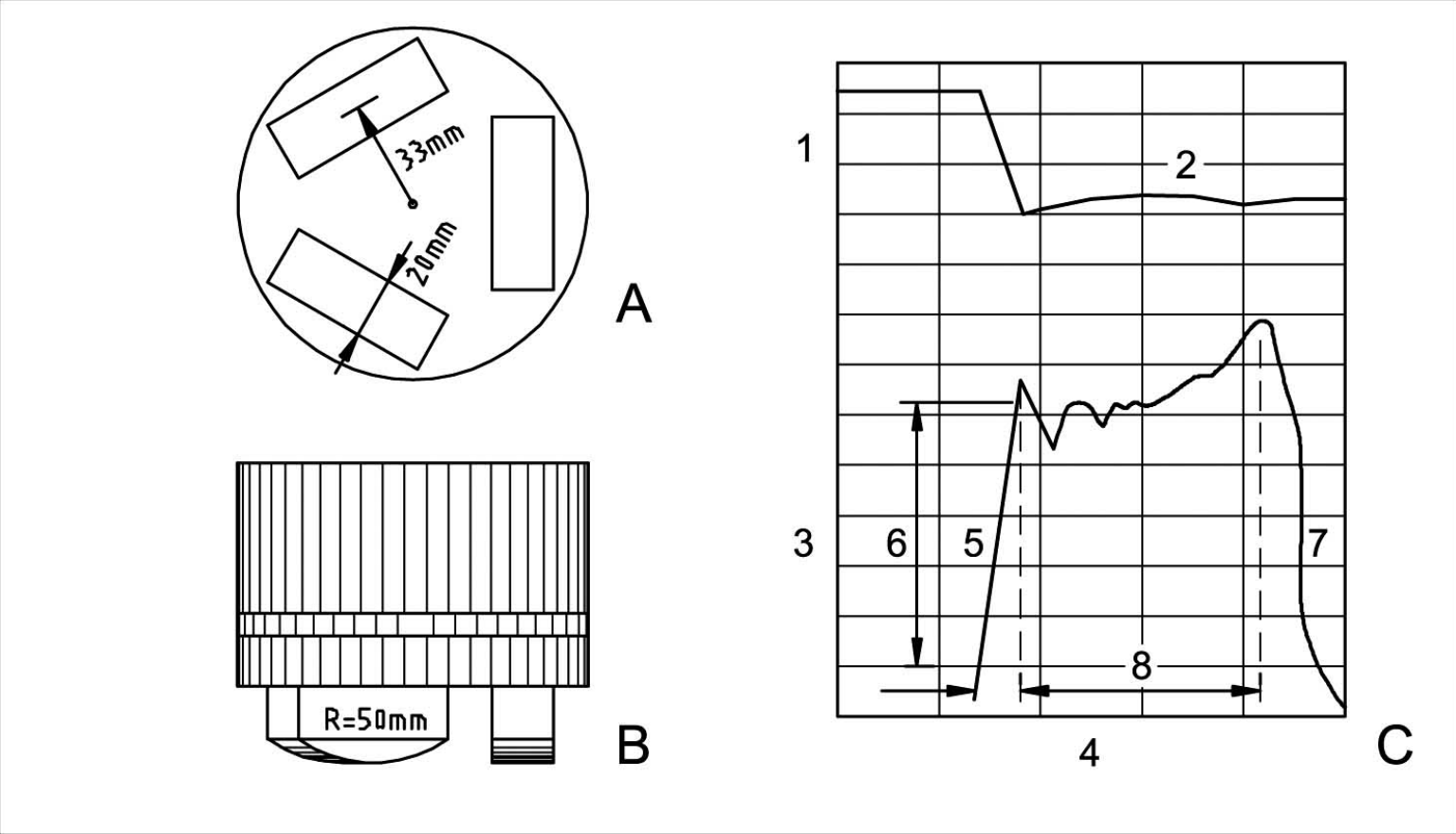
Shock absorption and vertical deformation are tested at least once per 500 m2 with at least 12 locations overall under the cited plan. Friction is tested at least once per 1000 m2 with at least six locations overall, and the cited wet friction coefficient is at least 0.5 using the TRRL pendulum method. Surface temperature for shock absorption, deformation and friction testing should be within 10 to 40 degrees C. Moisture-cured polyurethane components require at least 14 days of curing before the cited tensile assessment.
![]()
Figure 4. A pendulum-style friction test illustrates the controlled contact and reading procedure used for synthetic athletics surfaces.
Key Controls and Handover Evidence
• Approve the surface system against venue use, climate, spikes, certification target, base condition and construction programme.
• Identify products, rolls, batches, adhesives and installed locations in a traceable material register and roll map.
• Accept base strength, smoothness, levels, slopes, drainage, cleanliness and moisture before adhesive application.
• Record installation weather, substrate temperature, adhesive batch, mixing and application times, work zones and corrective actions.
• Check every seam for alignment, full bonding, tight fit and a step no greater than 1 mm under the cited criterion.
• Map thickness readings and ultra-thin areas rather than relying only on an overall average.
• Complete the required tensile, shock absorption, vertical deformation and wet-friction tests after the specified cure and conditioning period.
• Hand over product certificates, laboratory reports, site-test records, as-built drawings, defect closure, maintenance instructions and warranties together.
Reference basis: the numerical values in this article are drawn from the supplied technical source document and its cited athletics-facility guidance. Confirm the latest applicable World Athletics rules, national standard, approved product certificate and project specification before using any figure for contractual design or acceptance.
Frequently Asked Questions
1. Why is factory thickness control not enough?
Factory control establishes the supplied roll thickness and material structure. Finished quality still depends on base flatness, moisture, adhesive application, sheet fitting, seams, event-area thickening and site damage. The installed system therefore needs its own inspection and testing records.
2. How is finished running-track thickness verified?
Use the calibrated method required by the project standard and distribute readings across straights, bends, lanes and event areas. Record each location so thin zones can be mapped and corrected. Do not accept a few favourable spot readings as proof of the whole surface.
3. What should be checked at prefabricated seams?
Check cutting accuracy, alignment, tightness, full edge bonding, contamination, edge lift and changes in level. Under the cited smoothness criterion, a step-like irregularity greater than 1 mm is not acceptable.
4. When can performance testing begin?
Testing begins after the surface and adhesive have reached the cure or conditioning period required by the specified method. The cited method tests shock absorption, vertical deformation and friction with the surface between 10 and 40 degrees C and delays tensile assessment of moisture-cured polyurethane for at least 14 days.
Keywords: prefabricated running track surface; track surface quality control; running track thickness; track seam inspection; athletics surface testing.