Running Track Installation Process Guide for Different Scenarios
Introduction to Running Track Installation
Installing a running track is a precise and technical process that ensures safety, performance, and durability for athletes. Whether for competitive events or training, proper installation is essential to create an ideal environment. This guide will walk you through the steps of running track installation, with a focus on different scenarios such as straight sections, curved areas, and specialized zones. We will also highlight the benefits of prefabricated running tracks, which simplify the process and ensure consistent quality.

Importance of Proper Installation
A well-installed running track provides the smoothness and resilience needed for optimal performance. Misalignments, gaps, or uneven surfaces can cause safety hazards and reduce the track's longevity. Each stage of installation must be executed with precision to ensure long-lasting performance and safety.
Key Considerations for a Successful Running Track Installation
Before starting the installation, several key factors must be considered:
Materials: Choose the right materials that meet both performance and safety standards.
Track Design: Ensure that the track design is tailored to the needs of athletes and complies with regulatory standards.
Environmental Conditions: Take climate and weather into account, as they can influence material choices and adhesives.
Prefabricated Running Tracks: The Future of Track Installation
Prefabricated running tracks have become increasingly popular due to their precision and ease of installation. These tracks come in pre-cut rolls that are tailored to fit specific track designs, significantly reducing the on-site installation time and ensuring a flawless finish. This convenience is especially valuable in large-scale installations where speed and accuracy are critical.
Steps for Installing Running Tracks in Straight Sections

Preparation of the Subsurface
The first step in installation is preparing the subsurface. The ground must be leveled and stable, typically requiring a gravel or concrete base, depending on the track's needs. Proper subsurface preparation is essential to prevent the track material from shifting over time.
Installing Longitudinal Joints
Longitudinal joints, where one roll meets the next along the track’s length, must be bonded carefully to prevent misalignment. A 3–5mm overlap is critical for creating a tight, clean bond. The edges of the rolls are trimmed to fit seamlessly, ensuring no gaps or variations.
Precision Cutting and Seam Bonding
After the rolls are in place, precision cutting using a steel straightedge and sharp utility knife ensures that the seams align perfectly. A layer of adhesive is applied to the cut edges to enhance the bond, ensuring the track stays intact even under heavy use.
Weighting and Consolidation
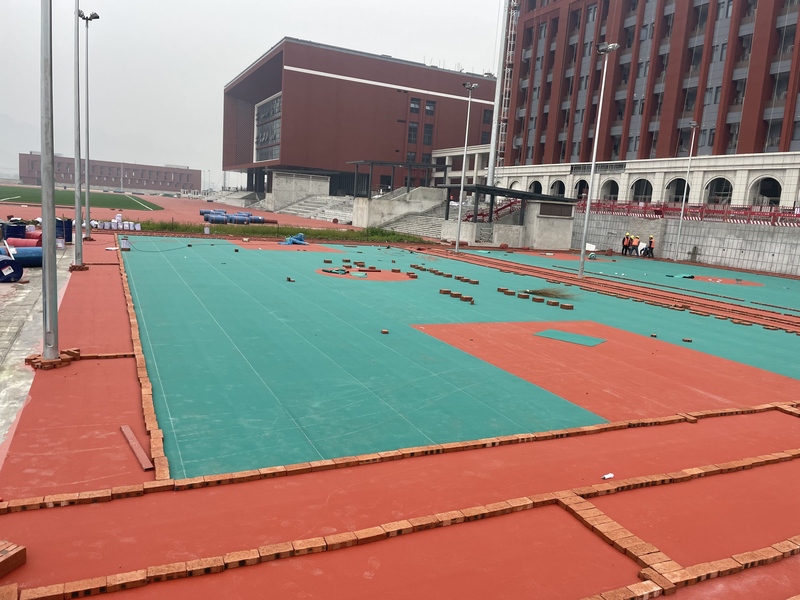
To ensure a seamless finish, bricks or other heavy weights are placed over the seams. This weight is essential for pressing the track firmly onto the substrate, allowing the adhesive to cure completely without lifting or misalignment.
Installing Running Tracks in Curved Sections

Preparing for Curve Installation
Installing tracks on curves presents additional challenges. Since the rolls are straight, they may fold or buckle when placed along curved sections. To avoid deformation, installers must carefully align the track to maintain proper shape during installation.
Smoothing the Inner Edge
Any slight folding or buckling on the inner edge of the track can be smoothed using bricks or other heavy weights. This ensures the track adheres to the curve and stays aligned throughout.
Seam Treatment and Adhesion in Curved Zones
Seams in curved sections must be treated with care to ensure smooth, continuous adhesion. This involves precise cutting and adhesive application, paying close attention to alignment to avoid visual disruptions.
Prefabricated Running Tracks in Curved Areas
Prefabricated tracks work well in curved areas because the precision cuts allow for easy manipulation and alignment. Their uniformity ensures a smooth transition between straight and curved sections, resulting in a more aesthetically pleasing and functional track.
Installing Running Tracks in Special Zones
D-Zone (Semicircular Area) Installation
The D-zone, or semicircular area, presents unique challenges due to its shape. To ensure proper installation, the direction of the roll must be carefully considered. Rolls can be installed either longitudinally or transversely, depending on the project requirements, ensuring a smooth transition between curved and straight sections.
Auxiliary Zones (Safety and Walkways)
Auxiliary zones, such as safety areas and walkways, must be installed with the same precision as the main track. Consistency across these areas is essential to maintain the track's overall performance.
Long Jump Runway Installation
The long jump runway has specific requirements, such as a custom width for competition standards. Prefabricated tracks for these areas are designed according to the approved specifications.
Custom-Sized Prefabricated Rolls for Long Jump Runways
Prefabricated tracks for long jump runways offer precise dimensions and a smooth surface, enhancing athlete performance. The consistency of the prefabricated materials ensures a seamless transition from the runway to the main track.
Thickened Zones for Enhanced Performance
Some sections of the track, like those for high-performance areas, require thicker materials for added durability. In these areas, 13mm prefabricated rolls provide additional strength and performance, ensuring the track can withstand high-impact use.
Techniques for Seamless Joints and Long-Term Durability

Handling Transverse Joints
Transverse joints, where one roll ends and another begins, require special attention to ensure perfect alignment. The standard method is overlap cutting, where the end of the first roll is trimmed to a precise length and bonded with the next roll. This technique creates a smooth, flush seam that prevents gaps and enhances the track’s durability.
Ensuring Structural Integrity Through Proper Compression
Brick pressing is an essential technique to ensure the joints are consolidated, and the adhesive cures properly. The weight applied ensures the track remains level and free of gaps or misalignment.
Preventing Common Installation Issues
Avoiding Visual Gaps and Misalignments
Proper installation techniques ensure no visible gaps or misalignments in the track. Special attention is paid to edge finishing and ensuring a clean, continuous surface.
Prefabricated Running Track: Seamless Joints and Ease of Installation
Using prefabricated tracks simplifies the process of achieving seamless joints. Their precise cuts ensure perfect alignment, reducing the likelihood of installation issues.

Conclusion: The Importance of Professional Installation for Running Tracks
Long-Term Benefits of Proper Running Track Installation
A professionally installed running track not only provides optimal performance but also enhances safety and longevity. Whether for competitive venues or community facilities, proper installation is essential for the track's lifespan and functionality.
Final Thoughts on Running Track Installation
When installing a running track, attention to detail and precision are essential. Professional services and prefabricated tracks ensure the track will be durable, high-quality, and ready for athletes to perform at their best.
Why Prefabricated Running Tracks Are a Game Changer
Prefabricated rubber tracks are revolutionizing the installation process by offering a more efficient and accurate approach. The use of prefabricated materials guarantees a consistent, high-quality finish, saving time and minimizing errors during installation.
By following the steps outlined in this guide and utilizing prefabricated tracks, the installation process becomes faster, more efficient, and ensures the track is ready for athletes to perform at their highest level.