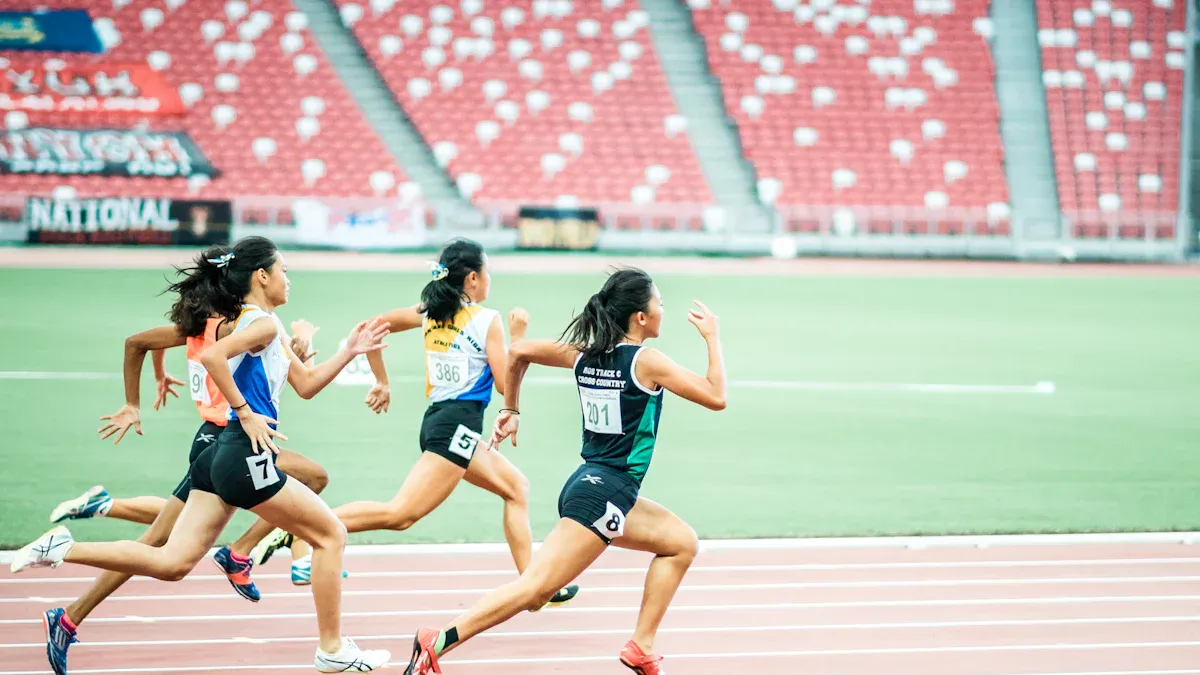
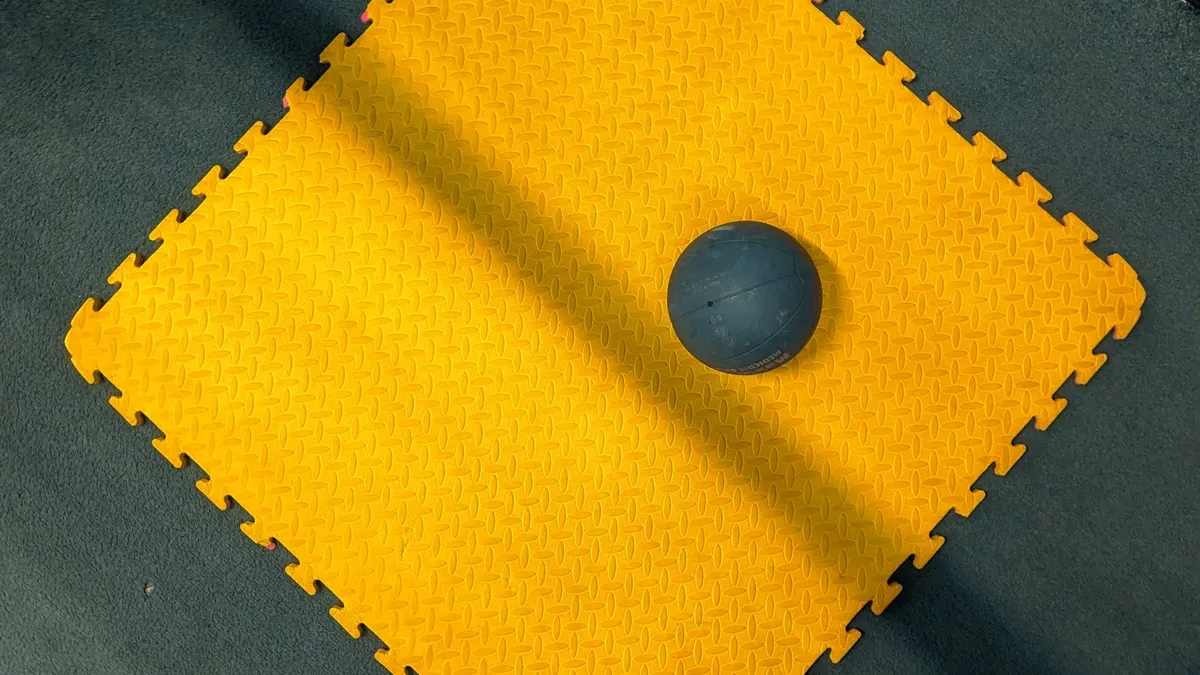
Rubber sports flooring enhances both performance and safety through its unique material properties. The material delivers reliable traction underfoot, returns energy with each stride, absorbs shock on hard landings, and holds up to constant use. These traits give athletes a consistent surface for every run, jump, and stop.
Coaches and facility managers see the difference in daily training. Sport rubber flooring supports athletic performance while lowering the risk of slips and impact injuries. This post examines the performance and safety benefits of rubber sports flooring and explains how to choose the right sports flooring for a facility.
Key Takeaways
Rubber sports flooring gives athletes reliable grip and energy return for better performance.
The flooring absorbs shock to reduce joint stress and lower injury risk.
Rubber surfaces resist slips and hold up well under heavy use.
Choose flooring thickness and material based on the sport and space.
Proper installation and maintenance keep the floor safe and durable for years.
Sport Rubber Flooring And Athletic Performance
Sport rubber flooring gives athletes a surface that works with the body instead of against it. The material's elastic polymer network plays a central role here. When a foot strikes the ground, that network deforms and dissipates a portion of the impact energy. This deformation lowers the ground reaction forces that travel back up through the leg. Lower forces mean less muscular fatigue across a long practice or game. The same elastic structure also drives the performance gains that coaches look for in daily training.
Traction And Grip
Traction determines how confidently an athlete can push off, cut, and stop. Rubber surfaces deliver grip that stays predictable across a session. Hardwood offers good traction when it is properly finished and maintained, yet it turns slippery once it is over-waxed or dusty. Synthetic floors hold more consistent traction than hardwood, especially under variable humidity or when athletes wear non-marking shoes. Rubber surfaces sit in a different category for certain sports. Recycled rubber flooring suits weight rooms well, but it provides too much coefficient of friction for basketball, indoor soccer, and volleyball. Compliant sports surfaces call for a sliding coefficient between 80 and 110, and rubber can exceed that appropriate range for these activities. Facility managers should therefore match the surface to the sport. Optimizing traction and stability means choosing a product with the right friction profile, not simply the highest grip available. Optimal traction supports controlled sliding, and that control protects joints during sharp direction changes. High-traction surfaces also shorten the time an athlete needs to reach top speed, agility, responsiveness and control all improve when the foot plants without slipping.
Energy Return And Shock Absorption
Resiliency and surface texture shape how athletes run, jump, slide, and stop. A rubber floor compresses under load and then springs back. This rebound feeds a measurable share of force back into the stride, and athletes describe the effect as a livelier push-off. Energy return of this kind rewards repeated jumping and sprinting with less perceived effort. Shock absorption works on the opposite side of the same coin. The polymer network cushions hard landings and spreads the force over a longer time window. Joints and connective tissue feel less stress during plyometric work and rebounding drills. Sport rubber flooring balances these two traits, and that balance is what separates a performance surface from a purely protective one. Too much cushioning drains energy from each step. Too little leaves athletes exposed to impact injuries. A well-made rubber sheet finds the middle ground, and the shock-absorbing properties stay consistent across the full court or track. Consistency matters as much as the raw numbers. A surface that behaves the same in every zone lets athletes trust their footing and commit fully to each movement. Coaches who track athlete performance over a season often notice fewer soft-tissue complaints and steadier output in late-game situations. The material supports athlete performance in small, cumulative ways that add up over months of training. Every stride, landing, and pivot benefits from a floor that returns energy and absorbs shock in equal measure.
Safety Benefits Of Sports Flooring
Safety drives every decision in a training facility. A floor must protect the body from impact, prevent slips, and survive years of heavy use. Rubber sports flooring meets all three demands through its material structure and surface design.
Injury Prevention And Slip Resistance
Shock absorption cushions athletes from hard impacts and softens falls. The elastic polymer network compresses on landing and spreads force over a longer window. This cushioning lowers the likelihood of injuries and reduces stress on joints during repeated jumps and sprints. Coaches who prioritize injury prevention notice fewer complaints about sore knees and ankles over a long season.
Anti-slip surfaces keep athletes stable during every movement. Lab testing of rubber flooring texture design confirms it maintains a minimum COF of 0.6 even under simulated wet conditions, ensuring maximum grip. That figure matters because a COF of 0.6 or higher under wet conditions is widely recognized as the threshold for true slip resistance. Rubber sports flooring is engineered to meet or exceed this 0.6 COF baseline, aligning with ADA 302 and EN 14904 friction requirements for sports surfaces.
Standard | Region | Focus | Requirement |
ADA 302 | U.S. | General Accessibility | COF ≥ 0.6 (commonly targeted) |
ASTM D2047 | U.S. | Static COF | Result value reported |
EN 13845 | Europe | Wet slip resistance | R-rating (R9–R13) |
EN 14904 | Europe | Sports surfaces | Shock absorption, friction |
ISO 13287 | Global | Industrial safety | Pass/Fail |
Rubber flooring also mitigates noise and reverberation in indoor halls. Hard surfaces reflect sound energy and raise reverberation levels. Resilient underlayment systems help block impact noise from footfalls, bouncing balls, and equipment. Facility managers should treat the floor as one part of a broader sound management strategy alongside ceiling and wall treatments.
Durability And Maintenance
Durability suits high-impact spaces. Rubber surfaces resist wear from dropped weights, constant foot traffic, and equipment drag. Lifespan varies by material type.
Flooring Type | Typical Lifespan |
Recycled SBR Rubber | 8–12 years |
Virgin Rubber (EPDM) | 10–15 years |
Vulcanized Rubber | 12–18 years |
Commercial-grade Vinyl | 10–15 years |
Maintenance demands stay modest. Crews sweep and damp-mop rubber rolls with a neutral pH cleaner each week and scrub quarterly. Rubber tiles offer a practical advantage: damaged pieces come out individually without redoing the entire floor. Rolls may need more careful repair when large sections fail, since matching cut sections takes labor. Well-installed rolls carry fewer seams and fewer wear points.
Total cost of ownership includes material price, labor rates, downtime, and upkeep. Buyers should look beyond the installation price and weigh maintenance, refinishing, and eventual replacement. A quality floor may cost more upfront and still reduce lifetime expenses through fewer repairs and a longer lifespan. Durable surfaces help athletes recover faster and play longer, which supports athlete performance across a full season.
Choosing Indoor Sports Flooring
The right indoor sports flooring starts with a clear picture of how the space will be used. Facility managers should match thickness and material to the sport, the traffic level, and the safety needs of the athletes. A weight room and a basketball court demand different surfaces. A multipurpose gym that hosts assemblies and tournaments needs a different balance than a single-use training hall. Buyers who define these needs first will narrow their sports flooring options quickly.
Thickness And Material
Thickness drives how much shock the floor absorbs and how much energy it returns. The table below shows common recommendations by activity and space.
Activity / Space | Recommended Thickness |
Sports facilities (basketball courts, indoor tracks) | 8mm–12mm |
Weightlifting gyms | 15mm–30mm |
Light-duty commercial areas (entrances, hallways, offices) | 4mm–6mm |
Multipurpose sports courts, fitness studios | 8mm–12mm |
CrossFit boxes / heavy equipment areas | 15mm–30mm |
A second way to plan thickness uses inches across a whole complex. Light-use areas such as hallways and entrances need about 1/4 inch. High-impact zones for weightlifting, gymnastics, and multi-sport training need at least 1/2 inch. Multi-sport environments that combine basketball, volleyball, strength training, and aerobics work well at 1/2 inch to 3/4 inch. Wall and fence protection also calls for about 1/4 inch.
Material composition shapes both performance and safety. Vulcanized rubber bonds its layers permanently through heat and pressure, so the layers never separate and the surface behaves the same way every session. The natural resilience of rubber reduces athlete fatigue and lowers the risk of foot injuries. A shock-absorbing compound cushions landings and sudden explosive movements. A dense, sturdy compound supports heavy weight loads without breaking and resists ripping from cleats and skates. Moisture- and chemical-resistant formulations withstand perspiration, spills, and regular cleaning without staining, and they inhibit mold and mildew growth.
Rubber also brings hygiene and air-quality advantages. The material is naturally slip-resistant and bacteria-resistant (ASTM G21), PVC-free, and low in VOC content. A homogeneous construction needs no waxing or sealing, so maintenance costs drop while traction stays reliable in wet or high-traffic areas. The same compound provides shock-absorbing and acoustic benefits that help facilities meet ADA compliance and ASTM performance standards. Very low VOC emissions and an antibacterial surface make the flooring safe for athletes and support indoor air quality. The absence of heat sealing and compatibility with shock-absorbing underlays further enhance safety and acoustic performance. Eco-compatibility is a direct benefit of the rubber material composition.
Buyers who compare custom sports flooring materials should weigh these traits against the sport. A basketball court needs a sliding coefficient in the right range, as the earlier section noted. A weight room needs density and load support. A fitness studio needs resilience and quiet. The best custom sports flooring materials for one space may be the wrong choice for another. Matching the compound to the use keeps the surface safe and durable indoor sport flooring for years.
Installation And Fit
Installation method affects both the finished surface and the project timeline. Glue-down installation is common with synthetic and rubber flooring. It provides strong adhesion and a stable surface when crews apply it over a properly prepared substrate. This method suits multipurpose rooms, fitness areas, and indoor sports applications that need resilience and easy maintenance. Rolled flooring is an efficient choice for large open spaces. Tile flooring simplifies repairs in certain environments. A seamless poured system creates a clean, uniform finish.
Subfloor preparation is the critical step. Crews should assess moisture conditions, slab levelness, existing floor removal, building usage and schedule, and HVAC or climate stability before installation. Poor preparation can cause premature floor failure. Testing should be conducted by the flooring contractor, because products carry different moisture and relative humidity specifications. Thorough testing lets adhesives bond properly to the concrete and minimizes future maintenance problems.
Budget and layout decisions belong in the same conversation. Buyers should ask how much of the project budget can go to flooring, whether sustainability matters, and whether the project is new construction or a refurbishment. They should define primary and secondary uses and decide whether the floor will be single-use or multipurpose. They should list the key athletic properties the space needs, such as shock absorption, energy return, floor deformation, and ball rebound. Aesthetic goals and brand recognition also play a role.
New construction and refurbishment lead to different choices. Modular rubber flooring suits refurbished projects because it needs little floor preparation and can be laid over the existing underlayment. Adhered options may demand more preparation. Rubber flooring comes in virgin sheet rubber and recycled rubber, which balances sustainability and cost. Virgin sheet rubber carries one of the highest price points but offers high performance, durability, and aesthetics. Recycled rubber flooring offers many use-based options and can lower upkeep costs when buyers weigh total cost of ownership. In weight rooms and high-traffic areas, for example, it reduces heavy-duty cleaning compared with carpeting.
A practical checklist helps facility managers confirm the fit. They should identify the primary sports and their performance requirements. They should decide whether the gym will also host assemblies, graduations, tournaments, camps, or community events. They should evaluate shock absorption, traction, vertical deformation, and other safety characteristics. They should consider daily traffic from athletes, students, staff, spectators, and equipment. They should compare routine cleaning, refinishing, repair, and long-term maintenance. They should plan the installation schedule around athletic seasons, summer breaks, and tournaments. Finally, they should look beyond the initial installation price and weigh maintenance, repairs, refinishing, and expected service life.
Recycled rubber flooring can be manufactured in small and large batches, so it fits a small locker room or a large arena. Sustainability and environmental concerns are a standard part of specification. In large sports facilities, buyers should consider a product's volatile organic compounds and indoor air quality, with third-party verification of emission levels such as California's strict standards. Initial costs may run slightly higher than low-cost alternatives, yet the benefits of recycled rubber flooring are substantial. A careful review of layout, schedule, and lifecycle cost helps buyers confirm that their chosen indoor sports floor fits the facility and the budget.
Rubber sports flooring delivers traction, energy return, shock absorption, and consistent footing for athletic performance. These same traits prevent injuries, resist slips, and hold up under heavy use.
The material earns consideration because it improves performance and safety at the same time. Coaches and facility managers should weigh their sport, traffic, and safety needs before they select a surface. That review protects athlete performance and supports better decisions.
FAQ
Does rubber flooring offer better grip than hardwood?
Hardwood grips well when crews keep its finish clean. Over-waxing or dust makes it slippery. Rubber holds a more predictable grip across a session. Facility managers should still match the friction profile to the sport, since rubber can exceed the sliding coefficient that basketball and volleyball require.
Which thickness suits a weight room?
Weightlifting gyms and CrossFit boxes need 15mm to 30mm of rubber. That range supports heavy loads and cushions dropped weights. Basketball courts and indoor tracks work at 8mm to 12mm. Light-duty hallways need only 4mm to 6mm.
How long does rubber sports flooring last?
Lifespan depends on the material. Recycled SBR rubber typically serves 8 to 12 years. Virgin EPDM rubber lasts 10 to 15 years. Vulcanized rubber holds up for 12 to 18 years. Traffic level and maintenance habits shift these ranges.
What maintenance does rubber flooring need?
Crews sweep and damp-mop the surface weekly with a neutral pH cleaner. A quarterly scrub handles deeper soil. Rubber tiles come out individually when one piece fails. Rolls need more careful repair, so fewer seams mean fewer wear points.
Can a facility use rubber flooring for basketball?
Recycled rubber provides too much friction for basketball, indoor soccer, and volleyball. Those sports need a sliding coefficient between 80 and 110. Buyers should confirm the product's friction profile before they specify rubber for a court.