Introduction
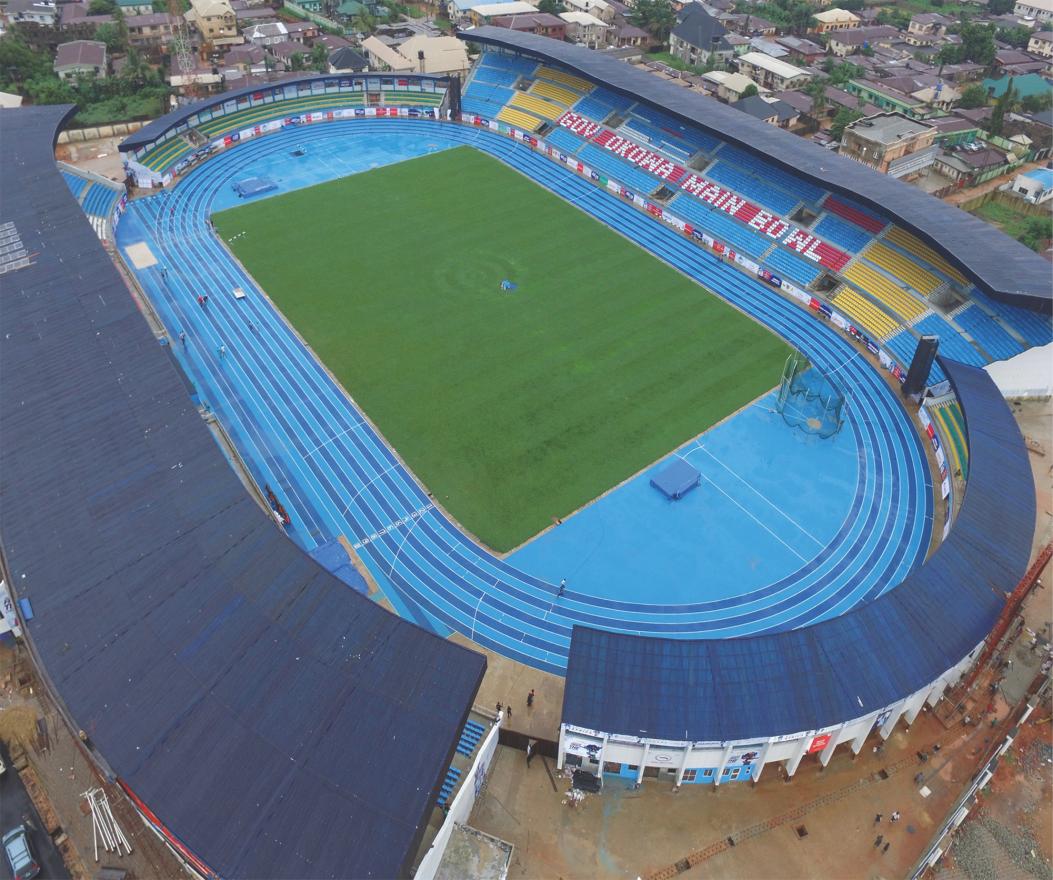
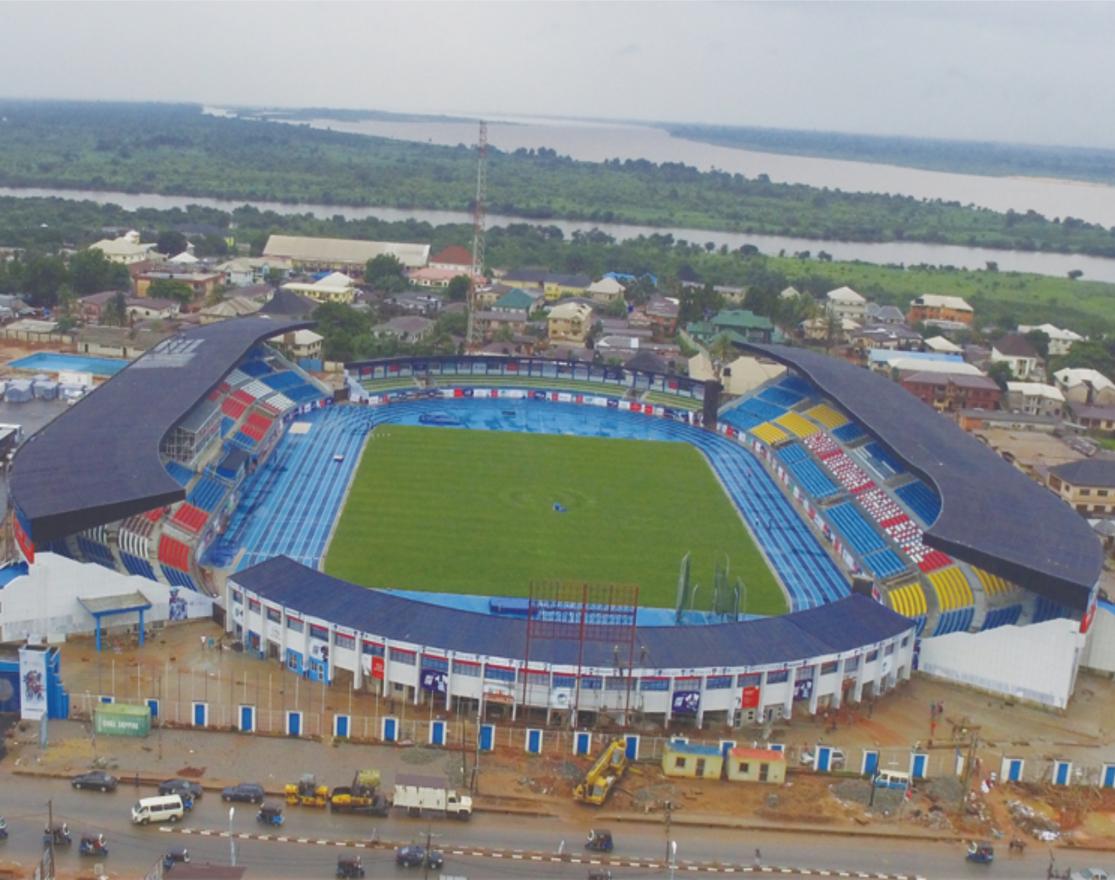
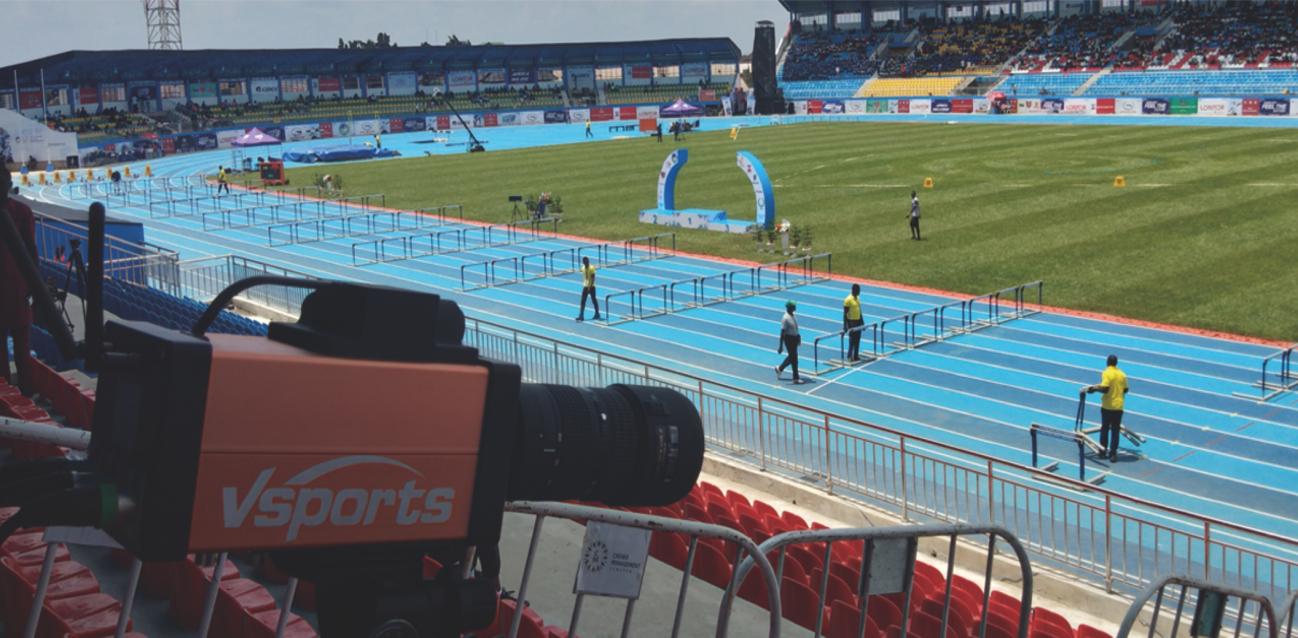
At the beginning of August 2018, Stephen Keshi Stadium in Asaba moved straight into the continental spotlight. The newly commissioned venue hosted the 21st African Championships in Athletics from 1 to 5 August, bringing together about 800 athletes from 52 African countries. For a stadium completed against a fixed event date, the running track was not simply one more finish on the construction schedule. It was part of the competition field, the television image and the athletes' first physical contact with the venue.
The bright blue oval is the feature that immediately separates Asaba from a conventional red-track stadium. Colour, however, is only the visible result. Underneath it sits a more demanding delivery problem: a stable base, controlled installation conditions, accurate geometry and a surface that can be handed over without a long period of on-site curing.
![]()
Five Days That Defined the Delivery Brief
A multi-purpose venue with a clear athletics role
Stephen Keshi Stadium is a multi-purpose complex in Delta State. Its main bowl accommodates football as well as track and field, with a reported capacity of 22,000. That combination creates a practical tension. The track has to meet the geometric and surface requirements of athletics, but it must also live beside football operations, event staging, maintenance traffic and large spectator movements.
The 2018 championships made the athletics requirement immediate. There was no soft opening in which the venue could gradually settle into use. Competition dates were fixed, national teams were travelling, and the track had to be ready for training, inspection and racing before the first starting gun.
Blue was an identity decision, not a shortcut
A non-traditional track colour attracts attention, especially in aerial and broadcast views. It also makes inconsistency easier to see. Variations between rolls, adhesive contamination, untidy seams or weak line marking can stand out sharply across a large blue field.
This is where factory-made material offers a useful starting point. Colour and surface texture can be controlled during production rather than created section by section beside the stadium. The site team still has to protect that consistency during storage, cutting, bonding and marking.
![]()
The Difficult Work Starts Before the Rolls Arrive
Base acceptance in a warm, humid environment
Asaba has a warm climate and a pronounced rainy season. Those conditions make water management a construction issue rather than a weather footnote. Before a prefabricated surface is installed, the base must be checked for level, local depressions, cracks, surface strength and moisture. If water remains trapped or the base falls outside tolerance, a finished roll surface will reproduce the problem rather than conceal it.
Drainage falls require particular attention around the inner kerb, bends and transitions to field-event zones. A track may look even from the stand while still holding water in small areas after rain. Finding those points during base acceptance is far less disruptive than correcting them after the surface has been bonded.
Overseas logistics become part of quality control
Prefabricated material reduces some wet work at the venue, but it introduces a different discipline. Rolls must arrive in the right sequence, remain protected from deformation and contamination, and be stored in conditions suitable for installation. Adhesive, line-marking materials and installation tools also need to be coordinated with customs, transport and the stadium programme.
On a deadline-led project, the contingency plan matters. A missing accessory or damaged roll cannot be treated as a minor procurement issue when teams are due to enter the stadium.
Installing a Prefabricated Track Against the Clock
Survey first, then dry layout
The installation team begins with geometry, not adhesive. Control points, lane radii, straights and field interfaces are checked before the rolls are committed. Dry laying allows the team to confirm direction, manage colour continuity and plan where factory edges and site-cut edges will meet.
Bends deserve more time than their area suggests. A small alignment error can travel through several lanes, becoming obvious at markings and staggered starts. Careful setting-out prevents the crew from trying to correct geometry while the adhesive is already open.
Bonding windows have to follow the weather
Temperature, substrate moisture and changing weather affect adhesive work. The practical response is to divide the track into manageable zones and open only the area that can be laid and rolled within the working window. More labour does not automatically solve the problem; coordination does.
Seams are then pressed and checked while the bond can still be corrected. The aim is not to make every joint visually disappear at close range. It is to create secure, flat transitions that do not interrupt drainage, foot contact or the overall reading of the oval.
Marking and protection complete the handover
Line marking is the final precision operation. Survey data, lane widths, exchange zones and event marks must be transferred accurately onto a surface that is already complete. After marking, access control becomes essential. Other contractors, broadcast crews and event teams may still be working in the bowl, so temporary routes and load protection should be agreed rather than improvised.
![]()
Where Huadong Track Fits
Huadong Track moves the manufacture of its prefabricated rubber surfaces into controlled production. The published range spans several system constructions, allowing the specification to follow the venue's use and applicable standards.
For an overseas stadium, the useful value is not limited to the roll itself. Material scheduling, roll identification, layout planning, storage guidance and coordination with the installation team all affect the result. A prefabricated system can reduce the number of wet processes completed at field level, but it does not replace substrate preparation or skilled site control.
The Asaba project illustrates that balance well. The blue surface gains its visual consistency from controlled material production; the completed oval still depends on dozens of careful decisions made at the venue.
A Measured View After 2018
Public records show that Stephen Keshi Stadium continued to host sport after the African Championships and received further refurbishment ahead of later national events. That is a more useful signal than an unverified claim that a surface remained "as new." Major venues are maintained, repaired and upgraded over time.
The lasting lesson from Asaba is therefore about delivery readiness. A stadium that moved directly into a five-day continental championship needed its surface, markings and event interfaces to work together from the opening session. The photographs record the visible outcome; the construction value lies in the planning that made that outcome possible on a fixed date.
Conclusion
Asaba Stadium is remembered for a blue track and a major African championship, but its relevance to future projects is practical. International events compress decision-making. Base acceptance, overseas logistics, weather windows, roll layout, seam control and post-installation protection all have to be resolved before the venue can look effortless.
For owners evaluating a prefabricated running track, the right question is not whether rolls are faster in isolation. It is whether factory-controlled material and a disciplined installation plan can reduce uncertainty across the whole delivery programme. In a deadline-driven stadium, that distinction matters.
FAQ
1.Is Asaba Stadium the same venue as Stephen Keshi Stadium?
Yes. The main athletics and football venue in Asaba is commonly known as Stephen Keshi Stadium. It was formerly known as Asaba Township Stadium and was renamed after Nigerian footballer and coach Stephen Keshi.
2.Which major athletics event was held there in 2018?
The stadium hosted the 21st African Championships in Athletics from 1 to 5 August 2018. Approximately 800 athletes from 52 African countries participated.
3.Why is base moisture important for a prefabricated running track?
Moisture can affect adhesive performance and may point to wider drainage problems in the substrate. The base should be tested and accepted before rolls are laid; the prefabricated surface should not be used to hide an unresolved moisture issue.
4.Is professional site work still required for a prefabricated track?
No. Factory production improves control over the surface material, while site quality still depends on surveying, substrate preparation, roll handling, bonding, seam work, marking and protection.