Selecting a stadium track surface stands out as a high-stakes infrastructure decision. Facility planners must carefully balance biomechanical performance, climate resilience, and ongoing maintenance demands. A minor miscalculation in surface selection often leads to major operational headaches down the line.
Traditional poured-in-place systems frequently suffer from inconsistent mixing. They also face severe weather delays during installation. In contrast, choosing a prefabricated athletic track offers immense controlled manufacturing precision. This modern approach guarantees uniform thickness. It ensures predictable athletic outcomes across every single lane.
Today, we introduce the GOTER prefabricated rubber track as an engineered solution for serious athletic facilities. You will learn how its vulcanized structure delivers certifiable performance and streamlines installation workflows. We will outline crucial sub-base tolerances, environmental constraints, and procurement logic to guide your next major stadium upgrade.
Key Takeaways
- Prefabricated vulcanized construction guarantees uniform thickness and consistent shock absorption across the entire track.
- Meeting World Athletics track surface standards is non-negotiable for hosting sanctioned Tier 1 and Tier 2 events.
- Proper sub-base preparation (asphalt or concrete) accounts for 80% of a track's long-term structural integrity.
- A premium natural rubber track architecture significantly lowers Total Cost of Ownership (TCO) by minimizing surface degradation, creating a viable 20 year rubber track lifecycle.
The Anatomy of a Precision-Engineered Prefabricated Athletic Track
Factory-controlled vulcanization fundamentally changes how we build sports surfaces. It completely eliminates the weather-dependent risks tied to mixing polyurethane on-site. Manufacturers cure the materials under exact heat and pressure settings inside a facility. You receive a consistent product every time. This consistency removes the guesswork from stadium construction.
The Upper Wear Layer (Friction & Durability)
The top section features a closed-cell, micro-textured surface. This unique texture repels water instantly. It allows athletes to perform safely during light rain. The surface relies on a highly engineered matrix of solid materials rather than loose particles.
Embedded natural rubber provides optimal spike resistance. Track spikes penetrate the surface and release easily without tearing the material. You gain excellent non-slip properties without relying on loose EPDM granules. Traditional tracks often lose these granules over time. A solid vulcanized layer prevents this structural degradation completely.
The Biomechanical Base Layer (Shock Absorption)
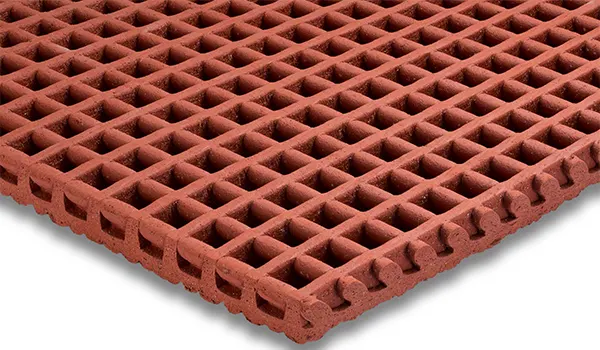
Beneath the wear layer lies a highly engineered shock-absorbing foundation. We can deconstruct this as a geometric honeycomb or waffle backing. This geometric design creates specific air pockets. These pockets compress upon impact and rebound instantly.
We can directly map this physical structure to critical athlete outcomes. The honeycomb base manages vertical deformation perfectly. It ensures energy restitution returns to the runner's legs. This specific energy return minimizes muscle fatigue. It plays a massive role in long-term injury prevention for competitive sprinters and distance runners.
- Vertical Deformation: Controls how deeply the foot sinks into the track, protecting joints from harsh impacts.
- Energy Restitution: Bounces kinetic energy back to the athlete, improving sprint times.
- Slip Resistance: Secures foot placement even in high-moisture environments.
- Force Reduction: Absorbs the initial shock wave to prevent shin splints.
![GOTER Prefabricated Rubber Track Installation]()
Core Evaluation Criteria: Why Specify the GOTER Prefabricated Rubber Track
Selecting the right surface requires aligning multiple stakeholder needs. Athletes demand peak performance and injury prevention. Facility managers require simple maintenance routines. Project planners need an asset boasting immense longevity. The GOTER system explicitly addresses each distinct requirement through superior material engineering.
World Athletics Compliance & Testing
Hosting sanctioned events requires strict adherence to international guidelines. You must meet specific testing parameters for a true World Athletics track surface. Inspectors measure friction, tensile strength, and force reduction. Force reduction must typically land between 35% and 50%.
Factory prefabrication makes certification predictability much higher than poured systems. Poured tracks often fail spot-tests due to uneven mixing by on-site crews. A prefabricated roll arrives already compliant. Testers in the factory verify the specifications long before the material reaches your stadium.
Material Superiority & Longevity
Molecular stability defines the lifespan of your athletic surface. A genuine natural rubber track outperforms standard synthetic EPDM or SBR blends. Synthetic blends often harden and crack under prolonged environmental stress. Natural rubber maintains its core elasticity across diverse climates.
UV resistance remains a critical factor for outdoor facilities. Harsh sunlight bleaches vibrant pigments over time. Premium vulcanized rubber locks the colorants deep within the polymer matrix. This superior pigment retention ensures a beautiful aesthetic throughout a 20 year rubber track lifespan. Your facility avoids the faded, chalky appearance common in older poured tracks.
Sustainability & Environmental Compliance
Modern stadiums face strict environmental scrutiny. Sustainable facility design demands materials supporting end-of-life recyclability. Vulcanized rubber tracks offer excellent recycling potential compared to chemically bonded polyurethane layers. Planners can repurpose the material into alternative flooring products eventually.
Air quality matters during installation and daily use. Wet-pour systems often release toxic off-gassing. Volatile Organic Compounds (VOCs) create hazards for installation crews and nearby communities. Prefabricated rolls cure in the factory. They arrive at your site completely free of harmful VOC emissions.
Implementation Realities: Installation Risks and Sub-Base Tolerances
Even premium roll-goods fail quickly if site preparation remains flawed. Contractors and project managers must treat the foundation as the most critical project phase. Rushing the groundwork guarantees structural failure. You must demand absolute precision from your paving contractors.
Sub-Base Requirements & Curing Times
The asphalt or concrete base dictates the final surface quality. Planners must enforce extremely strict flatness tolerances. A standard requirement dictates a maximum 3mm deviation under a 3-meter straight edge. Any dip or bump larger than 3mm will translate visibly through the rubber rolls.
Curing times are entirely non-negotiable. New asphalt must outgas complex oils before track installation. You must allow a minimum of 14 to 28 days for asphalt curing. Concrete requires similar curing windows plus vapor barrier treatments. Applying adhesive too early causes trapped moisture to form massive bubbles under the track.
| Sub-Base Material | Minimum Curing Time | Flatness Tolerance | Key Pre-Installation Risk |
| New Asphalt | 14 - 28 Days | 3mm per 3m | Trapped oils destroying adhesive bond |
| New Concrete | 28 Days Minimum | 3mm per 3m | High moisture vapor emission rates |
| Existing Sub-Base | N/A (Testing Required) | 3mm per 3m | Hidden structural cracks reflecting upward |
Environmental Constraints During Installation
Installation crews face strict environmental constraints when applying the track. They use a two-part polyurethane adhesive to bond the rolls to the sub-base. This adhesive requires highly specific temperature and humidity windows to cure correctly.
Contractors cannot install the track during rain. High humidity introduces moisture into the adhesive matrix. This moisture causes the glue to foam and lose its grip. Ambient temperatures usually must remain between 50°F and 85°F. Project managers must schedule installations during reliable weather patterns to avoid catastrophic bonding failures.
Seam Welding and Moisture Mitigation
The vulnerability of any roll-based system lies entirely in its seams. Installation teams must execute perfect edge-matching when joining two rolls. A gap of even one millimeter allows water to penetrate the sub-base. Trapped water freezes in winter, causing the track to heave and tear.
Crews apply heavy weights along the seams immediately after laying the material. Weighted seam pressing forces the edges flat while the adhesive sets. This meticulous technical process prevents edge-curling over the track's lifespan. Proper moisture mitigation at the seams guarantees the long-term structural integrity of the facility.
Lifecycle Maintenance and Installation Efficiency
Evaluating a track requires shifting focus away from just the initial construction phase. You must evaluate the long-term operating realities. A premium surface demands fewer maintenance hours. It also requires significantly less downtime for repairs over its operational life.
Material Setup vs. Installation Speed
Prefabricated rolls require a different logistical approach than liquid systems. The factory handles the complex chemistry phase. Consequently, on-site teams require significantly fewer labor days to complete the stadium. They simply unroll, align, and glue the material.
This efficiency drastically reduces weather-window delays. Poured tracks require multiple days of perfect weather for each distinct layer. If it rains between layers, the entire project halts. Prefabricated systems mitigate this risk. Crews can secure large sections of the track quickly before weather patterns shift.
Zero-Granule Maintenance Reality
Solid vulcanized surfaces eliminate major maintenance headaches. Traditional tracks utilize thousands of loose rubber granules broadcast over wet polyurethane. These granules inevitably detach. They wash into expensive stadium drainage systems, causing severe clogs.
A vulcanized surface requires no periodic re-texturizing. You never need to spray a new layer of granules over high-traffic areas. Facility crews save countless hours. They simply wash the track with standard equipment. You avoid hiring specialized contractors with deep-cleaning machines just to maintain surface friction.
Extended Asset Lifespan
A precision-engineered track acts as a generational asset for any institution. Proper installation combined with vulcanized durability creates a lasting surface. Facility planners can confidently project a 15-to-20-year viable lifespan without major structural degradation.
You avoid the frustrating cycle of constant patching. Liquid-applied tracks often require structural resurfacing every seven years. The GOTER system bypasses this accelerated wear cycle. Its continuous elasticity prevents the brittleness that destroys lesser tracks in cold climates.
Shortlisting Logic & Procurement Next Steps
Writing a Request for Proposal (RFP) demands extreme clarity. Vague tenders allow contractors to substitute inferior materials. You must protect your facility by demanding exact equivalents. Clear procurement logic filters out unqualified bidders immediately.
Essential RFP Specifications
You must list specific physical requirements directly in the tender document. Do not allow "equal or similar" clauses without strict testing data. Demand proven specifications to lock in quality.
- Minimum Thickness: Specify exactly 13mm or 14mm depending on your athletic event requirements.
- Vulcanization Requirement: Explicitly state the track must be a factory-vulcanized closed-cell product.
- Certifications: Require current laboratory test results proving compliance with international force reduction standards.
- Granule Prohibition: State clearly that surface textures relying on loose broadcast granules are unacceptable.
Validating Warranties & Contractor Certifications
Buyers must always separate the manufacturer's material warranty from the installer's workmanship warranty. Material defects behave differently than poor installation. Ensure the factory provides a direct warranty covering UV degradation and abnormal wear.
Demand proof of contractor certification. The installation firm must carry official authorization from the track manufacturer. Unauthorized installers often void the factory warranty by using incorrect adhesives or skipping crucial moisture tests on the concrete base.
Requesting Physical Proof
Never rely solely on digital brochures or glossy photographs. Facility directors must request physical cut-sheet samples prior to any final vendor selection. You need to hold the material. Bend it to test its elasticity.
Ask for independent lab testing reports matching the exact product code you intend to purchase. Inspecting these documents ensures you actually receive a premium stadium running track. Thorough verification protects your institution from costly procurement mistakes.
Prefabricated vs. Poured-in-Place Maintenance Summary Chart
| Feature | Prefabricated Vulcanized Track | Poured-in-Place Track |
| Granule Loss | None (Solid textured surface) | High (Granules detach over time) |
| Drainage Impact | Clean water runoff | Granules clog stadium drains |
| Thickness Consistency | 100% Factory Guaranteed | Varies based on manual paving |
| Re-texturizing Needs | Never required | Required every 5-7 years |
Conclusion
Choosing the correct surface requires balancing athletic safety, rigorous compliance, and long-term asset management. Traditional paving methods simply cannot match the precision of a factory-controlled environment. Weather variables and mixing errors pose too great a risk for serious facilities.
The GOTER system stands as the objective choice for risk-averse institutions. It guarantees reliable shock absorption and extended durability. Its closed-cell architecture protects athletes while drastically reducing daily maintenance burdens for your operational staff.
We encourage project planners to take immediate action. Contact our technical sales team to schedule a comprehensive site evaluation. We will provide sub-base core testing guidelines and ship physical product samples directly to your committee for review.
FAQ
Q: Can a prefabricated rubber track be installed over an existing track surface?
A: Overlaying is technically possible but highly discouraged. The existing sub-base must pass strict porosity, flatness, and structural integrity tests first. Hidden cracks in the old surface will reflect upward and damage the new track. Complete removal of the old system remains the standard recommendation for guaranteed longevity.
Q: How do temperature fluctuations affect the 20-year lifespan of natural rubber tracks?
A: Factory vulcanization creates immense molecular stability. Unlike standard polyurethanes that freeze and crack in winter, vulcanized natural rubber maintains its core elasticity. It stretches and contracts safely across extreme temperature deltas without suffering structural damage.
Q: What is the standard lead time for manufacturing and delivering a custom GOTER track?
A: Project managers should expect realistic supply-chain timelines involving several production weeks plus international freight transit. Always order well in advance of the brief summer installation window. Planning six to eight months ahead prevents weather-related installation delays.
Q: How are damaged sections repaired on a prefabricated track?
A: Maintenance teams utilize a precise cut-and-patch method. They remove the damaged square and glue a perfectly sized replacement piece. While structurally sound, patch repairs will have visible seams. You must prevent point-load damage by requiring plywood protection before driving heavy equipment onto the track.