Upgrading or building a new athletic facility requires balancing athlete safety, performance, and long-term return on investment. When suppliers send you a box of 4x4-inch material squares, visual inspection simply falls short. Evaluating physical samples without a standardized framework often leads to highly subjective decisions. We call this the dreaded "thumb-press" test. Facility managers frequently rely on how a material feels between their fingers. It results in surfaces causing immediate joint fatigue or degrading prematurely under heavy use. You need a rigorous, evidence-based approach instead. We must evaluate material samples against official biomechanical standards and practical installation realities. You will discover exactly how to decode lab data, assess material geometry, and vet manufacturing processes. We give you the tools to select a surface built for lasting performance. By standardizing your sample comparison protocol, you remove the guesswork entirely.
Key Takeaways
Contextualize softness: Running track shock absorption must balance impact reduction for injury prevention with energy return for athletic performance.
Demand lab data: Physical samples are for assessing texture, backing structure, and uniformity; they must be paired with independent lab reports detailing force reduction percentages.
Material uniformity matters: Prefabricated tracks guarantee the sample matches the final installation, whereas poured systems introduce on-site mixing variables.
Verify supplier claims: A credible running track shock absorption supplier will provide lifecycle data, not just day-one performance metrics.
The Biomechanics of Surface Evaluation: Striking the Right Balance
Athletic surfaces serve as the foundation of athlete biomechanics. Evaluating physical samples requires a deep understanding of how human bodies interact with synthetic materials at high speeds. We must align our material evaluation with modern sports science.
The Shoe vs. Track Dynamic
Modern high-stack running shoes interact differently on synthetic surfaces today. They create a unique "double cushioning" effect. Track design must provide a consistent baseline of impact reduction. The surface cannot bottom out during heavy foot strikes. Sprinters wear rigid spikes paired with minimal midsole foam. Distance runners often use thick, compliant foams. Your chosen track surface must accommodate both extremes safely. It serves as the primary shock absorber for sprinters. It acts as a secondary stabilizing platform for distance runners.
The "Goldilocks" Zone of Force Reduction
Finding the perfect middle ground defines successful surface engineering. Materials behave distinctly under dynamic loads.
Too hard (under 35% absorption): This environment dramatically increases lower extremity skeletal load. Impact transients travel quickly up the leg bones. This repetitive stress directly leads to shin splints and intense joint trauma.
Too soft (over 50% absorption): Overly compliant surfaces cause a "leg stiffness" adaptation. Human muscles naturally work harder to stabilize the foot on unstable ground. This unconscious adaptation accelerates muscular fatigue. It ultimately slows sprint times and reduces explosive power.
Optimal running track shock absorption hits the middle ground perfectly. It protects joints without sacrificing speed.
Internal vs. External Absorption
Physical therapy principles remind us of a core biomechanical truth. A synthetic track cannot replace human internal shock absorption. Tendons, muscles, and ligaments still perform the heavy lifting during locomotion. The surface merely accommodates peak impact forces safely. It gives athletes a predictable platform for propulsion. We must view the track as an external aid, not a medical cure-all.
You cannot evaluate a sample by touch alone. You must cross-reference physical squares with strict quantitative benchmarks. These metrics belong in every procurement rubric.
World Athletics (WA) Standards
Global mandates dictate strict performance parameters using devices like the Artificial Athlete Berlin. Force reduction must typically fall between 35% and 50%. Testing occurs under standard temperatures, usually 23°C (73°F). These metrics ensure a baseline of athletic safety across all certified facilities. When you examine a sample, demand the corresponding WA certification report. Without it, the material remains an unknown variable.
Vertical Deformation
You must pair shock reduction metrics alongside vertical deformation data. Acceptable ranges sit between 0.6mm and 2.5mm. A track can absorb heavy impact but still feel entirely "dead" underfoot. This happens when vertical deformation and energy return remain misaligned. A surface must yield slightly under pressure, but it must snap back instantly. High deformation combined with slow rebound creates a dangerous, energy-sapping environment.
Environmental Sensitivity Ranges
Synthetic materials fluctuate wildly under different weather conditions. You must ask for distinct performance ranges. Demand specifications detailing how the surface performs at 10°C (50°F) versus 40°C (104°F). Extreme heat or cold directly alters molecular flexibility. A surface might meet WA standards at room temperature but fail completely during a summer heatwave.
Table 1: World Athletics Baseline Performance Targets
| Testing Parameter | Acceptable Target Range | Primary Biomechanical Purpose |
| Force Reduction (Shock Absorption) | 35% – 50% | Minimizes skeletal impact and acute joint trauma during foot strike. |
| Vertical Deformation | 0.6mm – 2.5mm | Prevents a "dead" surface feel and aids kinetic energy return. |
| Friction (TRRL Test) | ≥ 47 | Ensures adequate spike grip and dramatically reduces slip hazards. |
| Tensile Strength | ≥ 0.5 MPa (Non-porous) | Guarantees material durability against mechanical tearing. |
![Running Track Material Close Up]()
Practical Office Evaluation: What to Do with Your Physical Samples
When a box of physical samples arrives, you need a systematic approach. We rely on experience-driven, pragmatic steps for facility managers handling these materials.
The Backing Structure Analysis
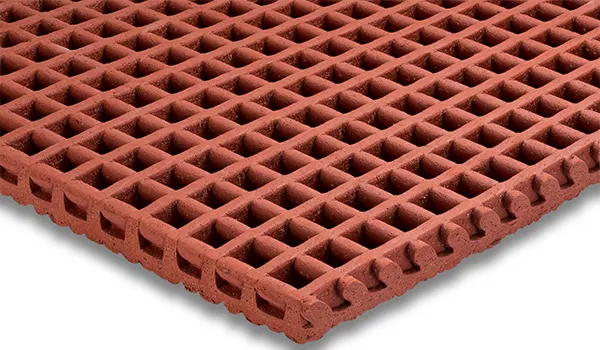
Flip the physical sample over on your desk. Examine the honeycomb, waffle, or closed-cell structures closely. Manufacturers design these geometric patterns for specific kinetic energy dispersion. The void spaces compress upon impact. They then rebound rapidly to deliver energy back to the athlete. A solid backing offers less dynamic response than a geometrically engineered one. Compare the void ratios between different vendor samples.
Thickness Verification
Grab a pair of precision digital calipers. Ensure the sample matches the proposed spec sheet exactly. Standard competitive tracks range from 13mm to 14mm thick. Do not accept a thinner sample if your contract specifies a thicker build. Even a 1mm deviation alters the entire shock dispersion profile. Measure the sample at multiple edges to check for manufacturing consistency.
The Limitations of the "Squeeze Test"
We strongly warn against purely subjective manual testing. Human thumbs cannot replicate the localized impact of a 180 lb sprinter. Athletes wear sharp metal spikes. They generate hundreds of pounds of localized downward force in milliseconds. A thumb press tells you absolutely nothing about high-velocity impact resistance. It only evaluates surface-level sponginess, which often misleads buyers into selecting inferior materials.
Traction vs. Cushioning Correlation
Assess the top-layer texture thoroughly. Ensure the embedding of EPDM granules does not compromise the underlying shock pad. Embossed textures should balance grip and softness. A highly aggressive top layer can mask a poorly engineered base layer. Run a hard plastic object across the top to simulate spike abrasion. Check if the top texture crumbles or holds firm.
Material Showdown: Poured-in-Place vs. Prefabricated Systems
Evaluating standard solution categories helps mitigate long-term installation risks. You must understand how factory production differs from field construction.
Poured-in-Place (Polyurethane/Sandwich Systems)
These traditional systems rely on liquid chemical mixtures applied directly over an asphalt base.
Pros: These systems offer seamless construction. Contractors can customize thickness directly on the site to fix minor sub-base undulations.
Risks: The pristine sample on your desk was created inside a highly controlled lab. Actual on-site performance relies entirely on the installation crew. They must manage precise chemical mixing ratios manually. Weather conditions dictate curing times. A sudden rainstorm or unexpected humidity spike can compromise the entire chemical reaction. This results in hard spots or improper curing across different lanes.
Prefabricated Rubber Systems
Modern sports engineering leans heavily toward factory-controlled vulcanization.
Pros: These rolls guarantee strict uniformity. The sample you hold is identically manufactured to the heavy rolls arriving on site. Factory production eliminates on-site mixing errors. What you test in the lab is exactly what athletes run on.
Market Examples: Advanced options like the goter prefabricated environmental rubber track lead the industry. These solutions utilize highly controlled vulcanization processes. They ensure consistent impact reduction in every single lane. Closed-cell rubber solutions provide reliable rebound characteristics day after day. You remove the weather variable from the material creation process entirely.
Transitioning from evaluating the physical product to evaluating the corporate partner requires strict bottom-of-funnel criteria. A great sample means nothing without a reliable vendor behind it.
Require Independent Lab Certifications
Never accept internal testing documents alone. You must demand independent DIN, ASTM, or WA certified lab reports. Ensure the documents match the exact system and thickness being pitched. Discard any generic performance reports immediately. If a supplier hesitates to provide third-party validation, remove them from your consideration list.
Lifecycle and Degradation Warranties
A track might meet required parameters perfectly on day one. You need to know how much it hardens after five years. Continuous UV exposure fundamentally alters chemical structures over time. Polyurethane can become brittle. Rubber can oxidize. Ask your supplier for explicit degradation timelines. Demand warranties covering sustained shock performance, not just material defects.
Track Record and Transparency
You might engage global giants or specialized manufacturers like goder. Either way, evaluate their willingness to provide local reference sites. You need to test an aged surface in person. A fresh factory sample represents optimal, untouched conditions. Real-world durability matters far more than day-one aesthetics. Walk on a track they installed five years ago. Feel the surface under genuine field conditions.
Conclusion
Physical samples serve merely as visual and structural aids. They are never standalone proof of athletic performance. True evaluation requires matching the sample's geometry to certified lab reports. You must align thickness and structure with rigid biomechanical standards. We encourage you to ditch the subjective squeeze test for empirical data.
Request a comprehensive spec sheet from your shortlisted vendors immediately.
Verify the exact thickness and environmental performance ranges of every proposed system.
Demand to visit a five-year-old reference site to evaluate material degradation firsthand.
Contact our technical team today to help audit your current track samples against global compliance standards.
FAQ
Q: Does track color affect shock absorption?
A: Generally no, but darker tracks absorb more UV and heat. This can marginally alter the surface temperature and, consequently, the momentary softness of certain polyurethane systems. Lighter colors reflect heat, maintaining a more consistent temperature profile during peak summer months.
Q: How long does a running track maintain its shock absorption?
A: Quality prefabricated or sandwich systems retain optimal specifications for 10–15 years, provided they are maintained and protected from excessive chemical/machinery damage. Proper cleaning and limiting non-athletic vehicle traffic extend this functional lifespan significantly.
Q: Should training tracks have different shock absorption than competition tracks?
A: Yes. Heavy-use training facilities often skew slightly softer (higher shock absorption) to protect joints during repetitive daily mileage, whereas elite sprint tracks are tuned slightly firmer to maximize energy return.