Procuring synthetic sports flooring is a high-stakes capital expenditure. Catching material defects after the cargo arrives on site leads to severe project delays, budget overruns, and installation failures. Buyers often rely solely on marketing brochures rather than technical batch verification. This approach risks non-compliance with strict international standards established by organizations like World Athletics. Facility managers must implement a reliable, evidence-based solution. You need a rigorous, documented pre-shipment inspection (PSI) protocol for all raw materials. You must assess EPDM granules, polyurethane binders, and prefabricated rolls well before container loading begins. This comprehensive guide details the exact steps you should take to inspect an outdoor running track surface before it ships. We cover physical testing requirements, packaging integrity checks, and documentation audits. By mastering these inspection phases, you proactively protect your facility investment and ensure a flawless on-site installation.
Key Takeaways
Pre-shipment verification of physical properties (tensile strength, shock absorption) mitigates post-installation compliance failures.
Climate-specific testing is non-negotiable; verify UV resistance and permeability characteristics, especially for a wet climates outdoor running track surface.
Request physical batch samples and independent lab reports from your outdoor running track surface supplier rather than relying on standard product data sheets.
Proper packaging inspection prevents moisture contamination of polyurethane binders during transit.
How Pre-Shipment Inspection Protects Facility Investments
A proactive inspection strategy forms the ultimate defense against material failure. You stop errors at the factory floor before they cross an ocean. This systematic verification process provides three massive operational advantages.
Financial Risk Mitigation: Shipping heavy industrial materials requires immense logistical budgets. Binders and rubber rolls weigh thousands of kilograms. You avoid the sunk costs of shipping defective heavy freight. Discovering faulty materials upon arrival forces you into expensive return shipping scenarios or total material write-offs. A pre-shipment inspection eliminates these catastrophic financial surprises.
Installation Readiness: Construction timelines run on tight schedules. You must ensure the shipped materials match the on-site contractor's mixing and curing equipment. Different polyurethane formulations require specific application temperatures and mixing ratios. Verifying viscosity and curing times before shipment guarantees your installation crew can begin work immediately without equipment recalibration.
Regulatory Compliance: Official athletic competitions require certified tracks. Your facility needs materials passing strict safety benchmarks. Pre-shipment verification validates that the manufactured batch aligns with the safety and performance benchmarks required for official facility certification. You eliminate the risk of building a track failing final governing body tests.
![Outdoor running track surface pre-shipment inspection and material testing]()
Verifying "Outdoor Running Track Surface Specifications"
Marketing data sheets show ideal laboratory scenarios. You need to inspect the actual production batch. Reviewing the explicit outdoor running track surface specifications guarantees the material performs under athlete stress.
Physical and Mechanical Properties
Athletes place tremendous rotational and compressive forces on synthetic tracks. You must rigorously verify tensile strength and elongation at break. These two metrics remain critical for preventing surface cracking over time. High tensile strength means the material resists tearing. Excellent elongation values ensure the track stretches and recovers without snapping under temperature swings.
You must also check Shore A hardness limits. Hardness dictates the balance between speed and safety. You want to ensure optimal athlete shock absorption and energy return. If the material cures too hard, athletes suffer joint injuries. If it cures too soft, runners lose momentum. Demand factory test logs proving the batch hits the exact Shore A target.
Dimensional and Weight Tolerances
Inconsistent dimensions ruin the installation process. The requirements vary depending on your chosen track system.
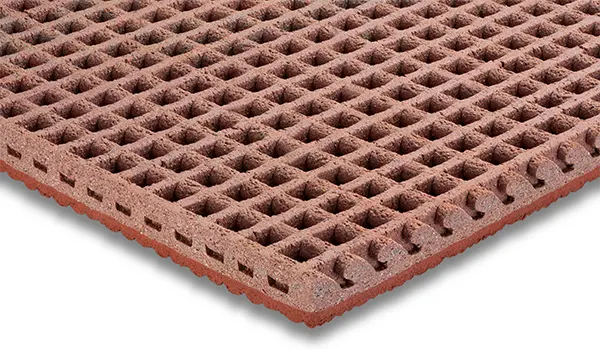
For prefabricated rolls: Inspect roll thickness, width, and uniform density. A variation of just one millimeter in thickness creates hazardous uneven lanes. Width variations force installers to use excessive adhesive or create wide, vulnerable seams.
For pour-in-place systems: Verify the precise sizing and dust-content ratio of EPDM rubber granules. Granules typically range from 1-3mm or 1-4mm. Excessive rubber dust acts as a sponge. It absorbs the expensive polyurethane binder and starves the actual granules of adhesion, leading to early track unraveling.
Common Mistake: Accepting visual confirmation of granule sizes. Always demand a sieve analysis report from the factory to confirm the exact particle size distribution.
Third-Party Lab Testing Alignment
Internal factory tests hold value, but external validation provides absolute certainty. You must cross-reference batch test results against World Athletics (formerly IAAF) synthetic surface testing specifications. Do not accept outdated reports from a previous year. The independent laboratory report must explicitly list the batch numbers currently sitting on the factory floor awaiting shipment. Compare the independent data against the manufacturer's internal Certificate of Analysis. Any discrepancy requires an immediate pause on container loading.
Standard Pre-Shipment Validation Limits
| Inspection Parameter | Testing Focus | Acceptable Tolerance Scope |
| Tensile Strength | Resistance to tearing under stress | Must meet World Athletics minimums (e.g., ≥ 0.5 MPa) |
| Elongation at Break | Flexibility and expansion capacity | Typically ≥ 40% based on system design |
| Thickness (Prefab) | Safety and shock absorption uniformity | Absolute conformity to order (e.g., 13mm ± 5%) |
| EPDM Dust Content | Binder adhesion interference | Should not exceed 1-2% of total bag weight |
Evaluating Materials for Regional Climate Demands
A track system succeeding in an arid desert might fail completely in a tropical rainforest. You must audit materials based on the specific environmental stresses of your project location.
Validating a "Wet Climates Outdoor Running Track Surface"
High rainfall zones demand specialized drainage logic. You must inspect the porosity design rigorously. Ask your engineering team: Is the system properly configured as impermeable (sandwich/full pour) or permeable (spray coat) based on the project's drainage capabilities? Impermeable tracks shed water horizontally into catch basins. Permeable tracks allow water to drain vertically through the surface into a stone base.
When reviewing a wet climates outdoor running track surface, you must verify the formulation includes adequate anti-slip textures. Athletes need maximum traction during heavy downpours. Furthermore, assess the moisture-compatible curing agents. Standard polyurethane foams uncontrollably if it interacts with high ambient humidity during installation. Specialized wet-climate binders offer controlled curing even when atmospheric moisture levels peak.
UV and Thermal Stability Testing
Sunlight aggressively degrades synthetic polymers. Ultraviolet radiation breaks chemical bonds, causing severe fading and brittleness. You must review accelerated weathering test data. These tests simulate years of harsh sunlight exposure in just a few weeks. The data helps you ensure colorfastness and resistance to surface hardening under prolonged sun exposure.
Pay close attention to aliphatic versus aromatic binders. Aliphatic polyurethane resists UV yellowing, making it mandatory for topcoats, especially over brightly colored EPDM. If your factory documentation shows aromatic binders slated for the top layer, halt the shipment. Aromatic binders chalk and discolor quickly under direct thermal stress.
Auditing "Custom Outdoor Running Track Surface" Orders
Bespoke athletic facilities often require unique aesthetic and structural demands. Custom orders carry higher risks of miscommunication. You must apply strict verification layers to these tailored shipments.
Color Consistency and Pigmentation
Schools and universities frequently order tracks matching their exact branding. You must check for color uniformity across different batches. This step remains especially critical in dual-color track designs or bespoke branding projects. A slight variation in the red pigment between batch A and batch B creates an unsightly checkerboard effect upon installation.
Do not trust verbal assurances. Require photo and video evidence of drawdown samples matching the approved RAL color codes. The factory should prepare a physical cured sample of the custom outdoor running track surface under standard lighting conditions. Compare this visual evidence against the master design contract before approving the freight.
Layer-Specific Formulations
High-performance tracks utilize distinct layers. The bottom layer focuses on kinetic shock absorption. The top layer focuses on traction and spike resistance. You must confirm the exact ratio and separation of base-layer SBR materials versus top-layer EPDM or polyurethane components.
Check the cargo manifest carefully. Ensure the factory provides the correct volume of SBR granules for the base depth and the right volume of EPDM for the topcoat. A common logistical error involves shipping too much base material and insufficient top-layer material. This mistake leaves installation crews stranded mid-project. Verify the exact weight of each specific component aligns perfectly with your site's total square meterage.
Assessing Your "Outdoor Running Track Surface Supplier" Quality Control
A reliable manufacturer operates with complete transparency. You evaluate their internal quality systems to predict the reliability of your physical shipment.
Factory Acceptance Testing (FAT) Documentation
Document audits separate top-tier manufacturers from inconsistent vendors. You must demand the Certificate of Analysis (CoA) tied directly to the specific batch numbers being shipped. Do not accept historical marketing data or general product brochures. The CoA proves the factory tested the very barrels and bags destined for your container.
Furthermore, review the broader quality framework. Check ISO 9001 and ISO 14001 compliance records for the manufacturing run. An excellent outdoor running track surface supplier maintains active, updated ISO certifications. These documents prove they use standardized mixing protocols, precise temperature controls, and environmentally responsible waste management during the production of your materials.
Remote vs. Third-Party Inspections
You have multiple options for executing the pre-shipment inspection. You must evaluate the necessity of hiring independent inspection agencies to conduct random sampling at the factory. Global agencies like SGS or Intertek offer unbiased, highly detailed container loading supervision. They physically open randomly selected drums and test materials on the factory floor.
Alternatively, consider accepting live video inspections. If you have an established, trusting relationship with the supplier, a high-definition video walkthrough can suffice. During a remote video inspection, ask the factory manager to randomly weigh EPDM bags on camera. Request close-up shots of drum seals and batch labels. While third-party agencies offer deeper security, rigorous live video audits provide a highly cost-effective alternative for routine shipments.
Packaging, Moisture Control, and Container Loading
Perfectly manufactured materials easily degrade during ocean transit. The container environment experiences extreme temperature fluctuations and high humidity. Robust packaging remains your final line of defense.
Chemical Packaging Integrity
Liquid components require extreme care. Polyurethane binders are highly moisture-sensitive. If humid air breaches a drum, the liquid polymer begins curing prematurely. When the drum arrives on site, the contractor will open it to find a solid, unusable block of rubber instead of liquid adhesive.
You must rigorously verify that drums are factory-sealed. Ensure they are nitrogen-purged to displace any trapped atmospheric moisture. Inspect photographs of the drums looking for dents or leaks. Even a micro-puncture compromises the nitrogen seal. Demand the factory uses heavy-duty steel drums with secure locking rings for all liquid exports.
Palletization and Roll Protection
Physical stress during shipping destroys solid materials. You must ensure prefabricated rubber rolls are shipped vertically, assuming this method is required by the manufacturer. Vertical stacking prevents severe compression deformation. If workers stack heavy rubber rolls horizontally, the bottom rolls crush under the weight, creating permanent flat spots. These flat spots cause ripples during installation.
Granule bags also require strict oversight. Verify UV-protective and moisture-barrier wrapping on all EPDM granule bags. Wooden pallets should undergo proper fumigation and heat treatment (ISPM 15 compliance) to prevent border customs delays. Shrink-wrap the pallets aggressively to prevent shifting during rough seas. A well-secured pallet guarantees materials arrive in pristine, ready-to-mix condition.
Conclusion
A systematic pre-shipment inspection fundamentally transforms your project management approach. It shifts quality control from a reactive on-site problem to a proactive factory-level solution. By verifying physical properties, validating climate-specific formulations, and enforcing strict packaging standards, you secure the foundation of your athletic facility.
Your immediate next steps involve formalizing this process. Draft a comprehensive Pre-Shipment Checklist with your procurement team. Distribute this checklist to your chosen manufacturer before signing the purchase order. Mandate its completion and demand photographic evidence before authorizing final supplier payments. Taking these decisive actions ensures your custom track materials arrive on time, on spec, and ready for a championship-level installation.
FAQ
Q: What is the most common defect found in outdoor running track shipments?
A: Focus on moisture contamination in PU binders and excessive dust in EPDM granule bags. Moisture causes premature curing inside the drums, turning liquid binder into solid waste. Excessive dust in the granules compromises the chemical binding process, weakening the final track structure.
Q: Can I test track materials myself when they arrive?
A: Yes, post-arrival testing is possible. However, discovering failures at this stage causes severe logistical and financial bottlenecks. You face delays, return shipping costs, and idle labor. Pre-shipment lab verification at the factory level is significantly more efficient and cost-effective.
Q: How does World Athletics certification factor into material shipping?
A: Official facility certification requires absolute consistency. The materials you ship must identically match the product formulation that originally received the World Athletics Product Certificate. Any unauthorized changes in material ratios or granule sizes during production will void the final installation's eligibility for official competition.