Municipalities and facility managers face a dual mandate today. They must maximize space utilization while adhering to strict safety standards. Durability remains a top priority for public infrastructure. Standard concrete or asphalt courts limit usability and increase injury risks. Single-sport surfaces often sit idle during off-seasons. Communities need adaptable spaces to accommodate diverse recreational activities.
Evaluating a multifunctional rubber sport surface requires looking past basic aesthetic choices. You must analyze sub-base requirements, UV resilience, and long-term maintenance demands. Selecting the right foundation dictates the entire facility's success. This guide details exactly how to navigate these material choices effectively. Readers will learn how to balance ball rebound with shock absorption. You will discover practical strategies for sub-base preparation and vendor selection.
Key Takeaways
- A true multifunction sport surface must balance shock absorption for fall safety with sufficient ball rebound for competitive play.
- Selecting the right format (poured-in-place vs. interlocking tiles) depends entirely on existing sub-base conditions and local climate.
- Integrating a community sport court with a surrounding walking path surface increases overall park traffic and community ROI.
- Vendor evaluation should prioritize verifiable UV resistance data, localized warranty terms, and drainage capacity.
The ROI of Moving to a Multifunctional Rubber Sport Surface
Converting single-use courts into multi-sport zones lowers the cost-per-user significantly. A single area can seamlessly host basketball, pickleball, and tennis. This flexibility serves more residents within the exact same footprint. Urban parks face severe space constraints today. Facility managers must optimize every square foot of available land. A multi-sport zone guarantees consistent daily usage regardless of the season.
Upgrading to impact-absorbing rubber sports flooring delivers distinct financial and liability benefits. Legacy hardscapes pose substantially higher injury risks. Asphalt and concrete offer zero shock absorption. Rubber cushioning minimizes joint strain for active athletes. It drastically reduces potential fall injuries during competitive play. Fewer injuries directly translate to reduced municipal liability. Lower liability risks often yield more favorable insurance premiums for facility operators.
Parks must also meet strict ADA compliance regulations. You need spaces fully usable by wheelchairs, strollers, and aging populations. A proper rubberized surface ensures universal access for every citizen. Hardscapes often crack and create dangerous trip hazards over time. Rubber surfaces maintain a smooth, accessible profile. This inclusion drives higher community engagement and validates the initial infrastructure investment.
Material Categories: Which Rubber Sports Flooring Meets Your Spec?
Choosing the correct material format dictates your installation timeline and long-term success. Facility managers typically evaluate three primary categories.
Poured-in-Place (PIP) EPDM
- Pros: PIP systems offer a seamless finish. They are highly customizable for intricate court lines and specific play zones. The material easily accommodates uneven topographies and sloped sub-bases.
- Cons: Installers require strict weather windows for proper curing. Temperature and humidity fluctuations can ruin a fresh pour. This option demands a higher initial capital expenditure.
Interlocking Rubber Tiles
- Pros: Tiles ensure predictable, fast installation. They allow for easy localized repairs. You can simply swap a damaged tile rather than patch a poured section. They deliver consistent, factory-controlled shock absorption across the entire grid.
- Cons: Exposed seams can become vulnerable to heavy vandalism. Proper perimeter edging is mandatory to secure the system against tampering.
Rolled Rubber Systems
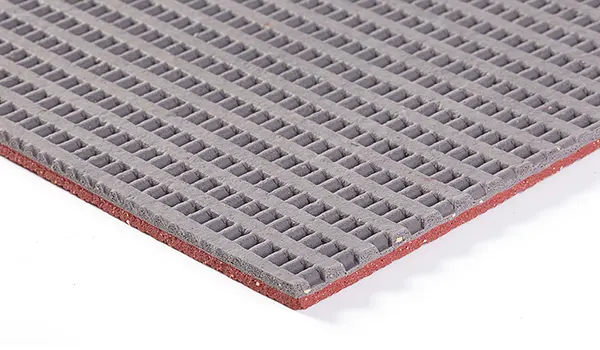
- Pros: Rolls allow for extremely fast deployment over existing smooth concrete. They provide excellent uniformity and require fewer seams than individual interlocking tiles.
- Cons: They are less ideal for extreme temperature-fluctuating outdoor environments. Significant thermal shifts introduce expansion and contraction risks. This movement can stress adhesives and cause seam buckling.
Below is a summary chart comparing these formats for quick reference:
| Material Type | Ideal Environment | Repairability | Installation Speed |
| Poured-in-Place (PIP) | Custom shapes, uneven grades | Complex (requires patch pouring) | Slow (requires curing) |
| Interlocking Tiles | Flat surfaces, high-vandalism areas | Simple (swap individual tiles) | Moderate |
| Rolled Systems | Indoor or climate-stable outdoor | Moderate (cut and patch) | Fast |
![Multifunctional Rubber Sport Surface Details]()
Essential Evaluation Criteria: Looking Past Manufacturer Claims
Evaluating technical specifications requires an understanding of applied physics and material science. You must balance competing performance metrics to achieve optimal results.
Force Reduction & Ball Rebound Matrix
Finding the perfect middle ground is challenging. You must balance the deep cushioning needed for a comfortable walking path surface against the surface hardness required for a basketball's kinetic return. Too soft, and the ball dies on impact. Too hard, and the fall safety rating drops below acceptable thresholds. Review the manufacturer's specific rebound percentage data before making any material commitments.
Weathering & UV Stability
Direct sunlight aggressively attacks synthetic polymers. The choice between aliphatic and aromatic binders heavily impacts long-term color retention. Aliphatic binders resist UV degradation exceptionally well. They maintain vibrant colors for years. Aromatic binders tend to amber or yellow under intense UV exposure. This degradation leads to surface chalking and premature wear. Always verify the binder chemistry in your material specification sheet.
Porosity and Drainage
You must assess permeable versus impermeable systems based on your specific site grading. Impermeable systems direct water off the sides. As a general rule of thumb, impermeable designs require a 1% to 2% structural slope. Permeable systems allow water to drain straight through the material. However, a permeable surface requires a highly engineered, porous sub-base to prevent subsurface pooling.
Maintenance Realities
Facility operators must abandon "maintenance-free" myths. Every outdoor infrastructure asset requires upkeep. Calculate what routine power-washing, debris removal, and restriping actually cost annually. Leaves, dirt, and organic matter compress into porous surfaces over time. This debris hardens and creates slick spots during rain. Scheduled mechanical blowing and low-PSI washing preserve both traction and aesthetics.
Designing the Space: Courts, Zones, and Walking Path Surfaces
Proper spatial design transforms an empty concrete slab into a thriving community hub. Thoughtful zoning maximizes both safety and simultaneous usage.
Line Marking Hierarchy
Multi-sport line painting demands careful planning. Applying too many overlapping grids causes severe visual clutter. Players become confused during fast-paced games. Implement a strict line marking hierarchy. Use distinct, contrasting colors for different sports. White often designates basketball boundaries. Yellow might indicate pickleball dimensions. Varying line thicknesses also helps athletes visually separate the overlapping courts effortlessly.
Perimeter Integration
Transition zones require particular attention. You must integrate the perimeter smoothly. Consider how to transition from a high-impact community sport court into a lower-impact, high-traction walking path. Abrupt changes in surface elevation create dangerous trip hazards. Use tapered edge ramps or recessed sub-bases to ensure completely flush transitions between different material zones.
Zoning by Wear
Different sports inflict distinct wear patterns on the ground. Basketball keys endure heavy pivoting and jumping. Pickleball baselines see aggressive lateral shuffling. Specify higher density rubber mixtures for these specific high-wear areas. Zoned density mapping prevents premature bald spots. This targeted approach extends the overall surface lifespan without dramatically increasing the entire project budget.
Implementation Risks and Sub-Base Preparation
Even the highest quality materials will fail if placed over a compromised foundation. Preparation defines the ultimate longevity of your project.
The Sub-Base Dependency
Industry data reveals a stark reality. Sub-base failures cause roughly 90% of all rubber sports flooring failures. The synthetic top layer only performs as well as the ground beneath it. If the base shifts, cracks, or sinks, the top layer will mirror those exact defects.
Concrete vs. Asphalt vs. Crushed Stone
Tolerance requirements differ dramatically for each base type. Concrete offers rigid stability but requires saw-cut control joints. Asphalt provides flexibility but contains oils that can interact with certain adhesives. Crushed stone offers excellent drainage. However, crushed stone requires meticulous, multi-layer compaction to prevent settling. Always match the base material to your specific drainage strategy.
Moisture Testing
Moisture represents the biggest threat during installation. Vapor barrier assessments are an absolute necessity. Newly poured concrete requires a strict curing time. Wait a minimum of 28 days before applying adhesives or PIP systems. Applying materials prematurely traps escaping moisture. This trapped water vapor eventually forces the rubber to bubble and delaminate from the concrete substrate.
Rollout Scheduling
Installation teams must actively manage temperature and humidity constraints. Cold weather stiffens rolled materials and prevents adhesives from curing properly. High humidity causes polyurethane binders to foam excessively. Manage your rollout scheduling strictly around favorable weather windows. Attempting to force an installation during marginal weather guarantees early system failure.
Vendor Shortlisting and the JOYPLAY Rubber Surface Standard
Navigating the procurement process requires a highly critical eye. Manufacturers often present similar marketing claims. You must dig into the engineering data to find true value.
Red Flags in Vendor Specs
Watch out for vague warranty terms. Exclusions hidden in fine print often void coverage for normal wear and tear. A lack of independent safety certifications, such as ASTM standards, is a massive red flag. Missing tear-strength data usually indicates a weak, filler-heavy material composition. Demand comprehensive technical data sheets before signing any purchase orders.
Evaluating Track Records
Do not accept theoretical lifespan estimates blindly. Demand actual case studies. Ask vendors to provide examples of installations enduring five or more years in climates similar to yours. Call those specific facility managers directly. Ask them about color fading, seam separation, and post-installation support experiences.
Why JOYPLAY Rubber Surface Stands Out
Selecting a reliable partner simplifies the entire process. The JOYPLAY rubber surface sets a high benchmark for municipal projects. It delivers verifiable evidence of stable UV resistance. Independent testing confirms consistent ball-bounce metrics across the entire slab. They provide transparent installation protocols and rigorous sub-base guidelines. Their compliance-first manufacturing process is specifically designed to handle high-traffic public parks seamlessly.
Next Steps
Transitioning from planning to execution requires a systematic approach. Follow these essential procurement steps:
- Request physical samples to manually test flexibility, texture, and density.
- Conduct a comprehensive site audit to evaluate existing drainage and sub-base conditions accurately.
- Draft your initial procurement brief using specific ASTM performance metrics rather than generic descriptions.
- Review localized warranty support terms and outline the required routine maintenance schedule.
Conclusion
Transitioning to a multifunction sport surface is a heavy infrastructure investment. It is not a simple cosmetic upgrade. Your choices directly impact community safety, accessibility, and long-term maintenance budgets. Proper material selection ensures athletes experience safe, predictable play environments.
Facility managers must prioritize meticulous sub-base preparation above all else. Demand completely transparent performance data from every potential vendor. Reject upfront material discounts if they compromise long-term durability. A well-engineered surface pays dividends through decades of reliable community use.
Take proactive steps today to secure your infrastructure. Request a technical consultation from certified experts. Order a physical material sample. Test the bounce, traction, and porosity against your specific site requirements before finalizing your project design.
FAQ
Q: What is the expected lifespan of an outdoor multifunctional rubber sport surface?
A: An outdoor multifunctional rubber sport surface typically lasts 10 to 15 years. This timeline relies heavily on binder quality and daily UV exposure. Routine maintenance, proper drainage, and meticulous sub-base preparation also extend the usable life significantly.
Q: Can we install rubber sports flooring over existing cracked concrete?
A: No. Installing directly over cracked concrete causes major structural issues. Rubber will ultimately telegraph existing sub-base flaws to the surface. You must implement proper crack mitigation and leveling techniques before laying any new materials.
Q: How do you clean and maintain a community sport court with a rubber surface?
A: Routine maintenance involves mechanical blowing to clear loose debris. You can utilize low-PSI pressure washing for deeper seasonal cleaning. Always avoid harsh chemical solvents. Strong chemicals degrade the rubber binder and cause premature surface breakdown.
Q: Does a rubber walking path surface require different thickness than a basketball court?
A: Yes. Thickness differences depend heavily on the primary use case. A walking path often features a softer, thicker anti-fatigue profile for joint relief. A basketball court requires a thinner, firmer profile to maintain adequate ball rebound metrics.