Introduction
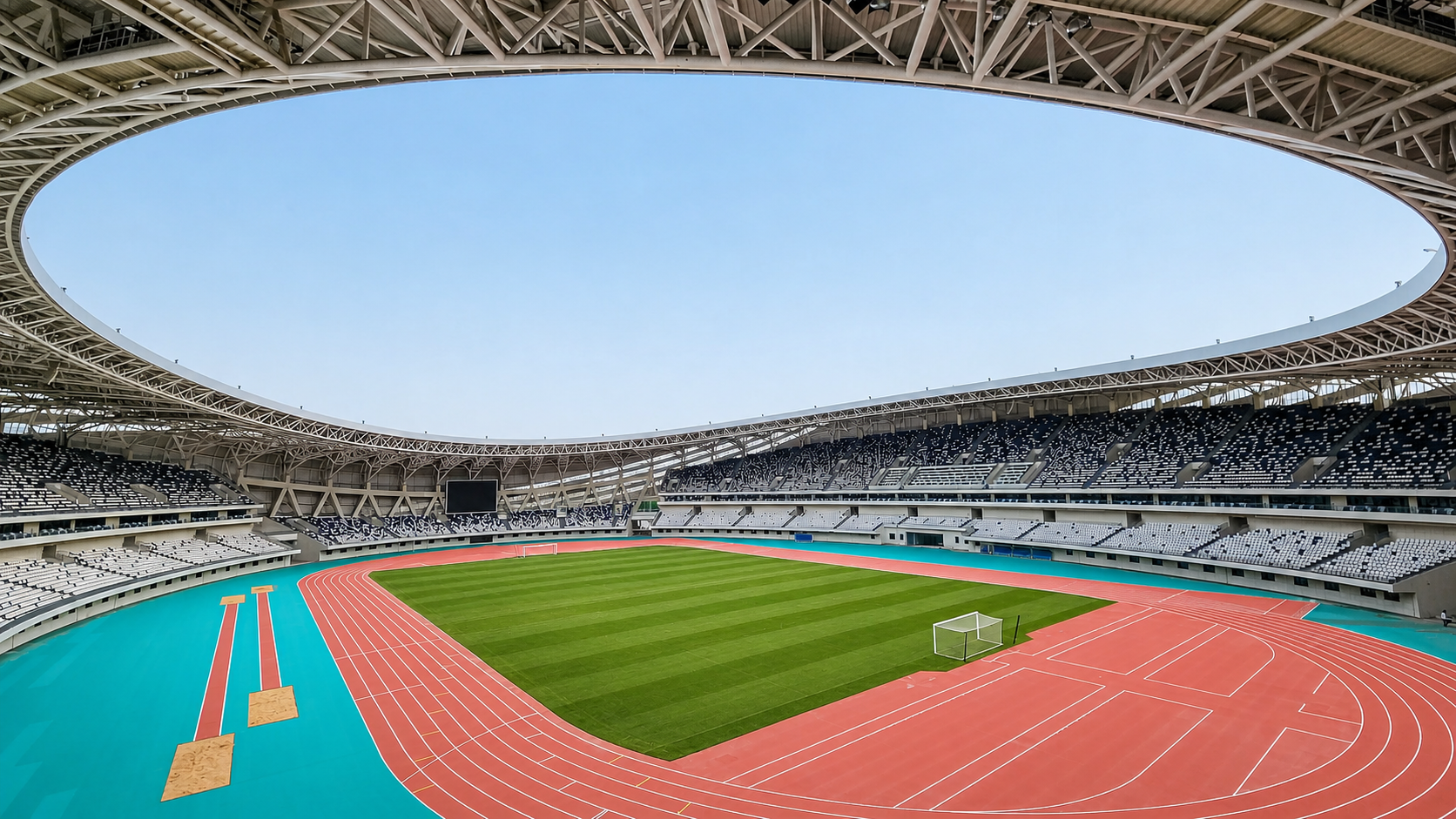
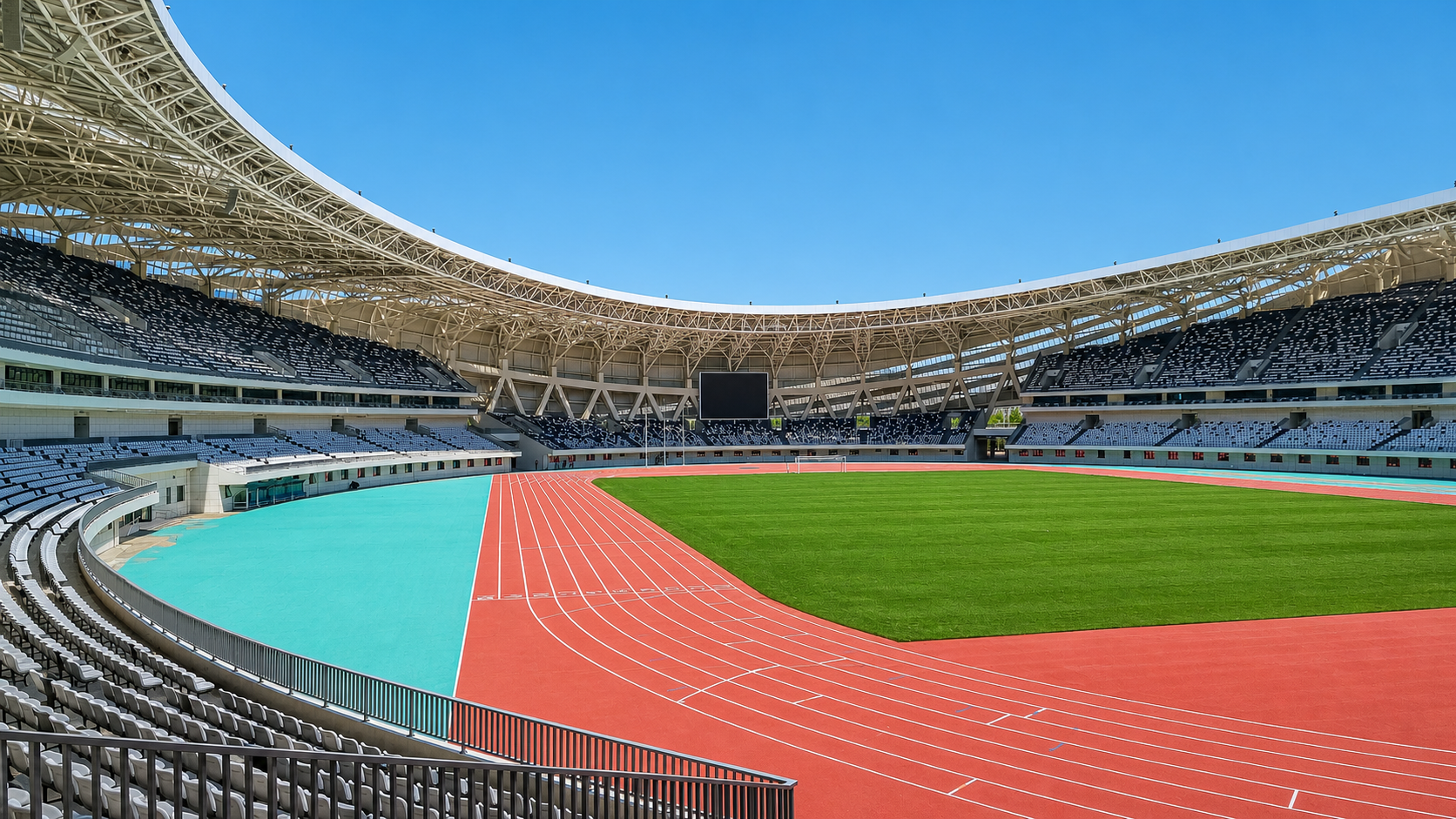
Tangshan Sports Center presents a very different project setting from a newly built landmark stadium. The photographs show an established open-air bowl: the main stand, field, access edges and surrounding urban context are already part of a working facility. The 2023 running-track project therefore had to fit into a place with its own geometry, drainage history and operational habits.
This kind of work is easy to underestimate. A mature stadium may look ready to receive a new surface, yet the condition beneath the visible track can vary from one bend or straight to another. The project team has to understand what can be retained, what must be corrected and how the completed track will connect to older fixed elements around it.
![]()
Before Installation | Read the Stadium That Already Exists
Do not assume the old base is uniform
An existing base has a history. Previous repairs, local settlement, drainage work and different exposure conditions may have produced areas with different strength or level. The sun-facing straight may not behave like the shaded side beside the main stand. Bends may carry old patching that is difficult to see until the surface is cleaned.
The investigation should therefore divide the track into measured zones. Flatness, slope, cracks, hollow or weak areas, moisture and surface strength all need records. If the project involves retaining part of the base, acceptance criteria should be written before repairs begin so that decisions are consistent around the oval.
Drainage evidence is more useful than appearance
Outdoor stadium photographs are usually taken in dry weather. They cannot show how the base behaves after sustained rain. Before surface installation, the team should review drainage outlets, channel condition, low points and the history of standing water reported by facility staff.
Water tends to collect where several systems meet: inner kerbs, field-event zones, service crossings and transitions to the green perimeter. These locations should be tested rather than judged only by eye. A prefabricated roll will follow the prepared base; it will not create a missing drainage fall.
![]()
During Installation | Work in Phases, Not in Fragments
Phase boundaries should follow the construction logic
Keeping part of an existing sports centre accessible can place pressure on the schedule. The answer is not to open many small, disconnected work fronts. Each phase should allow base preparation, adhesive work, roll placement and protection to be completed as one controlled sequence.
Long straights provide efficient production areas, while curves and field interfaces need more time. The programme should reflect that difference. Treating every square metre as if it requires the same labour and duration usually pushes the more detailed work into rushed final days.
Northern outdoor conditions narrow the working window
Tangshan experiences seasonal rain, summer heat and cold winter conditions. For adhesive installation, the important point is not a general climate label but the actual condition during each shift. Surface temperature can rise well above air temperature in direct sun, while a shaded area near the stand may remain cooler and retain moisture longer.
Materials, base and adhesive should all remain within the approved range. Work zones need protection from unexpected rain and contamination, and the crew should stop early enough to secure the open section rather than race a changing forecast.
Curves and colour borders need independent control
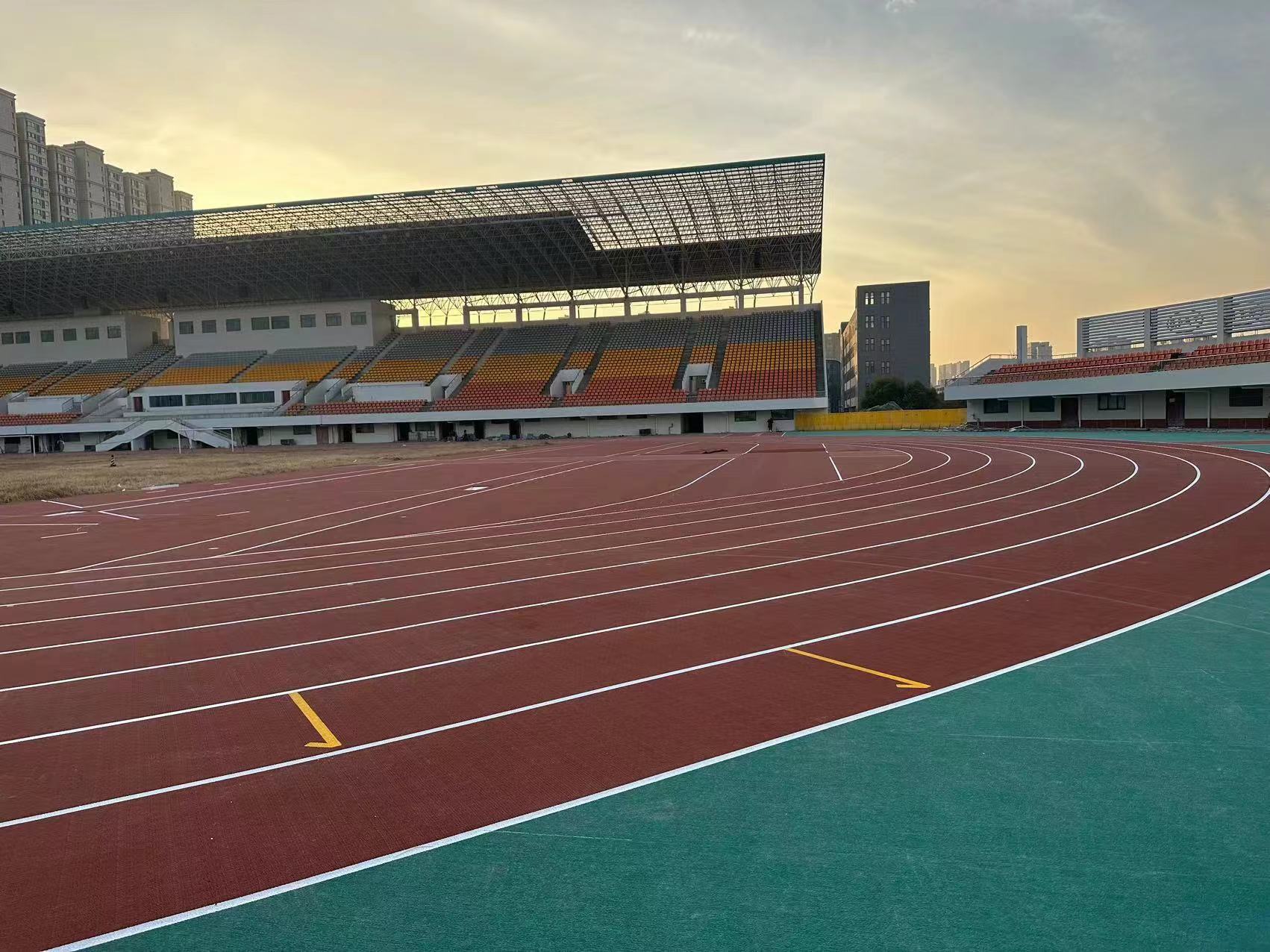
The completed project uses red track material beside broad green zones. These borders run for long distances and are visible from the stands. Accurate curves, secure edges and consistent width are required for the colour scheme to look deliberate.
Factory edges can be used where the layout allows, while site-cut edges need clean tools and stable reference lines. If the border is allowed to drift, later marking cannot correct the underlying geometry.
After Installation | Marking Is Only the Start of Handover
White and yellow lines must remain legible together
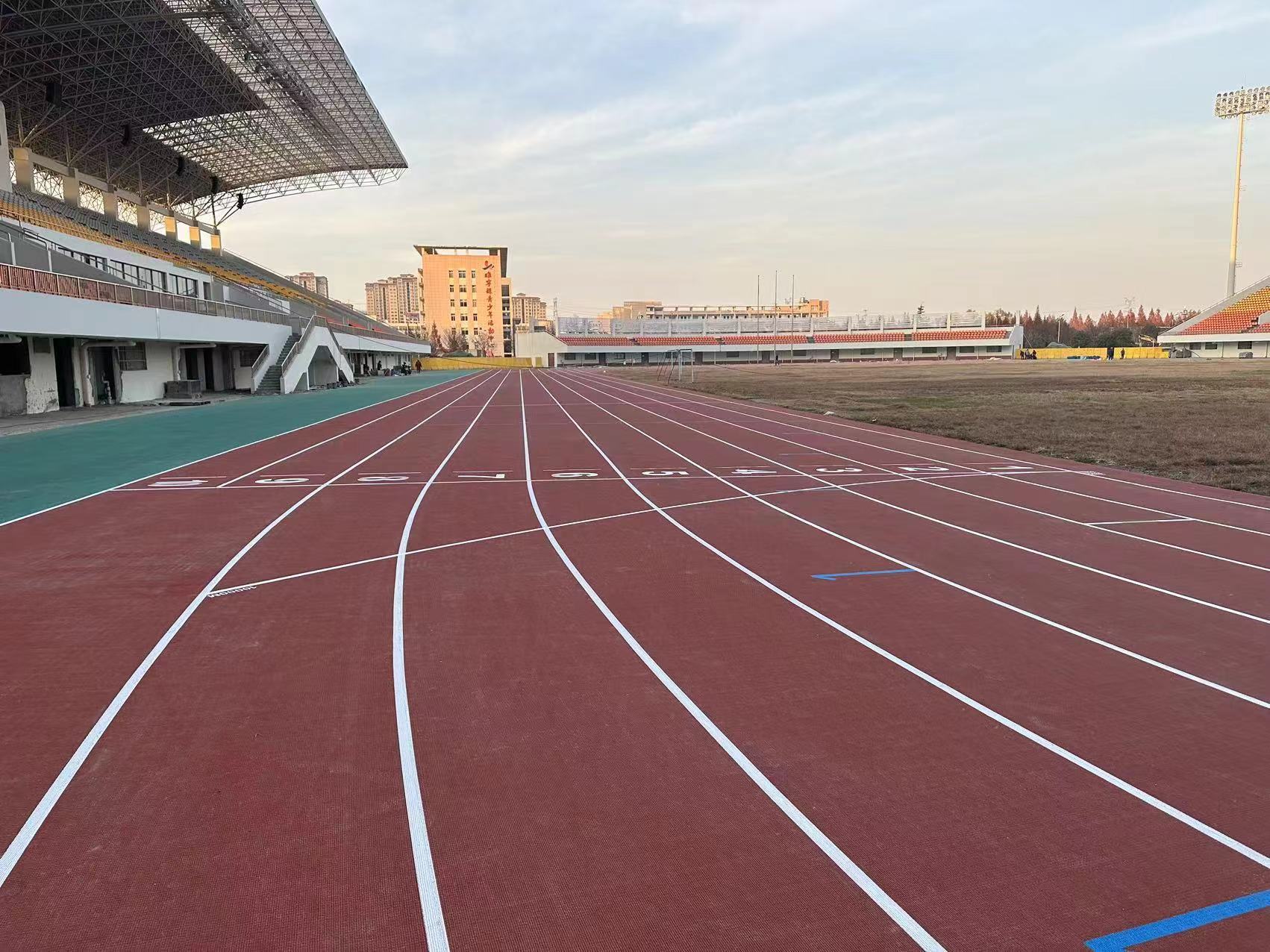
The Tangshan photographs show standard white lane lines alongside selected yellow markings. Multiple marking colours can make a facility easier to operate, but only if their hierarchy remains clear. Survey points, dimensions, paint compatibility and drying conditions should be checked before the marking crew works across the completed surface.
Line edges should be inspected from ground level and from the stands. A mark that appears acceptable at arm's length may look uneven when repeated around a large curve.
![]()
Handover should create a maintenance baseline
The best moment to document a track is immediately after completion. The operator should receive photographs of edges and interfaces, a map of repaired base areas, material and batch records, cleaning guidance and a process for reporting local damage.
This baseline makes later inspection more useful. Facility staff can distinguish a new change from a detail that already existed at handover, and repair decisions can refer to the original system rather than relying on guesswork.
Where Huadong Track Fits in a Stadium Upgrade
Huadong Track supplies prefabricated rubber running surfaces as factory-made rolls. In an established stadium, this approach can reduce the number of layers that must be formed outdoors and provide a controlled surface body once the base has been properly released.
The manufacturer still needs accurate project information. Existing geometry, measured quantities, colour boundaries, delivery access and the repair strategy affect roll planning. Compatible adhesive and local-repair material should be included in the technical package so that the owner is not left with a surface that cannot be maintained consistently.
The Tangshan case also reinforces an important limit: a new roll surface cannot compensate for an uncertain old base. Prefabrication is most useful when investigation and repair have already reduced the hidden variables beneath it.
![]()
A Realistic View of the Finished Result
The final photographs show an orderly red running surface, clear lane geometry and green perimeter areas that connect the track to the wider field. They support a visual assessment of the completed project, but they should not be used to invent long-term user feedback or certification claims that have not been published.
For an operating sports centre, the more meaningful response develops over time: whether drainage remains manageable, local wear can be repaired, markings stay organised and maintenance staff can keep the facility available. These are ordinary operational measures, but they decide whether a surface upgrade continues to serve the venue after the project photography is finished.
Conclusion
Tangshan Sports Center shows why track work in an established stadium begins with investigation rather than installation. The project has to respect existing geometry, identify weak areas, confirm drainage and organise outdoor work around real site conditions.
Once that groundwork is complete, a prefabricated running surface can bring factory-controlled material into a complex upgrade. Accurate phase planning, colour interfaces, line marking and handover records then turn the new surface into a maintainable part of the sports centre, not simply a fresh layer placed over its history.
FAQ
1.What should be checked before installing a new track in an existing stadium?
The team should assess base level, slope, cracks, strength, moisture, drainage, previous repairs and all interfaces with kerbs, fields and service routes.
2.Can a prefabricated track be laid directly over an old surface?
Only if the retained system has been investigated and approved for the proposed method. Loose, weak, wet or uneven areas must be corrected; covering them does not remove the defect.
3.Why divide outdoor installation into phases?
Controlled phases allow preparation, bonding, laying and protection to be completed without exposing too much unfinished work to weather, dust or traffic.
4.Why are handover records important for maintenance?
They identify materials, batches, repaired base zones and original edge details. Later inspections and repairs can then be compared with a reliable starting condition.
5.Does the project information confirm a specific Huadong Track product model?
The public project page identifies Tangshan Sports Center as a Huadong Track case but does not state a specific GOMER, GODER or GOTER model. The final specification should not be inferred from photographs alone.