
Views: 315 Author: Site Editor Publish Time: 2026-02-07 Origin: Site


Understanding Shock Absorption in an Athletics Rubber Running Track
Material Science Behind High-Performance Rubber Track Systems
Structural Design Layers and Their Role in Impact Attenuation
Biomechanical Benefits for Athletes on Professional Rubber Tracks
Standards, Testing, and IAAF-Certified Shock Absorption Metrics
Comparative Analysis: Rubber Tracks vs. Alternative Surfaces
Shock absorption is one of the most critical performance and safety characteristics in a professional athletics Rubber running track. Far beyond comfort, it directly affects energy return, injury prevention, stride efficiency, and long-term athlete health. Modern track engineering blends material science, biomechanics, and structural design to manage the intense ground reaction forces generated during sprinting, middle-distance running, and field events.
Shock absorption refers to a surface’s ability to reduce peak impact forces transmitted from the foot to the musculoskeletal system during ground contact. In a professional athletics Rubber running track, this process occurs within milliseconds of foot strike but has lasting consequences for performance and injury risk.
When an athlete’s foot contacts the track, vertical forces can reach three to five times body weight. A high-performance athletics Rubber running track is engineered to partially deform under load, dispersing force laterally and vertically before rebounding. This controlled deformation reduces stress on joints such as the ankles, knees, and hips while maintaining enough stiffness for propulsion.
Unlike rigid surfaces, rubber track systems manage a delicate balance between shock attenuation and energy return. Excessive softness can cause energy loss and instability, while insufficient absorption increases injury risk. Professional track designers calibrate rubber elasticity, granule size, and binder composition to achieve optimal force reduction without compromising speed.
In elite environments, shock absorption is not a comfort feature but a performance variable. Consistent impact attenuation allows athletes to train longer, recover faster, and maintain biomechanical efficiency over repeated sessions. This is why shock absorption is a defining characteristic of IAAF certified athletics Rubber running track installations worldwide.
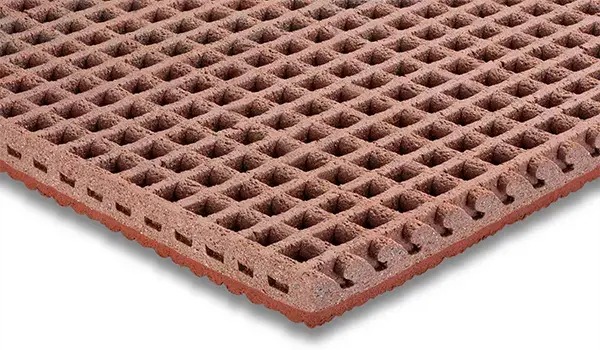
The shock-absorbing capability of a professional athletics Rubber running track begins at the molecular and material level. Rubber elasticity, resilience, and viscoelastic behavior determine how effectively impact energy is managed during foot strike.
Modern prefabricated athletics Rubber running track systems typically use vulcanized rubber compounds engineered for controlled compression and rebound. These materials exhibit viscoelastic properties, meaning they temporarily store energy under load and release it gradually rather than instantaneously. This behavior reduces peak force transmission to the athlete’s body.
Granule size and density play a significant role. Finer rubber granules improve uniform deformation, while larger granules increase resilience. Binder systems hold these granules together while influencing hardness and tensile strength. The interaction between granules and binders determines how the surface responds to repeated impacts over time.
Environmental resistance is another key factor. A professional outdoor all-weather athletics Rubber running track must maintain shock absorption characteristics across temperature extremes, humidity changes, and UV exposure. Advanced rubber formulations prevent hardening in cold conditions and excessive softening in heat, ensuring stable impact attenuation year-round.
Material science also governs durability. A track that loses elasticity over time compromises both safety and performance. High-quality rubber compounds are designed to resist fatigue, preserving shock absorption even after millions of foot strikes.
Shock absorption in a high-performance athletics Rubber running track is not achieved by material alone. Structural layering is equally essential in managing force distribution and rebound behavior.
Most professional systems consist of multiple functional layers, each contributing differently to shock attenuation. The base layer provides foundational stability and load distribution, preventing excessive vertical displacement. Above this, an elastic shock pad or resilient rubber layer absorbs the initial impact forces generated during foot strike.
The top wear layer plays a subtler but important role. While primarily responsible for traction and durability, it also influences surface stiffness and micro-deformation. The interaction between layers allows for progressive shock absorption, where force is reduced in stages rather than abruptly.
The table below summarizes how each layer contributes to shock absorption in a professional athletics Rubber running track:
| Track Layer | Primary Function | Contribution to Shock Absorption |
|---|---|---|
| Base Layer | Structural stability | Distributes load, limits vertical movement |
| Elastic Layer | Impact attenuation | Absorbs and disperses peak forces |
| Wear Layer | Traction and durability | Fine-tunes surface stiffness and rebound |
Layer thickness and material density are carefully calibrated. Increasing thickness improves shock absorption but may reduce energy return. Professional designs optimize this balance to ensure compliance with IAAF certified performance criteria while protecting athletes from excessive impact stress.
The biomechanical advantages of a professional athletics Rubber running track stem directly from its shock absorption properties. By moderating impact forces, these surfaces influence how the body moves, adapts, and performs during running.
Reduced impact peaks lower joint loading rates, which is critical for preventing overuse injuries such as stress fractures, tendinopathies, and cartilage degeneration. Athletes training on high-performance athletics Rubber running track systems experience less cumulative musculoskeletal stress, enabling higher training volumes with reduced injury risk.
Shock absorption also affects stride mechanics. Controlled surface deformation supports smoother transitions from landing to toe-off, improving force application efficiency. This results in more consistent stride length and cadence, especially during high-speed sprinting.
From a neuromuscular perspective, predictable shock attenuation enhances proprioceptive feedback. Athletes develop greater confidence in foot placement, which is particularly important during curve running and acceleration phases. Over time, this consistency supports technical refinement and performance stability.
Importantly, shock absorption does not equate to softness. A professional athletics Rubber running track is engineered to absorb harmful impact without dampening the explosive forces required for elite competition. This balance distinguishes professional systems from recreational or improvised surfaces.
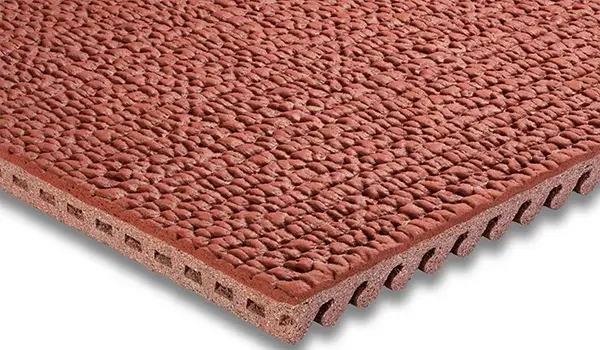
Environmental variability presents one of the greatest challenges to shock absorption in an outdoor all-weather athletics Rubber running track. Temperature, moisture, and solar exposure can alter material behavior if not properly engineered.
High-quality rubber systems are designed to maintain consistent elasticity across a wide temperature range. In cold conditions, inferior materials may stiffen, reducing shock absorption and increasing injury risk. In heat, excessive softening can lead to energy loss and unstable footing. Professional rubber formulations mitigate these risks through thermal-stable compounds.
Moisture resistance is equally critical. Rain and humidity should not significantly alter surface compliance. A professional outdoor all-weather athletics Rubber running track incorporates water-resistant binders and surface textures that preserve both traction and shock absorption when wet.
Consistency matters because athletes rely on predictable surface behavior. Variations in shock absorption can disrupt timing, stride rhythm, and confidence. By maintaining stable impact attenuation year-round, professional rubber tracks support reliable performance regardless of climate conditions.
Shock absorption in a IAAF certified athletics Rubber running track is not subjective; it is measured, tested, and regulated. Certification standards define acceptable ranges for force reduction, vertical deformation, and energy restitution.
Force reduction testing evaluates how much impact force the surface absorbs compared to a rigid reference. Professional tracks must fall within a defined percentage range to ensure adequate protection without excessive softness. Vertical deformation tests measure how much the surface compresses under load, providing insight into structural resilience.
Energy restitution metrics assess how efficiently the surface returns stored energy. Excessive energy loss indicates over-absorption, while insufficient loss suggests a surface that is too hard. Certification ensures that high-performance athletics Rubber running track systems strike the correct balance.
These standardized tests protect athletes and ensure fairness in competition. By adhering to certification requirements, track installations provide consistent shock absorption across venues, allowing performance comparisons to reflect athlete ability rather than surface variability.
When compared to alternative athletic surfaces, the shock absorption advantages of a professional athletics Rubber running track become clear. Traditional asphalt or concrete surfaces offer minimal impact attenuation, significantly increasing joint stress and injury risk.
Synthetic non-rubber surfaces may provide limited cushioning but often lack the elastic recovery needed for elite performance. Natural grass varies widely in shock absorption depending on moisture, compaction, and maintenance, making it unsuitable for consistent track events.
In contrast, prefabricated athletics Rubber running track systems deliver engineered consistency. Shock absorption remains stable across seasons, usage intensity, and environmental conditions. This reliability supports both athlete safety and performance optimization at the professional level.
The science of shock absorption in a professional athletics Rubber running track is a precise integration of material engineering, structural design, biomechanics, and performance standards. By controlling how impact forces are absorbed and returned, these surfaces protect athletes while enhancing speed, efficiency, and consistency.
From rubber compound formulation to multi-layer construction and IAAF certified testing protocols, every element contributes to a surface that absorbs shock without sacrificing performance. In elite athletics, this balance is not optional—it is fundamental. A well-designed high-performance outdoor all-weather athletics Rubber running track is both a protective system and a performance platform, enabling athletes to train and compete at their highest potential.
Q1: Why is shock absorption critical in a professional athletics Rubber running track?
Shock absorption reduces impact forces on joints and muscles, lowering injury risk while supporting efficient force transfer during running.
Q2: Does higher shock absorption reduce running speed?
In a high-performance athletics Rubber running track, shock absorption is calibrated to preserve energy return, ensuring speed is not compromised.
Q3: How is shock absorption measured in IAAF certified tracks?
It is evaluated through standardized force reduction, vertical deformation, and energy restitution tests.
Q4: Are prefabricated rubber tracks better for shock absorption?
Prefabricated athletics Rubber running track systems often provide more uniform and durable shock absorption due to controlled manufacturing processes.
Q5: Does weather affect shock absorption in outdoor tracks?
A professional outdoor all-weather athletics Rubber running track is engineered to maintain consistent shock absorption across temperature and moisture variations.


