Introduction
A newly installed prefabricated rubber track can look finished: the surface is continuous, the colour is consistent and the white lines are clean. Yet installation completion is not the same as readiness for use, and it does not automatically establish competition suitability or facility certification.
A prefabricated rubber track should open only after the adhesive system has cured as required, measurements and relevant tests have passed, defects have been resolved and handover has been authorised. After opening, regular inspection, suitable cleaning, seam maintenance, marking checks and technical records help preserve its condition.
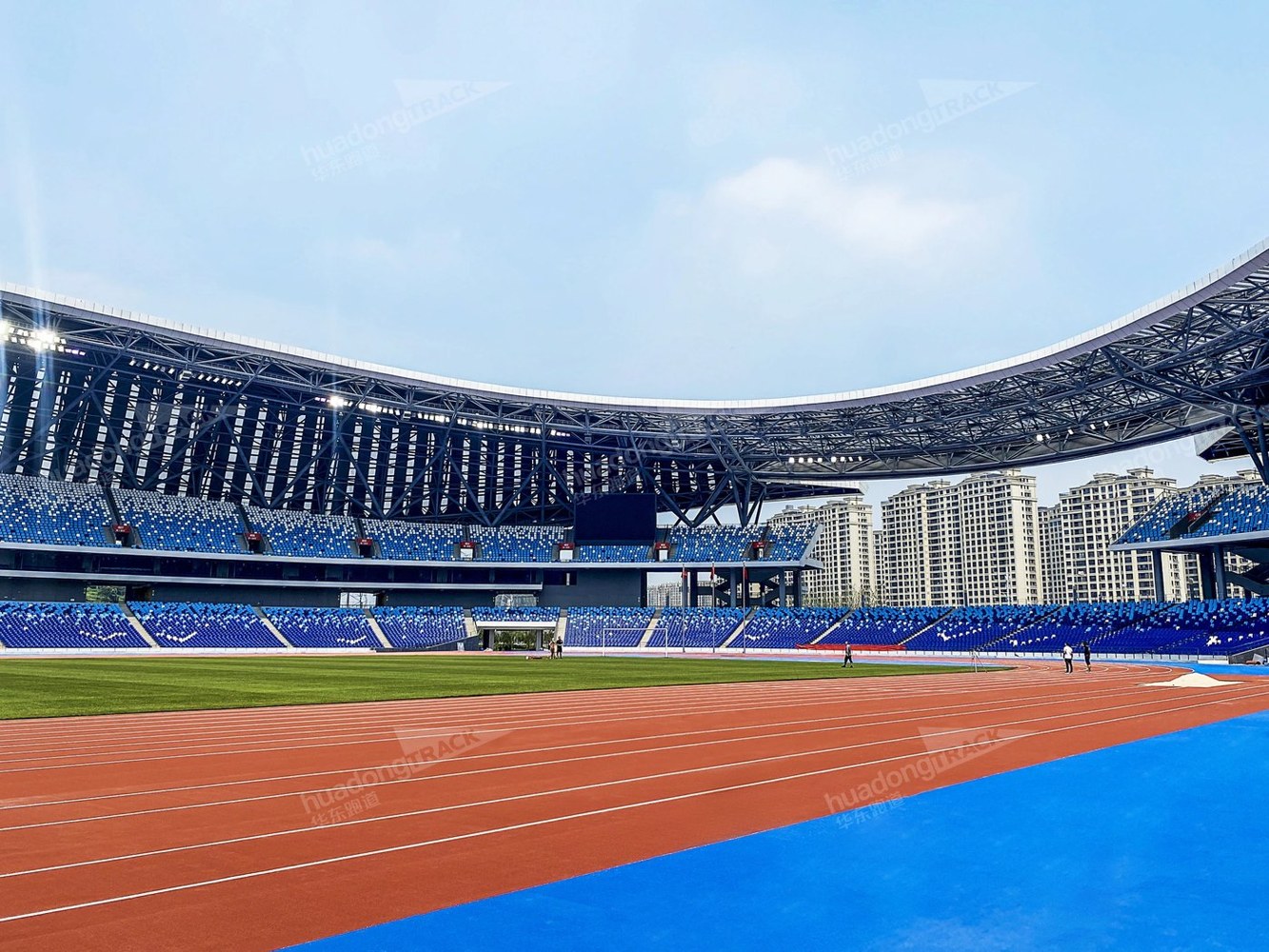
![Finished running lanes at Wenzhou Olympic Sports Center]()
Figure 1. Finished running lanes at Wenzhou Olympic Sports Center. HUADONG project photograph.
1. Curing Determines When the Bond Is Ready
Prefabricated rubber tracks arrive as factory-made rolls or sheets. Their main structure and running texture are already formed, but the bond between the material and the base is created on site through fitting, trimming, adhesive application and rolling.
The adhesive needs sufficient curing under the specified conditions before it can provide a stable bond. Until the system is released for the intended activity, keep intense training, vehicles, heavy equipment and unauthorised traffic off the surface.
Opening too early can cause movement, lifted edges, open joints, local loss of adhesion or pressure marks. Some defects become apparent only after repeated loading and temperature changes rather than on the day of installation.
Do not apply a universal number of curing days. The product system, adhesive instructions, temperature, humidity, substrate condition and construction environment determine readiness. Low temperatures, high humidity or abnormal moisture conditions require particular attention. Inspect seams, edges and heavily loaded locations before moving on to acceptance.
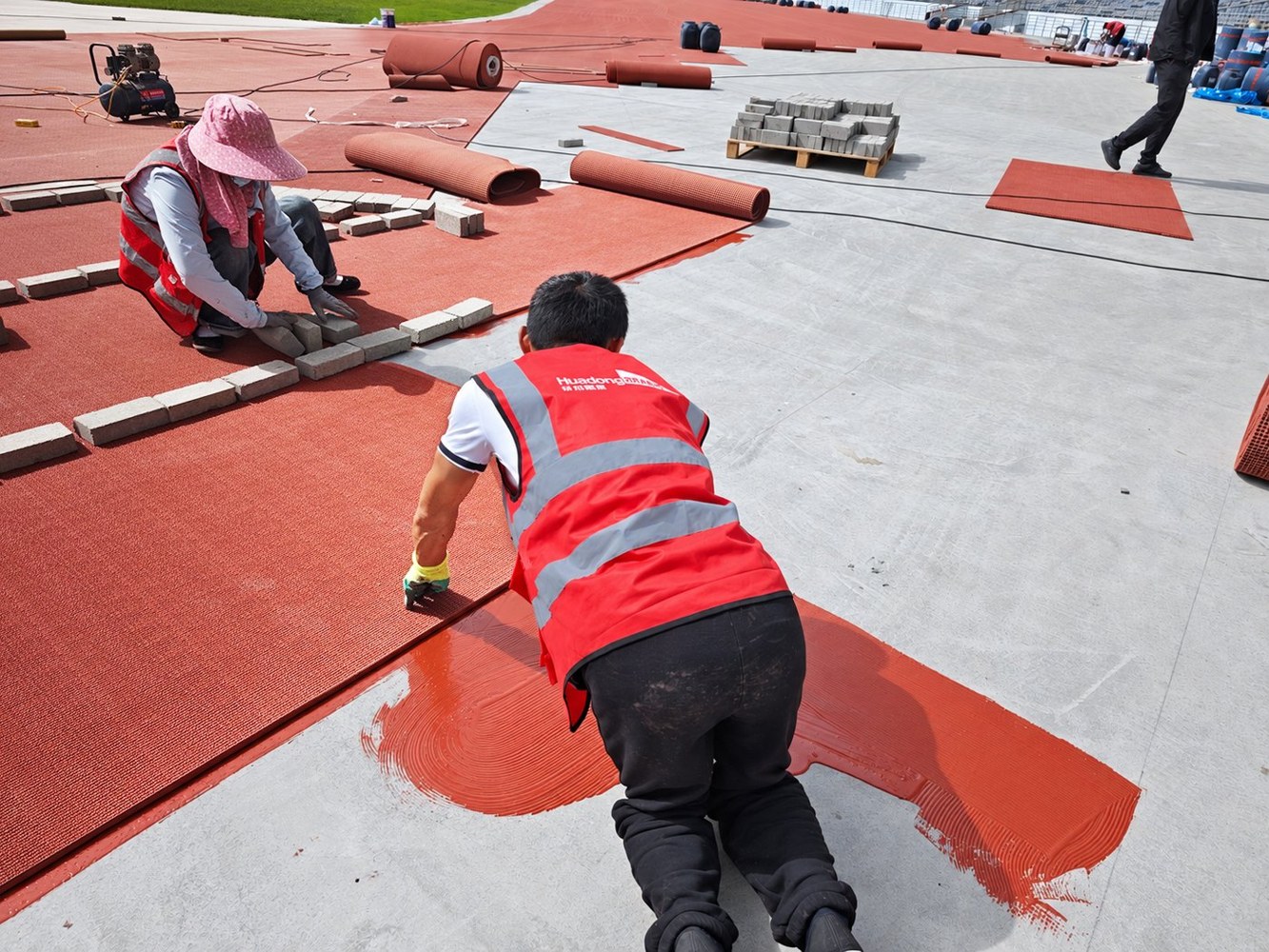
![HUADONG crew fitting track sheets with temporary edge weights]()
Figure 2. HUADONG crew fitting track sheets with temporary edge weights. HUADONG installation photograph.
2. Measurement Confirms the Competition Geometry
A regular-looking oval does not prove that the race distances are correct. The standard outdoor track has a nominal length of 400 m, with parallel straights connected by equal-radius bends.
Where an inner kerb is present, lane one is measured 0.30 m outward from it. Where the kerb is absent on a bend and the inner boundary is a line, the measurement reference changes to 0.20 m from that boundary as specified in the rules. Other lanes are measured 0.20 m outward from the outer edge of their inner lane line. Using the wrong reference makes an apparently precise instrument reading unreliable as evidence of compliance.
Acceptance measurement should check the inner border, bend geometry, tangent transitions, lane widths and start/finish positions. Standard outdoor lane width is 1.22 m with a permitted variation of 0.01 m, including the line on the runner's right; lane boundaries are 50 mm white lines, subject to the applicable rule and any legacy provisions.
Rubber-sheet seams must not be used as the basis for race marking. Set out the completed surface from the actual surveyed geometry so that errors in the old markings, base or roll layout are not carried forward.
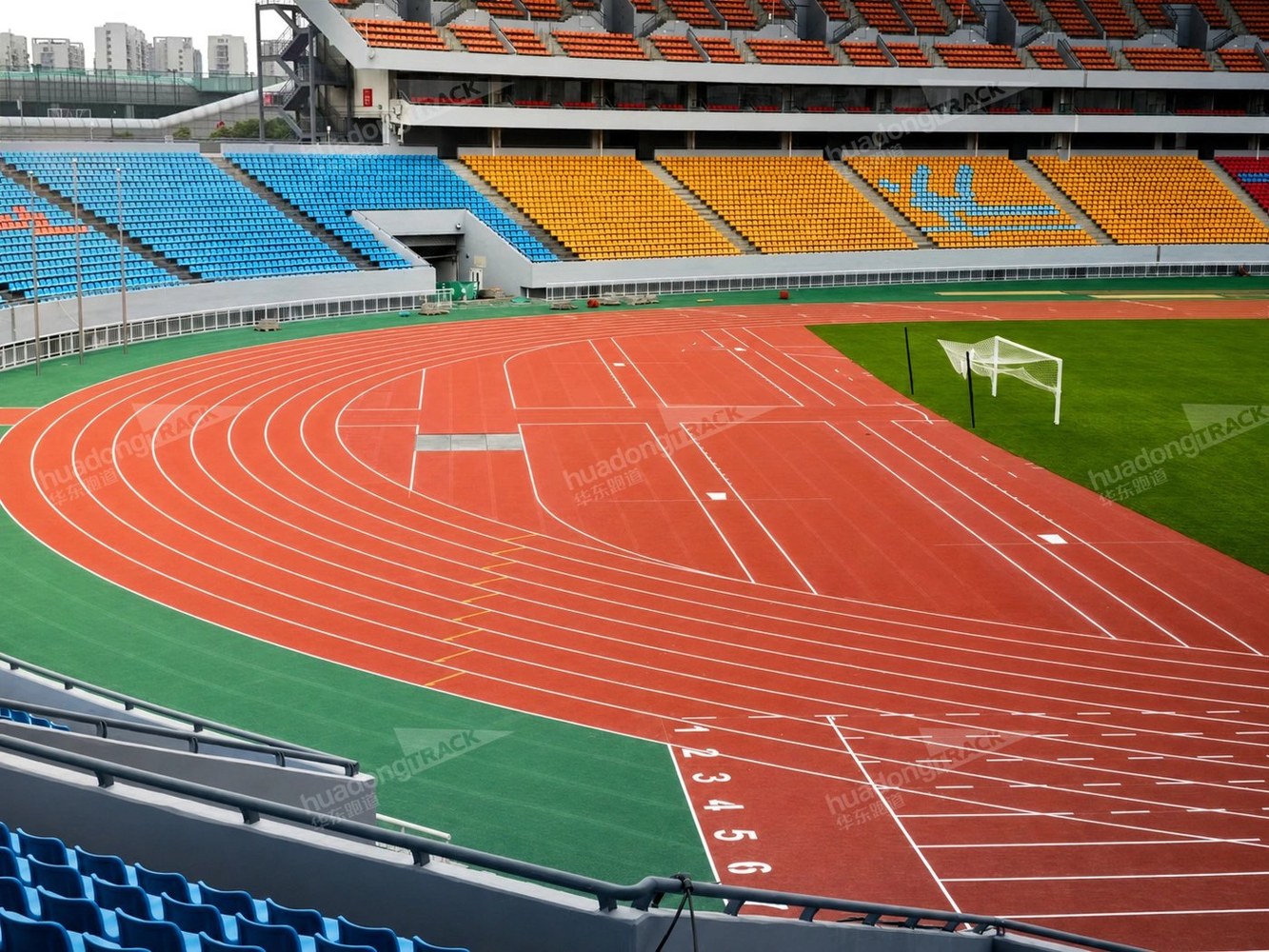
![Curved lanes and track markings at Jiaxing Sports Center]()
Figure 3. Curved lanes and track markings at Jiaxing Sports Center. HUADONG project photograph.
3. Check Levels Across the Whole Track
Because a prefabricated rubber surface has a relatively consistent manufactured thickness, it cannot substantially correct an uneven foundation. Final slope, evenness and drainage depend strongly on the base.
The outdoor-track rules generally limit lateral inclination toward the inside to 1% and overall downward inclination in the running direction between start and finish to 0.1%, with exceptions governed by the rules. Survey coverage should include straights, bends, tangent transitions, inner and outer edges, drains and settlement-prone areas.
If water ponds, do not automatically blame the rubber. Settlement, reverse falls, incorrect channel levels or blocked outlets can produce similar symptoms. Use level data to identify the low area and flow path before selecting a repair method.
4. Assess Performance with Tests, Not Foot Feel
Descriptions such as soft, springy or firm are subjective. They do not replace the performance testing required by the project. Relevant checks can include force reduction, vertical deformation, friction, thickness, evenness and material properties, using the methods applicable to the selected system.
A track is not necessarily better because it feels softer, nor is a hard track automatically more durable. Cushioning, support, deformation and traction must work together within the required performance range.
Factory testing is valuable but cannot fully replace evaluation of the installed surface. Transport, storage, base quality, adhesive application, site conditions and workmanship can influence the finished result. Where facility certification requires field tests, use a laboratory accredited for the relevant World Athletics testing scope and follow the current procedure.
5. Inspect Seams, Edges and Adhesion
Prefabricated rubber is assembled and bonded on site, making joints and adhesion specific acceptance priorities. Inspect the installed sheets for movement, wrinkles or abnormal stretching; check that seams are secure and level, adjacent sheets do not form unacceptable steps, and perimeter edges remain bonded.
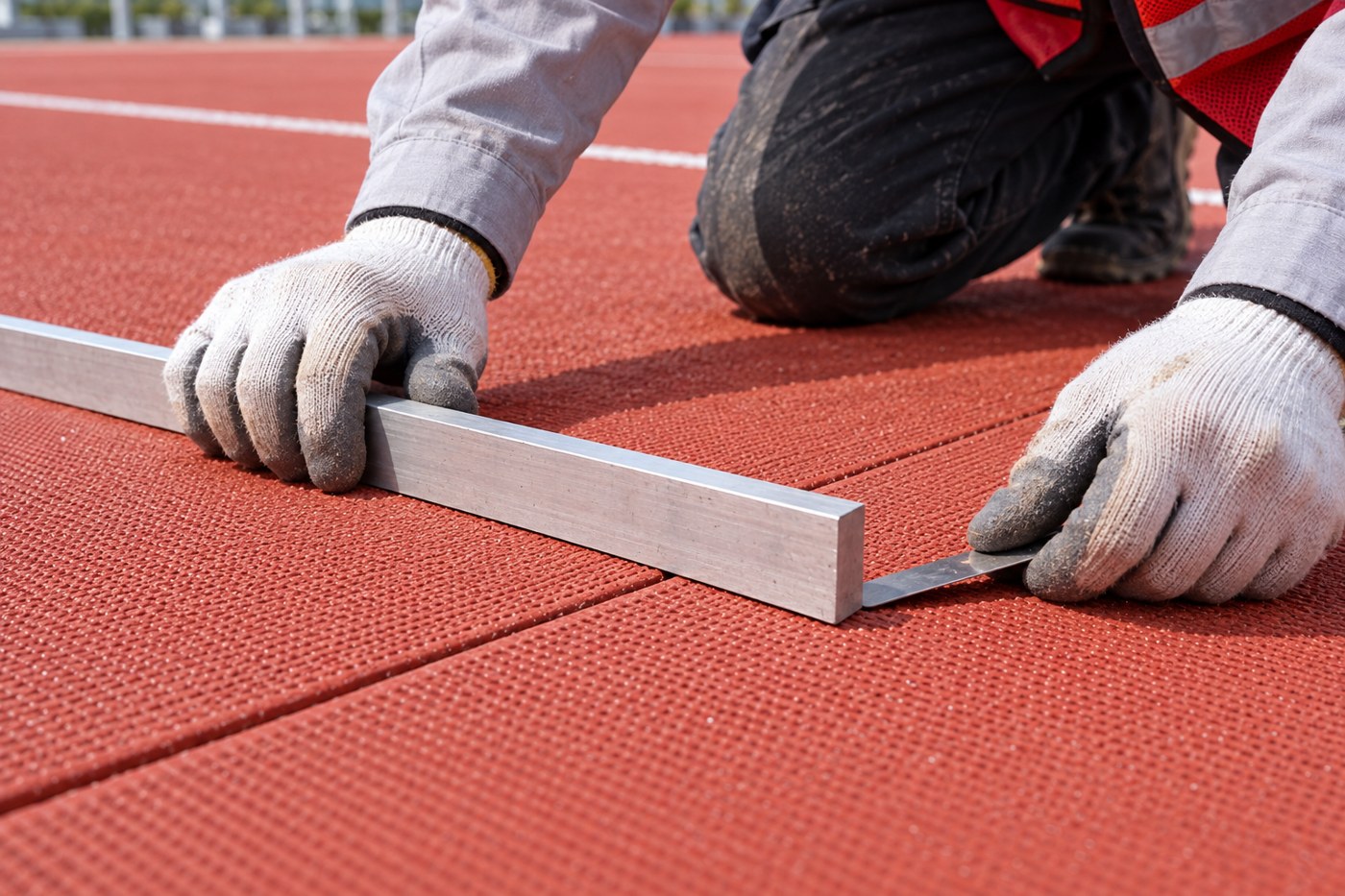
![Straightedge and feeler-gauge check across a prefabricated rubber sheet joint]()
Figure 4. Straightedge and feeler-gauge check across a prefabricated rubber sheet joint. AI-generated technical illustration.
Look for hollow or debonded areas, lifted edges, joint openings and adhesive contamination. An inspection photograph cannot demonstrate a passing measurement; retain the actual results and defect record.
Do not simply conceal a failed seam with a surface patch. Establish whether the cause is base movement, adhesive selection, uneven coverage, unsuitable weather, insufficient rolling or incomplete cure. Correcting the underlying cause is necessary for a lasting repair.
For a specified GOTER rubber track or GODER running-track system, retain the matching product and installation documents in the handover file, rather than substituting a generic maintenance instruction for a different surface.
6. Treat Handover as a Complete Quality Review
Acceptance is not merely a visual inspection, and one test report does not replace the complete process. A practical handover review brings together the physical condition, measurements, test evidence and project records.
| Acceptance area | What to verify |
| Appearance | Colour, texture, cleanliness and visible defects |
| Installation | Seams, edges, bond condition and curing release |
| Geometry | Lap length, lane width, bends and start/finish positions |
| Levels and drainage | Slopes, evenness, channels and water discharge |
| Competition markings | Starts, finishes, relay zones, break lines and hurdle marks |
| Performance | Required installed-surface test results |
| Specialist facilities | Kerbs, field-event areas and associated equipment interfaces |
| Documentation | Materials, construction, survey, testing and maintenance records |
Document defects and corrective actions, then recheck the repaired areas. Open the venue for its intended use only when curing, measurement, testing, defect closure and the required records have been completed and accepted by the responsible parties.
7. Maintain the Track After It Opens
Handover starts the operating phase of quality management. Sunlight, rain, temperature changes, spikes, equipment movement, training loads and cleaning practices all affect the surface over time. A good initial installation still needs a suitable maintenance routine.
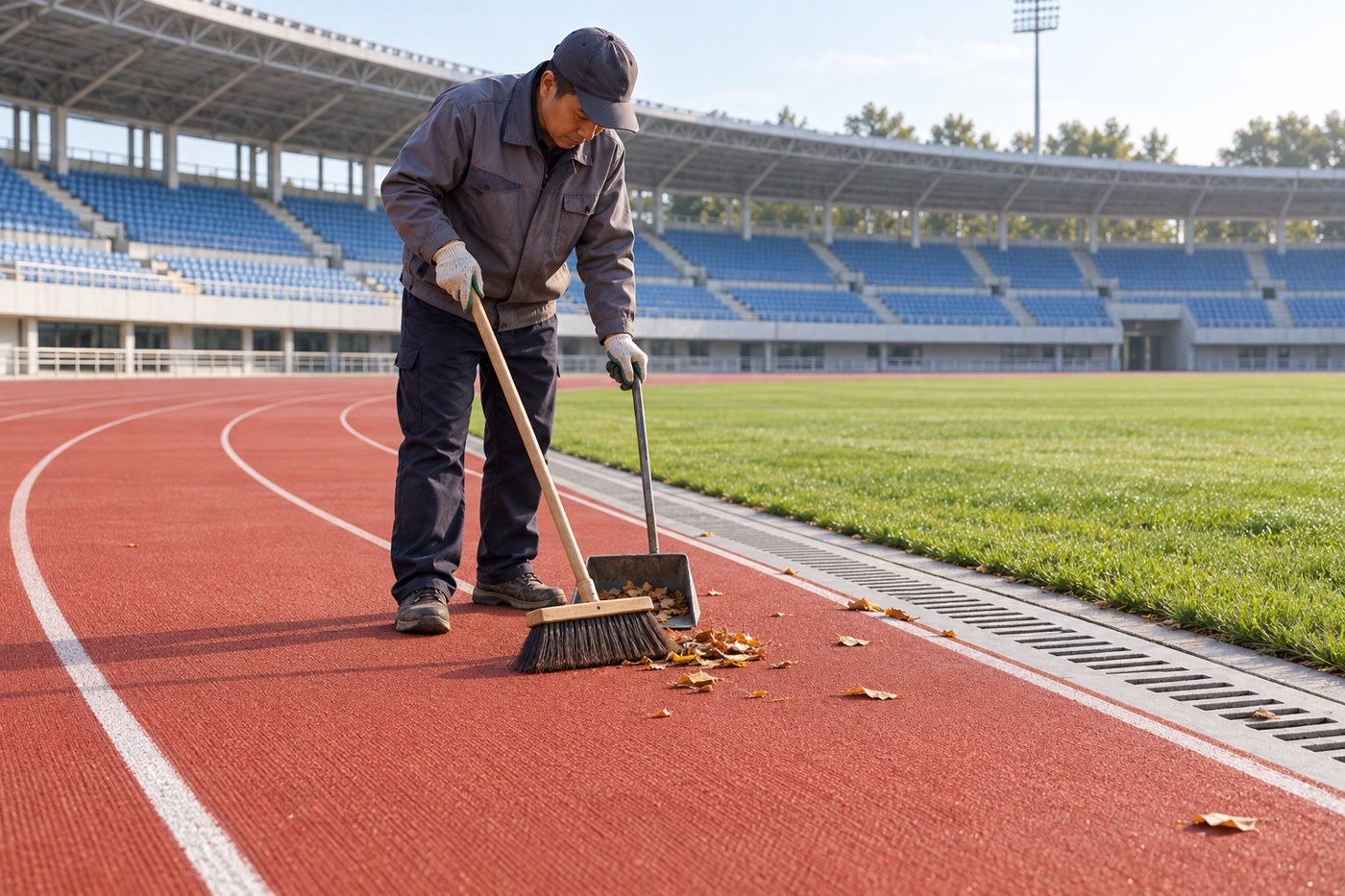
Remove grit, leaves and contamination promptly using methods compatible with the rubber and its adhesive system. Follow the manufacturer's cleaning guidance. Restrict vehicles, sharp equipment and unsuitable heavy loads; protect approved equipment routes and avoid improvised cleaning chemicals or aggressive treatment.
![Groundskeeper removing leaves from a rubber track beside the drainage channel]()
Figure 5. Groundskeeper removing leaves from a rubber track beside the drainage channel. AI-generated technical illustration.
Regular inspections should cover longitudinal and transverse joints, inner and outer edges, drainage interfaces, frequent starting-block locations, start/finish areas, busy training lanes, bends, equipment routes and previously repaired or water-affected areas. Include worn or missing competition marks.
Deal with small debonded edges and local damage early, before water and repeated loading enlarge the defect. Where damage creates a trip hazard or uncertain footing, restrict access to the affected area while it is assessed. Inspection frequency should reflect use, weather exposure, events and the manufacturer's maintenance plan.
8. Keep a Traceable Track Maintenance File
Retain design drawings, as-built drawings, survey-control information, measurement and surface-test reports, roll batch details, adhesive records, installation logs and acceptance documents. Add inspection, repair, remarking and remeasurement records as the venue operates.
Comparing records over time can show whether a particular area is settling, one joint repeatedly opens, ponding is spreading or repairs have affected the geometry. Maintenance decisions then rely on evidence rather than memory. Photographs should identify the location and date, and significant repairs should include a check of the completed result.
9. Distinguish Compliance from Certification
Meeting relevant technical requirements is not the same as holding a formally issued World Athletics certificate. A product certificate relates to the specified surfacing product; it does not certify every installation or the entire facility.
Similarly, passing a surface test does not by itself establish venue certification. The applicable facility route can require measurement documents, product evidence, field-event checks, accredited testing and an application review. Certification claims should identify the actual certificate, its scope and current validity.
Define the intended use and certification objective at the beginning of the project. Discovering missing facilities or inadequate records only after construction can lead to avoidable corrective work.
Conclusion
The material can be prefabricated, but the quality of the completed venue still has to be demonstrated. Curing establishes the bond; surveying confirms geometry; testing documents performance; acceptance clarifies handover; and maintenance protects the result.
A professional athletics track is more than a bright surface on opening day. It should remain supported by reliable dimensions, stable performance, effective drainage and clear technical records throughout its use.
Frequently Asked Questions
1. Can a prefabricated rubber track be used immediately after laying?
No. The adhesive must reach the specified condition, and the track must complete the required inspection, measurement, testing and acceptance before release for its intended activity.
2. How many days should the track cure?
Use the specified adhesive and product instructions, adjusted for the actual site conditions. A fixed number of days is not a reliable substitute for the system's curing and release requirements.
3. Does a factory test report replace on-site acceptance?
No. It supports material verification, but the completed surface also depends on the base, adhesive, workmanship, geometry and environmental conditions.
4. What should be checked when a seam opens?
Inspect the bond and neighbouring surface, then investigate movement, moisture, adhesive compatibility, coverage and installation conditions. Correct the cause before completing an approved repair.
5. What maintenance matters most in daily use?
Keep the surface and drains clean, control equipment access, monitor seams and edges, and address defects promptly. Use cleaning methods and materials approved for the installed system.
6. Does a certified rubber product make the stadium certified?
No. Product and facility certificates have different scopes. The venue must complete the applicable facility-certification process and receive its own valid certificate.
Technical References
Consult the World Athletics Technical Rules, facility and certification documents, and the HUADONG installation guidance, together with the selected product's current maintenance instructions.
Keywords: prefabricated track acceptance; rubber track curing; running track inspection; track maintenance; World Athletics facility certification.