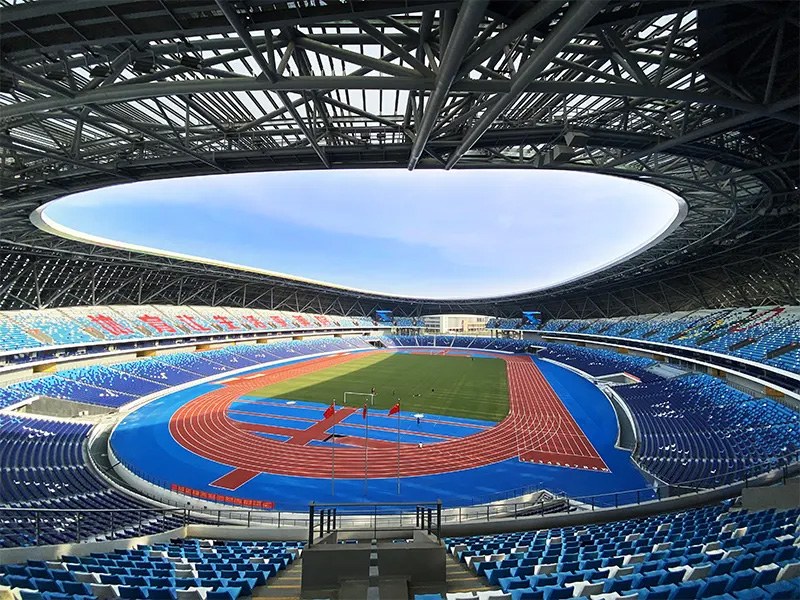
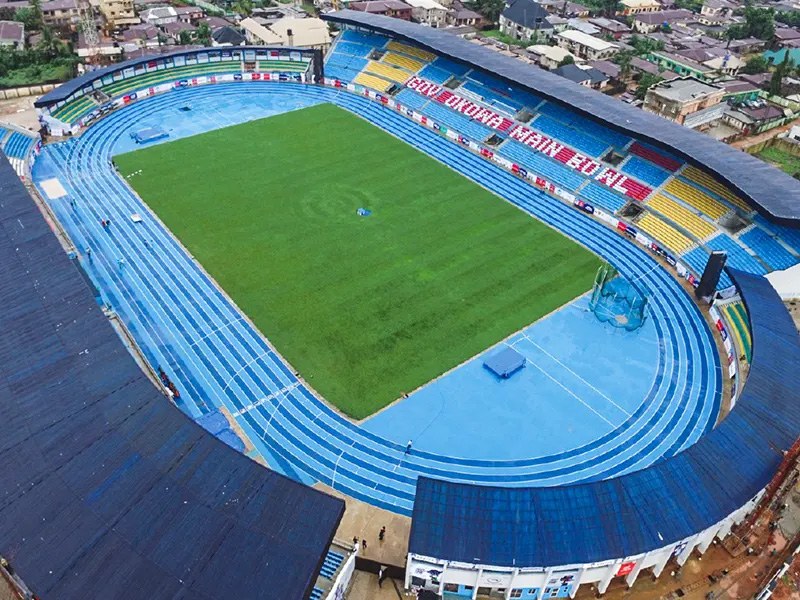
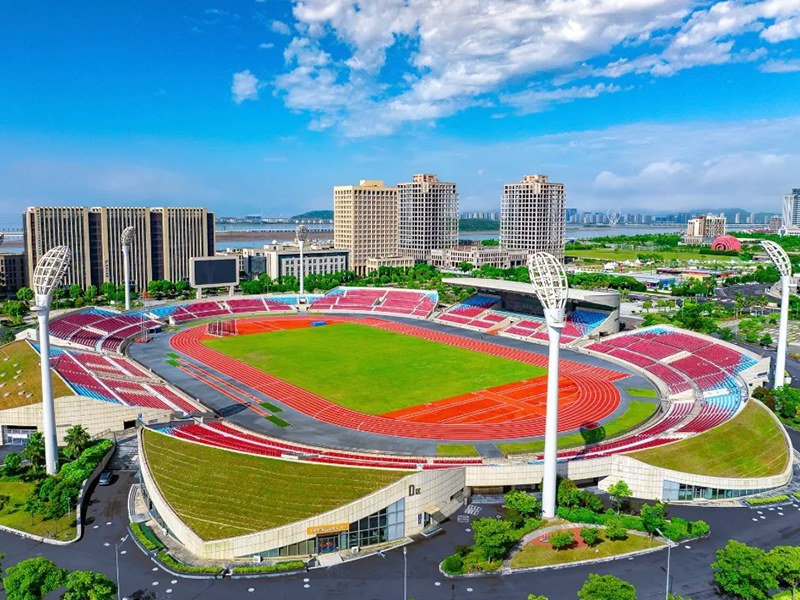
“World Athletics certified track” can describe two very different things:
1. A specific synthetic surfacing product has been certified.
2. A completed athletics facility has been certified.
They are related, but they are not interchangeable. A manufacturer cannot make a stadium Class 1 simply by delivering a certified product. The finished facility still depends on track geometry, event-site construction, surface installation, measurement, documentation and—where required—in-situ testing.
This guide explains the distinction between a World Athletics Track Surfacing Product Certificate, a Class 1 Athletics Facility Certificate, a Class 2 Athletics Facility Certificate and an Indoor Athletics Facility Certificate. It also shows owners what to verify during design, tendering, installation and final application.
Quick Answer
| Certification | What it applies to | Core evidence | What it does not prove |
Track Surfacing Product Certificate | A named synthetic surface product/system | Product application and laboratory test evidence under the certification procedure | That every project using it is correctly installed or facility-certified |
|
Class 1 Facility Certificate | A completed outdoor athletics facility | Required measurement documentation, valid certified surface and full in-situ synthetic-surface testing by an accredited laboratory | That removable competition equipment is certified or every future condition remains unchanged |
|
Class 2 Facility Certificate | A completed outdoor athletics facility | Required facility measurement documentation and a valid certified surfacing product; full Class 1 in-situ surface testing is not part of this route | Class 1 status or full in-situ verification of installed surface performance |
|
Indoor Facility Certificate | A completed indoor athletics facility | Indoor measurement and certification requirements | Outdoor Class 1 or Class 2 status |
|
The exact application route, forms and requirements must be checked against the current certification procedures.
1. What Is a World Athletics Track Surfacing Product Certificate?
A product certificate relates to a defined synthetic track surfacing product submitted under the World Athletics certification scheme. It is linked to details such as:
• Manufacturer/legal entity.
• Product name.
• Generic surface description.
• Tested construction.
• Thickness identified in the certification listing.
• Certificate number and status.
Product testing considers sport-performance and material characteristics required by the current synthetic-surface testing specification. Relevant characteristics include force reduction, vertical deformation, friction, tensile properties and thickness-related requirements, depending on the product and test route.
What a product certificate tells a buyer
It provides evidence that the named surfacing product has completed the applicable certification process in the tested configuration.
What it does not tell a buyer
It does not prove that:
• The material delivered to a specific project is the same product or batch.
• The base is stable, flat or correctly drained.
• Adhesive and installation are correct.
• The finished track geometry complies.
• Field-event sites are complete.
• The installed surface passes Class 1 in-situ tests.
• The stadium holds a facility certificate.
Procurement verification checklist
Before accepting a “World Athletics certified surface” claim, compare:
☐ Company name on the offer with the listing.
☐ Exact product name.
☐ Surface type/description.
☐ Thickness and construction.
☐ Certificate number.
☐ Current listing date/status.
☐ Technical data sheet and supplied sample.
☐ Manufacturing location, where relevant.
☐ Batch traceability and delivery documents.
A certificate for one product should not be used to market a different product family without clear evidence that the offered system is the listed certified product.
![]()
A certified product is only one part of a complete facility whose geometry, event sites and installation must also be controlled.
2. What Is a World Athletics Certified Athletics Facility?
Facility certification applies to the completed venue, not only the red surface around the football field.
The certification process addresses the technical suitability of the athletics facility for the relevant competition level. It involves the required measurement of track and field facilities and, for Class 1, full in-situ synthetic-surface testing.
The World Athletics certification procedures state that certificates are issued for complete facilities with the event sites required for the applicable construction category. This means the project team must coordinate:
• Track geometry and lane layout.
• Straights, bends and kerb.
• Runways and take-off areas.
• Throwing circles, arcs, sectors and cages/interfaces as applicable.
• Water-jump and steeplechase facilities where required.
• Vertical and horizontal measurements.
• Synthetic surface identity and installation.
• Measurement and test documentation.
Facility certification is therefore a design-and-delivery process, not a product add-on purchased at the end.
3. Class 1 Facility Certification
What Class 1 means
A Class 1 Athletics Facility Certificate is the higher outdoor facility-certification route and is required for the top levels of competition described in the current World Athletics rules and certification procedures.
According to the World Athletics Certification System Procedures , the route includes:
• The applicable measurement report for the completed facility.
• A valid World Athletics certified synthetic surfacing product.
• Full in-situ testing of the installed synthetic surface by an accredited laboratory.
• The required application and supporting records.
Why in-situ testing matters
Product testing evaluates the product under the certification process. In-situ testing evaluates the surface as installed at the facility. Installation thickness, base, adhesive, workmanship, environmental exposure and site execution can affect the completed result.
Typical Class 1 project evidence
• Approved facility design and event-site schedule.
• Product certificate and current listing.
• Material and batch records.
• As-built measurement report.
• Levels/geometry records required by the applicable forms.
• Synthetic Surface Field Test report from an accredited laboratory.
• Application form and applicant details.
• Photographs and other records requested in the current procedure.
• Closure of deviations or retest evidence where applicable.
![]()
Facility evidence must address the whole athletics layout, not only the product name or the colour of the installed track.
4. Class 2 Facility Certification
Class 2 is a facility certificate, not a product certificate and not an informal statement that a surface is “nearly Class 1”.
Under the World Athletics procedures, a Class 2 facility must meet the relevant accurate-measurement requirements and use a synthetic surface with a valid Product Certificate. The full in-situ synthetic-surface testing required for Class 1 is not part of the Class 2 route.
Class 2 still requires project control
The absence of full Class 1 field testing does not remove the need for:
• Correct facility geometry.
• Complete required event sites.
• A valid certified product.
• Correct installation.
• Accurate measurement and documentation.
• Compliance with local and competition requirements.
When Class 2 may be appropriate
The choice depends on the competitions the owner intends to host and the current applicable rules. Decide this during concept design. Changing the objective late can require additional event sites, documentation, testing or corrective work.
5. Indoor Facility Certification
Indoor athletics facilities follow a separate certificate route and indoor measurement documentation. Do not describe an indoor venue as outdoor Class 1 or Class 2 unless it independently holds that certificate for an outdoor facility.
Indoor projects introduce additional coordination around:
• Track geometry and banking.
• Structural support and transitions.
• Indoor event-site layout.
• Surface attachment and dimensional stability.
• Environmental and indoor-air requirements.
• Indoor measurement forms.
Use the current Indoor application and measurement documents listed in the World Athletics technical library.
6. Facility Class Is Not the Same as Construction Category
World Athletics facility certificates may refer to a construction category associated with the facility's event-site configuration. This is not the same concept as Class 1 versus Class 2.
• Class describes the certification route and competition-related requirement.
• Construction category relates to which event facilities/configuration are provided under the applicable manual and certificate.
Owners should ask a qualified facility designer or certification consultant to define both. Avoid assuming that a more expensive surface automatically gives the venue a higher construction category.
7. Certification Does Not Cover Everything at the Venue
The certification procedures explain that facility certification addresses technical suitability for competitions. Removable competition equipment—such as hurdles, landing mats, starting blocks or other equipment—may require separate inspection or equipment certification and is not automatically covered by the facility certificate.
The project must also comply with matters outside the World Athletics certificate, including:
• Building and fire codes.
• Structural safety.
• Accessibility.
• Electrical and lighting requirements.
• Spectator safety.
• Environmental approvals.
• Local federation rules.
• Event-specific technical regulations.
8. Who Is Responsible for What?
| Party | Primary certification responsibilities |
Owner/applicant | Define competition objective, appoint qualified parties, budget fees/testing, provide application information and maintain records |
|
Facility designer/consultant | Design geometry and event sites, coordinate rules and construction category, review deviations |
|
Civil contractor | Build stable base, drainage, kerbs and event-site infrastructure to approved geometry |
|
Surface manufacturer/supplier | Provide exact product certificate, technical data, samples, batch traceability and system requirements |
|
Surface installer | Inspect/release base, install approved system, keep environmental and QA records, correct workmanship defects |
|
Surveyor | Measure completed facility using current applicable forms and methods |
|
Accredited laboratory | Perform the required synthetic-surface testing within its accreditation/recognition scope |
|
Certification adviser, if appointed | Coordinate forms, sequence, evidence and submission; does not replace each party's technical duty |
|
World Athletics | Operate the certification scheme, review applications and issue certificates under its procedures |
|
The contract should name these parties before construction. “Supplier will arrange certification” is too vague.
9. Certification Roadmap From Concept to Handover
Phase 1 — Define the competition objective
• Identify intended competitions and governing rules.
• Decide whether Class 1, Class 2, Indoor, domestic certification or no formal certification is required.
• Confirm the necessary event sites and construction category.
Phase 2 — Design for certification
• Appoint an experienced facility designer and surveyor.
• Use the current measurement forms during design, not only after construction.
• Coordinate drainage, kerbs, levels, runways and safety zones.
• Reserve budget for testing, application, travel and retesting.
Phase 3 — Procure the correct surfacing system
• Require the exact current Product Certificate.
• Verify product name, description, thickness and manufacturer.
• Require technical data, samples, installation method and traceability.
• Define whether alternatives must hold equivalent certification.
Use the detailed Running Track Tender Specification Kit to write these requirements.
Phase 4 — Control the base and installation
• Complete civil QA and as-built surveys.
• Use a signed 12-Point Base Inspection Checklist .
• Record weather, materials, adhesive batches, areas installed and repairs.
• Protect survey control and certification-critical details.
Phase 5 — Measure and test
• Arrange the qualified surveyor and accredited laboratory early.
• Confirm access, weather and surface cure requirements.
• Use the current forms.
• Resolve non-conformities and plan retesting if required.
Phase 6 — Submit and archive
• Complete the current application.
• Check names and product identifiers across every document.
• Submit required reports and evidence.
• Archive certificate, as-builts, test reports, batch records and maintenance information.
10. Tender Document Checklist for Certification
Include these requirements in the tender:
☐ Intended competitions and certificate class.
☐ Required facility construction category/event sites.
☐ Current World Athletics documents and revision dates.
☐ Exact certified surfacing product evidence.
☐ Measurement responsibility and surveyor requirements.
☐ Accredited laboratory appointment and scope.
☐ Testing, application, travel and retest cost allocation.
☐ Base and installation QA records.
☐ Material/batch traceability.
☐ Programme hold points for survey and testing.
☐ Procedure for design or site deviations.
☐ Handover and certificate-document archive.
11. Common Certification Mistakes
Mistake 1: Saying “IAAF approved” without a certificate number
“IAAF approved” remains a common search phrase because IAAF was the former name. Procurement documents should use the current World Athletics terminology and identify the exact certificate/listing.
Mistake 2: Showing a facility certificate to sell a different product
A facility certificate shows that a venue completed a certification route. Verify which surface product is named and whether it matches the offered product.
Mistake 3: Assuming any certified product creates a certified facility
The completed venue must still satisfy the facility process.
Mistake 4: Appointing the surveyor and laboratory after installation
Late appointment can expose missing records, inaccessible points, wrong forms or programme conflicts.
Mistake 5: Failing to control product identity
Product name, thickness, certificate number, samples, packing list and batch records should align.
Mistake 6: Treating Class 2 as “Class 1 without paperwork”
They are defined certification routes with different requirements. Select the route based on the intended competition and current rules.
Mistake 7: Ignoring event sites outside the oval
A track surface alone is not a complete athletics facility. Runways, circles, sectors, pits and other required sites matter.
Mistake 8: Using an old PDF list without checking the live library
Certificates and official lists are updated. Record the retrieval date and recheck before tender award, shipment and application.
12. How to Verify a Certification Claim Online
1. Open the World Athletics Technical Information page .
2. Open the current Certified Track Surfacing Products or Certified Athletics Facilities list.
3. Search the legal company, exact product or facility name.
4. Compare certificate number, description and thickness where shown.
5. Save the dated list or retrieval evidence in the tender file.
6. Ask the bidder to explain any name, thickness or entity difference.
7. Recheck the current list before final acceptance or certification submission.
Search-engine snippets, supplier brochures and certificate-logo images are not substitutes for the current official list.
![]()
Certification claims should be checked against the exact completed facility, its current certificate route and official records.
Frequently Asked Questions
Does a World Athletics certified track surface make a stadium Class 1?
No. A certified product is one input. Class 1 applies to the completed facility and includes the required measurement and full in-situ synthetic-surface testing process.
What is the main difference between Class 1 and Class 2?
Both are outdoor facility certificates with measurement and certified-surface requirements. Class 1 includes full in-situ synthetic-surface testing by an accredited laboratory; that full field-test route is not part of Class 2.
Is Class 2 a product certificate?
No. It is a facility certificate.
Is “IAAF certification” still valid terminology?
IAAF is the former organisation name and remains common in legacy certificates and searches. Current documents and new procurement language should use World Athletics, while identifying legacy certificate information accurately.
Does World Athletics certify track manufacturers?
The certification list identifies certified track surfacing products associated with companies. Do not turn this into a blanket claim that every product made by the company is certified.
Does Class 2 require a certified surface product?
Under the current procedures, the facility route requires a valid certified synthetic surfacing product along with the applicable measurement requirements.
Who performs Class 1 surface testing?
Use a laboratory recognised/accredited for the relevant World Athletics synthetic-surface testing scope. Check the current accredited-laboratory list.
Can the surface supplier issue a Class 1 certificate?
No. The supplier provides product and project evidence; World Athletics issues facility certificates under its certification process.
Does facility certification include line marking?
The facility measurement and technical compliance process includes relevant track and event-site geometry/markings. The project team must use current measurement forms and qualified surveyors.
Are hurdles and landing mats included in facility certification?
Removable competition equipment is not automatically covered by the facility certificate and must be handled under the applicable equipment and event requirements.
Can an existing track apply for certification?
Potentially, if it meets the current applicable requirements and the required evidence, measurements and tests can be produced. A gap assessment should be completed before committing to the application.
How long does certification take?
There is no safe universal duration. Design readiness, facility completeness, survey, laboratory availability, test results, document quality, fees and corrective work all affect the programme. Plan backward from the event date with float.
Does a certificate guarantee that the track will never fail?
No. Certification is not a substitute for correct design, drainage, base construction, installation, use and maintenance.
Can a certified product be installed at a different thickness?
The offered and installed construction must be checked against the product's certification and current technical requirements. Do not assume that every thickness variant is covered.
What should an owner ask for before contract award?
The exact certificate/listing, technical data sheet, independent test evidence, project references, installation method, base requirements, QA plan, measurement/testing proposal, warranty and maintenance obligations.
Final Takeaway
The simplest correct explanation is:
Product certification validates a named surfacing product. Facility certification validates the completed athletics venue through the applicable measurement and testing route. |
Keeping that distinction clear prevents misleading tender claims, late certification surprises and incorrect expectations about what the surface supplier can guarantee.
HuadongTrack publishes information on its prefabricated rubber running track systems and company certificates. For a live tender, provide the destination country, intended competition, required facility class, track area, design stage and opening date so the technical team can identify the product and document package to be reviewed. Final certification decisions remain with World Athletics under its current procedures.